- Whatsapp: 8613738300923
- Email: [email protected]


In industries where hygiene is non-negotiable — food processing, dairy production, pharmaceuticals, and biotechnology — the integrity of your piping system can make or break your operation. At the heart of every hygienic fluid transfer system lies one critical component: SS sanitary pipe fittings.
Unlike standard industrial fittings, sanitary stainless steel pipe fittings are engineered to prevent bacterial growth, withstand aggressive cleaning protocols (CIP/SIP), and maintain product purity across thousands of production cycles. A single poorly selected fitting can lead to contamination, costly downtime, or regulatory non-compliance.
Whether you are designing a new processing line, upgrading an existing facility, or sourcing reliable sanitary pipe fittings for an upcoming project, this guide covers everything you need to know — from material selection and industry standards to installation best practices and supplier evaluation.
SS sanitary pipe fittings (also referred to as hygienic or aseptic fittings) are precision-engineered connection components made from stainless steel, designed specifically for applications where cleanliness and sterility are paramount. They connect sections of sanitary tubing, change flow direction, reduce or expand pipe diameter, and provide access points for cleaning and inspection.

Key characteristics that distinguish sanitary fittings from standard industrial fittings include:
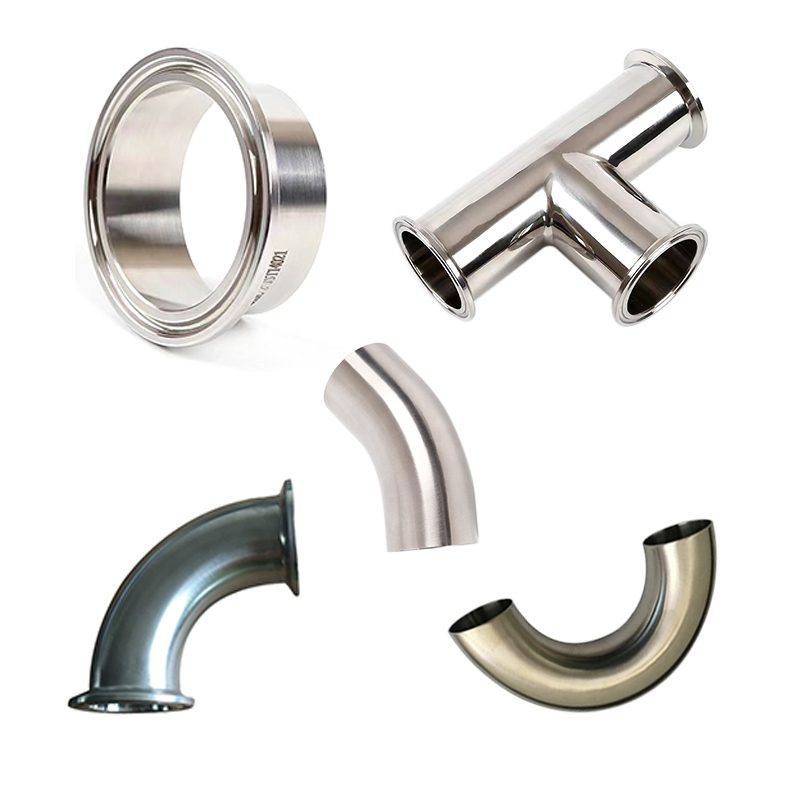
Understanding the full range of available sanitary fittings helps you specify the right component for each connection point. Below is a breakdown of the most widely used types:
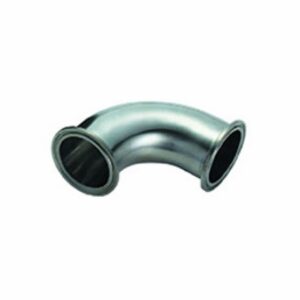
Sanitary elbows change flow direction with minimal turbulence. Available in long-radius and short-radius configurations, 90° elbows are the most common, while 45° elbows are used where gradual directional changes reduce pressure drop. Both are critical stainless steel sanitary pipe fittings in any processing line.
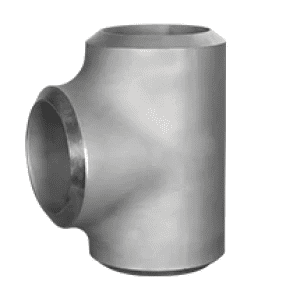
These fittings split or combine flow streams. Tees create 90° branch connections, crosses allow four-way distribution, and Y-types offer smooth 45° branching that minimizes product shear — particularly important in dairy and pharmaceutical applications.
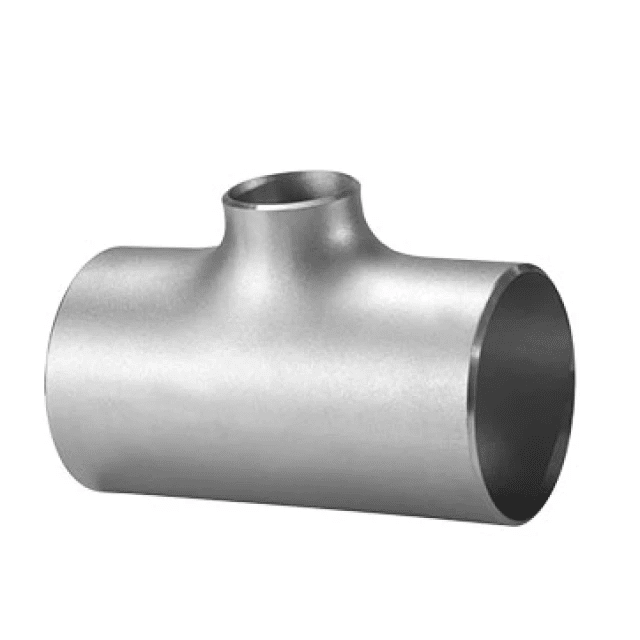
Reducers transition between different pipe diameters. Concentric reducers center both ends on the same axis, while eccentric reducers maintain a flat bottom or top — essential for self-draining horizontal piping in hygienic systems.
The tri-clamp (also known as tri-clover) connection system is the industry standard for quick-disconnect sanitary joints. High-quality clamps, matched ferrules, and FDA-compliant gaskets ensure leak-proof, crevice-free connections that can be disassembled in seconds for cleaning and inspection.
Sight glasses provide visual verification of product flow, color, and clarity without breaking the sterile barrier. They are indispensable in process monitoring across all sanitary industries.
Used to seal open pipe ends during system shutdowns, maintenance, or to close off unused branches. Properly designed caps maintain the sanitary integrity of the entire system.
Fixed or rotating spray balls are installed inside tanks and vessels for Clean-in-Place (CIP) operations. They ensure 360° coverage of cleaning solutions across all interior surfaces.
Proper support systems prevent sagging, maintain slope for drainage, and reduce vibration-induced wear. Sanitary-grade supports are designed to avoid creating crevices or contamination traps.
Material selection is the single most important decision when specifying SS sanitary pipe fittings. The two dominant grades are 304 (UNS S30400) and 316L (UNS S31603). Here is how they compare:
| Property | 304 Stainless Steel | 316L Stainless Steel |
|---|---|---|
| Composition | 18% Cr, 8% Ni | 16-18% Cr, 10-14% Ni, 2-3% Mo |
| Corrosion Resistance | Good — suitable for most food and beverage applications | Excellent — superior resistance to chlorides and acidic products |
| Temperature Range | Up to 870°C (intermittent) | Up to 870°C (intermittent) |
| Weldability | Excellent | Excellent — low carbon content minimizes carbide precipitation |
| Cost Factor | Standard pricing — the industry workhorse | 20-40% premium over 304 |
| Best For | Dairy, beer, wine, water, general food processing | Pharmaceuticals, biotech, marine environments, high-acid products |
When to choose 316L: If your process involves chloride-containing solutions, acidic products (citrus juices, tomato-based products), or requires the highest sterility assurance levels (injectable drugs, vaccines), 316L is the recommended choice. The molybdenum content provides the critical extra resistance against pitting and crevice corrosion.
When 304 is sufficient: For standard dairy processing, brewery piping, potable water systems, and most general food applications, 304 stainless steel sanitary pipe fittings provide excellent performance at a more economical price point.
Beyond these two grades, specialized alloys such as duplex stainless steel (S31803/S32205), super duplex (S32750/S32760), and high-nickel alloys (904L, C276) are available for extreme environments — high chloride concentrations, elevated temperatures, or aggressive chemical exposure.
Compliance with recognized standards is non-negotiable in sanitary processing. Here are the key standards governing SS sanitary pipe fittings:
Developed by 3-A Sanitary Standards, Inc., these are the most widely recognized hygienic design standards globally. 3A certification covers material specifications, surface finish requirements, and design criteria that ensure cleanability and bacterial control. For dairy processing in the United States, 3A compliance is often a regulatory requirement under the Pasteurized Milk Ordinance (PMO).
The SMS standard is prevalent in European food and dairy processing. SMS fittings feature specific dimensional requirements and are widely used across the EU food industry. Many global manufacturers produce SMS-compatible sanitary fittings alongside other standards.
The German DIN standards define tube dimensions (DIN 11850) and aseptic connection systems (DIN 11864 series). DIN 11864-1 covers aseptic screwed connections, -2 covers aseptic flange connections, and -3 covers aseptic clamp connections. These are extensively used in European pharmaceutical and biotechnology facilities.
ISO 2037 defines stainless steel tubes for the food industry, while ISO 2852 covers the clamped (tri-clamp) coupling system dimensions. Together, they form the backbone of internationally recognized sanitary connection specifications.
For pharmaceutical and biotech applications, ASME BPE standards govern the design, materials, fabrication, and testing of equipment and components that contact products during manufacturing. Surface finish requirements under BPE are among the most stringent in the industry.
Surface roughness (Ra) is perhaps the most overlooked yet critical specification for sanitary stainless steel pipe fittings. The smoother the surface, the less opportunity for bacteria to adhere and form biofilms. Industry requirements by application:
Electropolishing — an electrochemical process that removes a microscopically thin layer of material — further enhances corrosion resistance by eliminating surface imperfections and enriching the chromium oxide passive layer.
From dairy pasteurization to brewery fermenters and juice processing lines, SS sanitary pipe fittings form the backbone of hygienic fluid transfer. Stainless steel’s non-reactive surface ensures zero product contamination while withstanding daily hot water and chemical sanitization cycles.
In API (Active Pharmaceutical Ingredient) manufacturing, vaccine production, and biotech fermentation, product purity is absolute. Sanitary fittings used here must meet ASME BPE standards with documented surface finish certifications, full material traceability, and often passivation certificates.
The cosmetics industry increasingly adopts sanitary-grade equipment to meet GMP (Good Manufacturing Practice) requirements. Lotions, creams, and liquid personal care products all benefit from the contamination-free transfer that sanitary stainless steel fittings provide.
The dairy sector is one of the largest consumers of SS sanitary pipe fittings. From raw milk reception through pasteurization, homogenization, and packaging, every connection must comply with 3A standards to meet regulatory requirements under the PMO.
Choosing the right supplier for your sanitary fittings is as important as selecting the correct fitting itself. Here is a practical checklist:
Even the highest-quality sanitary fittings can underperform if installed incorrectly. Follow these best practices:
Sanitary fittings feature crevice-free designs, polished internal surfaces (Ra ≤ 0.8 μm), self-draining geometry, and certified material traceability — features absent in standard industrial fittings. They are specifically engineered to prevent bacterial growth and withstand CIP/SIP cleaning protocols.
Choose 304 for standard food, dairy, and beverage applications where cost-effectiveness is important and chloride exposure is minimal. Choose 316L for pharmaceutical, biotech, marine, or high-acid product applications where superior corrosion resistance justifies the premium cost.
Key certifications include 3A Sanitary Standards (essential for US dairy), ISO 9001 (quality management), material test certificates per EN 10204 3.1, and for pharmaceutical applications, ASME BPE compliance. Always verify certificates directly with the issuing body when possible.
Ra ≤ 0.8 μm (32 μin) is standard for food and dairy. Ra ≤ 0.5 μm (20 μin) with electropolishing is recommended for pharmaceuticals. Ra ≤ 0.38 μm (15 μin) is required for the most critical biotech applications per ASME BPE SF4.
Yes. Reputable manufacturers offer custom dimensions, non-standard angles, special alloy grades, and bespoke surface finishes. Customization typically requires engineering drawings and may involve tooling costs, though established manufacturers with extensive inventory can often adapt existing components.
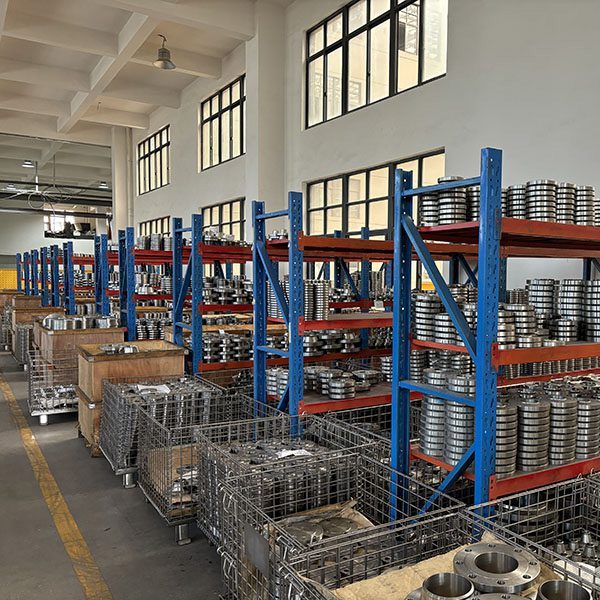
Standard catalog items typically ship within 7-25 days. Custom orders may take 4-8 weeks depending on complexity. Suppliers with large warehouse inventories (3000+ sqm) can often provide faster delivery on standard items.
Request material test certificates, review surface finish documentation, order evaluation samples, check for 3A or other certifications, and inspect for consistent weld quality and dimensional accuracy. Third-party inspection services can also be engaged for large orders.
Yes, tri-clamp (tri-clover) fittings manufactured to ISO 2852 or equivalent standards are dimensionally interchangeable across brands. However, always verify the specific standard (ISO, SMS, DIN) to ensure compatibility, as different standards may have slightly different flange dimensions.
EPDM is the most common and cost-effective for general food and dairy applications (temperature range: -30°C to +150°C). PTFE (Teflon) offers superior chemical resistance. Silicone is used for high-purity applications. Viton (FKM) handles higher temperatures and aggressive chemicals.
Visual inspection should occur during every CIP cycle or production changeover. Detailed inspection (surface condition, gasket integrity, clamp torque) should be performed quarterly. Fittings typically last 10-20 years under normal conditions but should be replaced immediately if pitting, cracks, or surface deterioration is detected.
Gencel Stainless Steel is a trusted manufacturer with 20+ years of experience, 3A and TS certifications, and a track record of serving clients in 50+ countries. We offer free samples, custom solutions, and fast delivery from our 3000 sqm warehouse.
Contact our engineering team today for a free consultation and quote.

STAINLESS STEEL&GENCEL;
Privacy Policy | SiteMap
Copyright GENCEL STAINLESS STEEL CO.,LIMITED
 Optimized by Seraphinite Accelerator