- Whatsapp: 8613738300923
- Email: [email protected]


Selecting the right pipe fittings is essential for ensuring the safety, efficiency, and reliability of any industrial piping system. Among the various materials available, SS 316 fittings have become one of the most popular choices due to their excellent corrosion resistance, high strength, and long service life. They are widely used in industries that handle aggressive chemicals, seawater, high temperatures, and hygienic processes.
However, SS 316 fittings are available in many different types, each designed to perform a specific function within a piping system. Understanding the characteristics and applications of these fittings helps engineers, contractors, and buyers choose the most suitable solution for their projects.
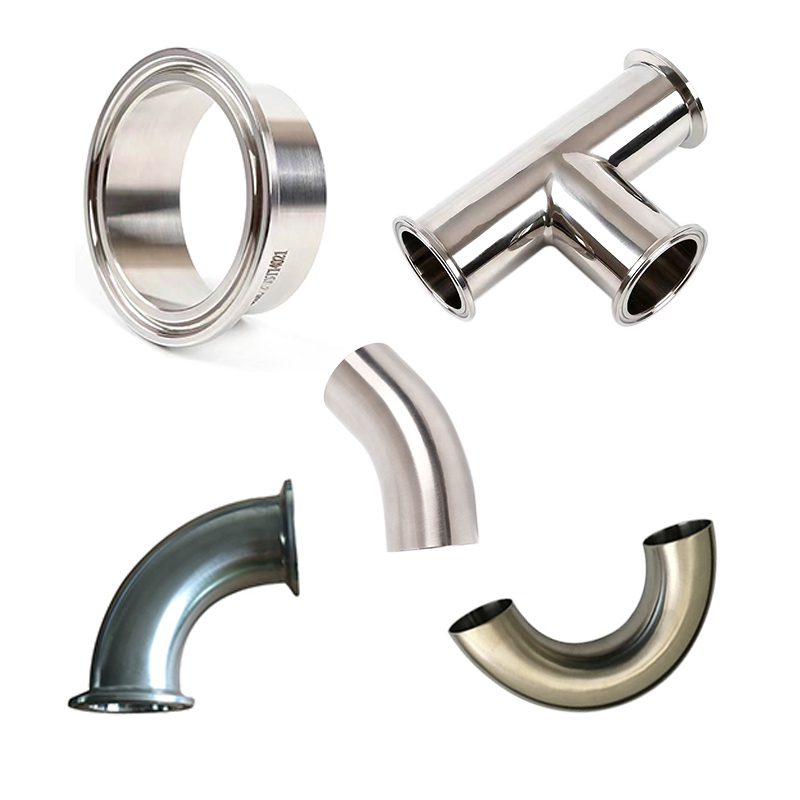
SS 316 fittings are pipe fittings manufactured from 316 stainless steel, an austenitic stainless steel alloy containing chromium, nickel, and approximately 2–3% molybdenum. The addition of molybdenum significantly improves resistance to chlorides, acids, and corrosive chemicals compared with standard 304 stainless steel.
These fittings are used to connect, redirect, branch, reduce, or terminate pipelines while maintaining the integrity of the entire piping system.
Because of their outstanding corrosion resistance and durability, SS 316 fittings are commonly found in:
Chemical processing plants
Marine engineering
Food and beverage processing
Pharmaceutical manufacturing
Oil and gas facilities
Water treatment systems
Power generation plants
Different piping systems require different fitting configurations. The following are the most widely used types of SS 316 fittings.
SS 316 Elbows
Elbows are used to change the direction of fluid flow within a pipeline. They are available in 45°, 90°, and 180° angles, as well as long-radius and short-radius designs.
Long-radius elbows are preferred where smooth flow and minimal pressure loss are required, while short-radius elbows are suitable for installations with limited space.
Typical applications include chemical pipelines, steam systems, food processing equipment, and water treatment facilities.
SS 316 Tees
Tees create branch connections by dividing one pipeline into two or combining two flow paths into one.
Equal tees connect pipes of the same diameter, while reducing tees connect pipes of different sizes.
They are widely used in:
Process piping
Water distribution systems
Chemical plants
Pharmaceutical production lines
SS 316 Reducers
Reducers connect pipes with different diameters while maintaining efficient fluid flow.
There are two main types:
Concentric Reducers feature a common centerline and are commonly installed in vertical piping systems.
Eccentric Reducers have one flat side and are primarily used in horizontal pipelines to prevent air pockets or liquid accumulation.
Reducers are commonly used in pump systems, process equipment, and pipeline transitions.
SS 316 Pipe Caps
Pipe caps are designed to close the end of a pipeline.
They are commonly used for:
Pipeline maintenance
Pressure testing
Future system expansion
Temporary or permanent sealing
Their welded design provides excellent pressure resistance and leak protection.
SS 316 Stub Ends
Stub ends are used together with lap joint flanges.
They simplify flange alignment, reduce maintenance costs, and allow easier disassembly of piping systems that require frequent inspection or cleaning.
They are commonly found in food processing, pharmaceutical manufacturing, and chemical plants.
SS 316 Couplings
Couplings connect two sections of pipe in a straight line.
Depending on the application, they may be:
Full couplings
Half couplings
Threaded couplings
Socket weld couplings
They are frequently used in low- and medium-pressure piping systems.
SS 316 Unions
Unlike standard couplings, unions allow pipelines to be disconnected without cutting the pipe.
This makes maintenance much easier for equipment that requires regular servicing, such as pumps, valves, filters, and instruments.
SS 316 Cross Fittings
Cross fittings provide four-way pipe connections.
Although less common than tees, they are used in specialized distribution systems where multiple branch connections are required.
Besides different shapes, SS 316 fittings are also classified according to their connection methods.
Butt Weld Fittings
Butt weld fittings are permanently welded to pipes, creating strong, leak-proof joints suitable for high-pressure and high-temperature systems.
Socket Weld Fittings
Socket weld fittings allow pipes to be inserted into recessed sockets before welding. They are commonly used for small-diameter piping systems.
Threaded Fittings
Threaded fittings use internal or external threads for assembly. They are easy to install and remove, making them ideal for lower-pressure systems requiring frequent maintenance.
The outstanding corrosion resistance of SS 316 fittings makes them suitable for a wide range of industrial environments.
Chemical Processing
Chemical plants often transport highly corrosive acids, alkalis, and solvents. SS 316 fittings provide reliable corrosion resistance while maintaining pipeline integrity under demanding operating conditions.
Food and Beverage Industry
Food-grade production requires hygienic piping systems that are easy to clean and resistant to contamination. SS 316 fittings feature smooth surfaces that support sanitary processing and comply with strict hygiene standards.
Pharmaceutical Manufacturing
Pharmaceutical facilities rely on SS 316 fittings for sterile water systems, clean-in-place (CIP) lines, and high-purity process piping where cleanliness and corrosion resistance are critical.
Marine and Offshore Engineering
Because SS 316 contains molybdenum, it performs exceptionally well in chloride-rich environments, making it ideal for seawater pipelines, offshore platforms, shipbuilding, and desalination plants.
Oil and Gas Industry
Refineries, offshore drilling platforms, and petrochemical facilities use SS 316 fittings to transport aggressive process fluids under high pressure and temperature.
Water Treatment Systems
Municipal and industrial water treatment plants use SS 316 fittings in filtration systems, desalination equipment, and chemical dosing pipelines due to their excellent durability.
Power Generation
Power plants utilize SS 316 fittings in steam systems, cooling water circuits, and process piping where long-term reliability is essential.
Compared with many alternative materials, SS 316 fittings offer several significant advantages.
They provide excellent resistance to corrosion, especially in environments containing chlorides and aggressive chemicals. Their high mechanical strength enables them to withstand demanding pressure and temperature conditions, while their smooth surface minimizes flow resistance and helps maintain clean, hygienic systems.
In addition, SS 316 fittings require relatively little maintenance and offer a long service life, reducing overall operating costs and making them a cost-effective solution for critical industrial applications.
Choosing the correct fitting depends on several factors, including the type of fluid being transported, operating pressure and temperature, pipe size, connection method, and environmental conditions.
It is also important to ensure that fittings comply with relevant international standards such as ASTM, ASME, or ANSI. Purchasing from an experienced manufacturer with strict quality control can further improve the reliability and longevity of your piping system.
Q1. What are SS 316 fittings used for?
SS 316 fittings are used to connect, redirect, reduce, branch, or terminate pipelines in industries such as chemical processing, food and beverage, pharmaceuticals, marine engineering, oil and gas, and water treatment.
Q2. What are the most common types of SS 316 fittings?
The most common types include elbows, tees, reducers, caps, stub ends, couplings, unions, and cross fittings. Each type performs a specific function within a piping system.
Q3. Why are SS 316 fittings preferred over SS 304 fittings?
SS 316 fittings contain molybdenum, which provides better resistance to chlorides, saltwater, and corrosive chemicals. This makes them more suitable for marine environments, chemical processing, and pharmaceutical applications.
Q4. Which connection type is best for SS 316 fittings?
The best connection type depends on the application. Butt weld fittings are ideal for high-pressure systems, socket weld fittings are commonly used for smaller pipelines, and threaded fittings are suitable for systems requiring easy installation and maintenance.
Q5. How long do SS 316 fittings typically last?
With proper installation and regular maintenance, SS 316 fittings can provide reliable service for decades. Their excellent corrosion resistance and mechanical strength make them one of the most durable options for industrial piping systems.
SS 316 fittings are indispensable components in modern industrial piping systems, offering outstanding corrosion resistance, strength, and long-term reliability. Available in a wide variety of types—including elbows, tees, reducers, caps, stub ends, couplings, and unions—they are designed to meet diverse piping requirements across industries such as chemical processing, marine engineering, pharmaceuticals, food production, oil and gas, and water treatment.
Understanding the different types of SS 316 fittings and their applications enables engineers, contractors, and procurement professionals to select the most appropriate solution for their systems. By choosing the right fitting type and connection method, businesses can improve pipeline performance, reduce maintenance costs, and ensure safe, efficient operation for years to come.


STAINLESS STEEL&GENCEL;
Privacy Policy | SiteMap
Copyright GENCEL STAINLESS STEEL CO.,LIMITED
 Optimized by Seraphinite Accelerator