- Whatsapp: 8613738300923
- Email: [email protected]


Author: Gencel Stainless Steel Engineering Team — 3A and ISO 9001 certified manufacturer of stainless steel sanitary pipe fittings, tank sight glasses and hygienic tank accessories for food, beverage, dairy, pharmaceutical and chemical projects. Reviewed: September 2026.
Every closed vessel in a hygienic plant creates the same problem: the process is running and nobody can see it. A sight glass solves half of that problem by giving you a window. A sight glass with light solves the other half by putting usable illumination behind that window, so the operator sees foam height, colour, particulate and mixing behaviour instead of a dark reflection of their own torch.
The choice matters commercially, not just technically. A plain sight glass is cheaper per unit and simpler to install. A sight glass with light costs more, needs a power feed, and adds a second sealed component to maintain. Buying the wrong one means either paying for illumination you never switch on, or retrofitting light ports into a validated tank after commissioning — which is always the expensive option.
This guide compares sight glass vs sight glass with light for B2B buyers: what each design physically is, how the specifications differ, where each one belongs, what the total cost of ownership really looks like, and exactly what to put on the RFQ. Every specification quoted below is Gencel’s actual supply range, not a generic industry figure.
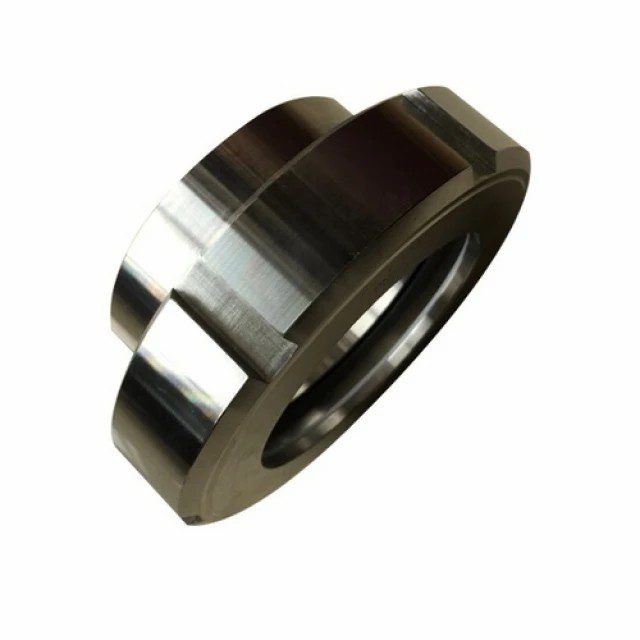
A standard sanitary sight glass is a stainless steel body fitted with a transparent window that lets an operator observe flow, level or product condition without opening the system. The window is normally borosilicate glass, held between the body and a retaining ring against a hygienic gasket so the wetted path stays crevice-free.
Gencel builds sight glass bodies in SS304 (1.4301) and SS316L (1.4404), from 1/2″ to 12″ — DN10 to DN300 — with clamp, weld, thread or weld-thread ends, and inner and outer surfaces polished to Ra 0.8 μm–0.5 μm using 320/240 grit. Production runs under 3A and ISO 9001, and parts can be built to 3A, SMS, IDF, RJT, DIN or ISO dimensional standards so they drop into an existing line without adapters.
Format follows function. An inline union type sight glass is the standard choice for pipe runs because it unbolts for cleaning and glass replacement. Elbow and cross types let you look along or across a change of direction. Straight types with a protective net survive knocks in traffic areas. Flanged and welded types are used where the vessel or code dictates a permanent connection.
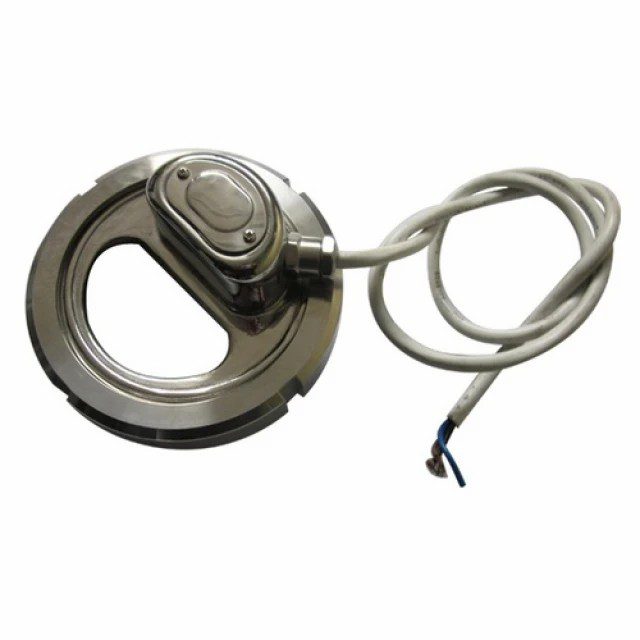
A sight glass with light is the same hygienic viewing assembly plus an integrated illumination unit — normally an LED lamp — mounted so its beam enters the vessel and lights the product rather than reflecting off the glass into the operator’s eye. Gencel’s design combines a stainless steel sight glass body, a borosilicate glass window and a built-in LED module in a sanitary union configuration, so operators can read internal conditions in tanks that receive no ambient light at all. Buyers often search for it as a sight glass with LED light, and that is exactly what the modern version is — an LED module has replaced the hot filament lamps used on older hygienic tank sight glass designs.
The engineering point people miss is that a tank sight glass with light is a two-port concept even when it looks like one part. Light has to enter the vessel from a position that does not glare back through the viewing window. That is why most well-designed installations either use a lamp offset from the viewing axis or pair a viewing sight glass on one side of the vessel with a light unit on the other. Ordering a single unit and expecting perfect visibility straight down the beam is the most common source of complaints — and it is a layout mistake, not a product fault.
Material, size range, connection ends, surface finish and certification are identical to the plain version: SS304 or SS316L, 1/2″–12″ (DN10–DN300), clamp / weld / thread / weld-thread, Ra 0.8 μm–0.5 μm at 320/240 grit, made under 3A and ISO 9001. What changes is the added lamp housing, its seal, its power feed and its ingress protection.
| Criterion | Standard sight glass | Sight glass with light |
| Core function | Provides a sealed window into the line or vessel | Provides the window plus controlled internal illumination |
| Visibility in a dark closed tank | Poor — depends on an external torch, which reflects off the glass | Good — the LED lights the product, not the operator’s reflection |
| Components to maintain | Body, glass, gasket, retaining ring | Body, glass, gasket, ring, lamp housing, lamp seal, wiring |
| Utilities needed | None | Low-voltage electrical feed and a switch or timer |
| Typical unit cost | Lower — the baseline part | Higher — lamp module, housing and wiring add cost |
| Installation effort | Mechanical only | Mechanical plus electrical termination and IP verification |
| CIP and washdown exposure | One sealed interface | Two sealed interfaces — glass seal and lamp seal |
| Best fit | Inline flow checks, transparent media, well-lit locations | Closed tanks, fermenters, dark or opaque product, night shifts |
| Material and finish | SS304 / SS316L, Ra 0.8–0.5 μm, 320/240 grit | SS304 / SS316L, Ra 0.8–0.5 μm, 320/240 grit |
| Certification | 3A, ISO 9001 | 3A, ISO 9001 |
Read that table as a decision about the vessel, not about the fitting. Sight glass vs sight glass with light is really a question of how much light the process environment already supplies. If ambient light reaches the product, the plain unit wins on cost and simplicity. If it does not, the illuminated unit is the only version that actually does the job you bought it for.
Not sure which version your tank needs? Send us the vessel drawing, port sizes and product type. Our engineers will confirm the viewing and lighting layout before you order.
Review Gencel sight glass with light specifications — SS304 / SS316L, DN10–DN300, 3A certified.
| Parameter | Gencel supply range |
| Body material | SS304 / SS316L (1.4301 / 1.4404) |
| Window material | Borosilicate glass |
| Size range | 1/2″–12″, DN10–DN300 |
| Connection ends | Clamp, weld, thread, weld-thread |
| Surface finish | Ra 0.8 μm–0.5 μm, 320/240 grit polishing |
| Dimensional standards | 3A, SMS, IDF, RJT, DIN, ISO |
| Certificates | 3A, ISO 9001 |
| Illumination | Integrated LED module on the sight glass with light version |
| Customisation | Sizes, connection types and lighting options built to project spec |
| Pressure and temperature | Derated by size, gasket and glass — request the P–T data for your exact configuration |
| Quality control | 100% finished-product inspection before shipment |
| Warranty | 6 months after shipment, with free replacement of defective parts |
| Lead time | Stock items 3–5 days; large volume orders typically 30–60 days |
| OEM / ODM | Accepted, trade secret confidentiality agreement available |
One honest caveat on ratings. A headline pressure figure means nothing without its conditions. On any sight glass the limiting element is the glass and the elastomer, not the stainless body, and the allowable pressure falls as diameter and temperature rise. Ask for the pressure–temperature data for your exact size, glass thickness and gasket, and confirm the mating ferrules are rated to the same value. Any supplier who quotes a single number for the whole size range has not done that work.
● Inline flow and colour checks. A union type sight glass in a pipe run under normal plant lighting shows flow, air entrainment and colour change without any lamp.
● Transparent or light-coloured media. Water, brine, clear juice, wine, purified water and similar products transmit ambient light well enough to read.
● Cost-sensitive multi-point installations. When a skid needs eight viewing points and only two are inside dark vessels, fitting illuminated units everywhere wastes budget.
● Zones where electrical work is unwelcome. Fewer cable runs in a washdown area means fewer ingress paths and a simpler validation file.
● Frequent glass replacement duty. Abrasive slurries scratch windows; a plain unit is faster and cheaper to rebuild.
● Closed and insulated tanks. Mixing vessels, blending tanks and storage silos receive no ambient light through a manhole once the lid is shut.
● Fermentation and biotech vessels. Operators need to judge foam height, cell density and headspace behaviour without breaking containment.
● Dark or opaque product. Chocolate, sauces, cosmetic emulsions, syrups and dark beer absorb light instead of transmitting it.
● CIP verification. An illuminated view confirms that spray coverage is actually reaching the tank wall rather than assuming it from a flow meter.
● Night shifts and unmanned areas. A permanent lamp removes the torch-and-two-hands routine, which is also a safety improvement on platforms and ladders.
● Regulated visual inspection steps. Where a batch record requires a documented visual check, consistent illumination makes the observation repeatable rather than operator-dependent.
In practice the payback is rarely in the fitting itself — it is in avoided batch loss and shorter troubleshooting. One prevented over-foaming incident on a fermenter usually costs more than the entire lighting upgrade for the vessel.
Mount the viewing unit at the level you actually need to observe — normally around the working liquid level and the agitator zone. On a stainless steel sight glass with light installation, offset the lamp port from the viewing port so the beam crosses the field of view instead of shining straight back at the observer.
Both versions must be installed so the wetted cavity self-drains. A horizontal sight glass on a vertical tank wall will hold residue behind the glass if the gasket seat forms a ledge, which is exactly the crevice a 3A design is meant to avoid. Confirm the gasket sits flush and the internal profile is continuous.
The lamp needs a low-voltage supply, a rated cable gland and an ingress rating that survives your washdown regime. Specify the voltage, the IP class and whether the area is classified before the order is placed. Retrofitting a compliant gland after installation is far more disruptive than specifying it up front.
LEDs run cool compared with older filament lamps, but the lamp still sits against a glass window that may be exposed to hot CIP water on the other side. Avoid switching the lamp on during a hot cleaning cycle, and confirm the maximum surface temperature with the supplier if your CIP runs above 80 °C.
A plain sight glass has one consumable set: gasket and glass. A sanitary sight glass with light has that plus the lamp seal and the lamp itself. Plan maintenance accordingly.
● Gaskets. Replace at planned intervals, not on failure. Match the elastomer for the media and CIP temperature — the gasket usually sets the temperature limit of the assembly.
● Glass. Inspect for scratching, chemical etching and edge chips at every shutdown. A scratched window scatters light and defeats the purpose of an illuminated unit.
● Lamp seal. Check for moisture ingress and discoloration. This is the component that decides whether the lamp survives five years or five months.
● Surface condition. Keep the Ra 0.8–0.5 μm finish intact; aggressive abrasives create micro-roughness that holds soil.
● Spares standardisation. Ordering both versions from one manufacturer against one ferrule standard keeps gaskets and glass interchangeable across the plant.
Total cost of ownership normally favours the illuminated unit only where visibility has operational value. Where it does, the added spend is small against downtime. Where it does not, you are maintaining a lamp seal for no return — which is a good reason to mix both types deliberately across a plant rather than standardising on one.
Print this table, fill in the middle column and send it with your enquiry. It is the same checklist our engineers use to confirm a sight glass with light order, and completing it removes most of the back-and-forth from quotation.
| Checkpoint | Your requirement | Why it matters | Confirmed |
| Application: pipeline or vessel | Decides inline union type versus tank-mounted format | ||
| Ambient light at the viewing point | The single factor that justifies the illuminated version | ||
| Product opacity and colour | Opaque media need light entering from an offset port | ||
| Size and dimensional standard | 1/2″–12″ DN10–DN300 across 3A, SMS, IDF, RJT, DIN, ISO | ||
| Material grade | SS304 for general duty, SS316L for chlorides and pharma | ||
| Connection end type | Clamp, weld, thread or weld-thread must match the line | ||
| Surface finish required | Ra 0.8–0.5 μm supports CIP and reduces product adhesion | ||
| Operating and CIP temperature | Sets gasket choice and lamp switching rules | ||
| Working pressure and test pressure | Needed to issue the correct pressure–temperature data | ||
| Lamp voltage and IP rating | Must match plant standards and washdown severity | ||
| Certificates and documentation | 3A, ISO 9001 and material certificates for approval files | ||
| Quantity, spares and lead time | Stock 3–5 days; volume production typically 30–60 days |
Send us your completed worksheet and we will return a written specification, dimensional confirmation, certificate list and quotation for your project.
Contact the Gencel Stainless Steel team for drawings, samples and OEM support.
Once the technical choice is made, supplier evaluation decides whether the part arrives fit for purpose. A credible sight glass with light manufacturer should be able to produce all of the following without hesitation — and a trading-only sight glass with light supplier usually cannot.
● Certification evidence. 3A and ISO 9001 documents, plus material certificates traceable to heat numbers on request.
● A drawing before production. Dimensioned drawings for approval, not a catalogue photo, especially on OEM and non-standard sizes.
● Pressure–temperature data. Real derating information for your size and gasket combination rather than one headline number.
● Inspection and warranty terms. Gencel inspects 100% of finished products before shipment and provides a 6-month warranty with free replacement of defective parts.
● A full fitting range. Sourcing sight glasses alongside the rest of your sanitary pipe fitting range keeps ferrule standards, finishes and gasket sizes consistent.
● Export track record. Gencel supplies the United States, Southeast Asia, Europe and South America, with T/T and L/C payment terms and export plywood packing.
If a viewing point sits at a change of direction rather than a straight run, look at the geometry options too — our guide to the cross type sight glass explains where a four-way body gives a better view than an inline unit, and the same body can be supplied with a light port.
It is a sanitary tank inspection device that combines a stainless steel viewing window with an integrated LED lamp, so operators can monitor level, mixing and product condition inside a closed vessel.
A plain sight glass only provides the window. A sight glass with light adds controlled internal illumination, a power feed and a second sealed interface, making dark or opaque contents readable.
No. Where ambient light reaches the product — clear media, inline runs, lit areas — a standard sight glass is cheaper and simpler. Illumination is justified when the vessel is dark or product opaque.
Gencel supplies SS304 and SS316L (1.4301 / 1.4404) bodies from 1/2″ to 12″, DN10 to DN300, with clamp, weld, thread or weld-thread ends and Ra 0.8–0.5 μm polished surfaces.
Yes. Bodies are polished to Ra 0.8–0.5 μm and built under 3A and ISO 9001. Match the gasket to your CIP chemistry and temperature, and avoid running the lamp during hot cleaning cycles.
Usually a layout issue. If the lamp shines straight along the viewing axis, light reflects off the glass. Offset the light port from the viewing port so the beam crosses the field of view.
Ratings depend on size, glass thickness, gasket and temperature, and derate as diameter rises. Send your operating conditions and we will issue pressure–temperature data for that exact configuration.
Yes. Sizes, connection types, lighting options, marking and packaging are all customisable, drawings are approved before production, and a trade secret confidentiality agreement can be signed.
Stock items ship in 3–5 days; large volume orders normally take 30–60 days. Payment is by T/T or L/C, with 100% finished-product inspection before shipment.
Sight glass vs sight glass with light comes down to one honest question: does the viewing point already have light? For inline checks on transparent media, the plain unit is the correct engineering and commercial answer. For closed tanks, fermenters, dark product and documented visual inspections, the illuminated version is the only one that delivers what the window was installed for.
Specify the dimensional standard first, choose SS316L wherever chlorides or aggressive cleaning are present, request pressure–temperature data instead of a headline number, and design the lamp port offset from the viewing port. Get those four decisions right and the sight glass becomes a genuinely useful instrument rather than a dark circle of glass in the tank wall.
Ready to specify your sight glass? Tell us the vessel type, product, size, CIP temperature and lamp voltage, and we will recommend the right body, grade, glass and gasket combination.
Request a quote from Gencel Stainless Steel — we reply within one business day.
● What Is a Cross Type Sight Glass and How Does It Work?
● The Advantages of Stainless Steel Cross Type Sight Glasses
● Cross Type Sight Glass Applications in Cosmetic and Biotechnology Industries



STAINLESS STEEL&GENCEL;
Privacy Policy | SiteMap
Copyright GENCEL STAINLESS STEEL CO.,LIMITED
 Optimized by Seraphinite Accelerator