- Whatsapp: 8613738300923
- Email: [email protected]


Yes — a Stainless Steel Sheet Plate can be laser cut, bent and welded, and most industrial stainless fabrications are built exactly that way. The qualification matters more than the yes: each process has thickness limits, tooling requirements and metallurgical rules, and stainless is less forgiving than mild steel on all three.
This guide covers what the shop floor needs to know: assist gas selection for laser cutting, minimum bend radii and springback, filler metal and purging for welding, and the inspection steps that catch problems before the part is installed.

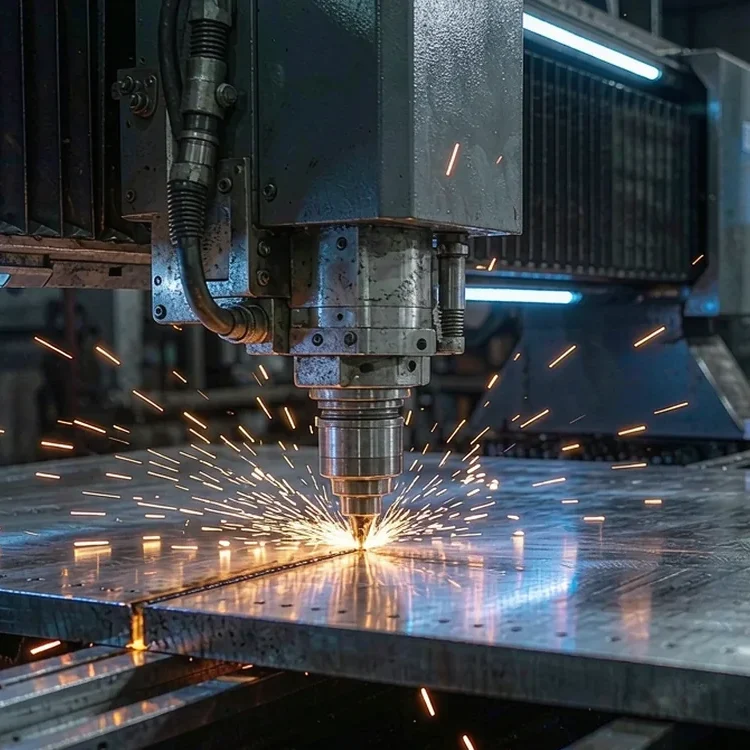
Fibre lasers are now the default for stainless. CO₂ machines still exist for thin gauge, but fibre gives faster cutting, lower running cost and better results on reflective material.
Nitrogen produces a clean, oxide-free, weldable edge. It is the right choice for any part that will be welded or left unpainted, and it is the standard for hygienic equipment.
Oxygen cuts faster and thicker but leaves an oxidised, darker edge that must be ground or pickled before welding.
Compressed air sits in between and is common for non-critical parts where edge appearance does not matter.
A modern 6 kW fibre laser will cut 304 or 316 plate up to roughly 20–25 mm, but the economic range is lower. Above about 12–15 mm, cut speed drops sharply, dross becomes harder to control and the heat-affected zone widens. For heavy sections, waterjet or plasma is often the better process, particularly where edge squareness and a metallurgically clean face are required for welding.
Laser cutting holds roughly ±0.1–0.2 mm on thin sheet and rather more on thick plate, depending on machine, nesting and material stress. Residual stress in the plate is released as the cut removes material, so long slender parts can bow. Cut a test piece from the same batch before committing to a nest of tight-tolerance parts.
Nitrogen-cut edges are usually weld-ready. Oxygen-cut edges and any cut on 316L exposed to chlorides should be cleaned and passivated. Do not use a carbon steel wire brush for de-drossing — it embeds iron and creates rust sites.
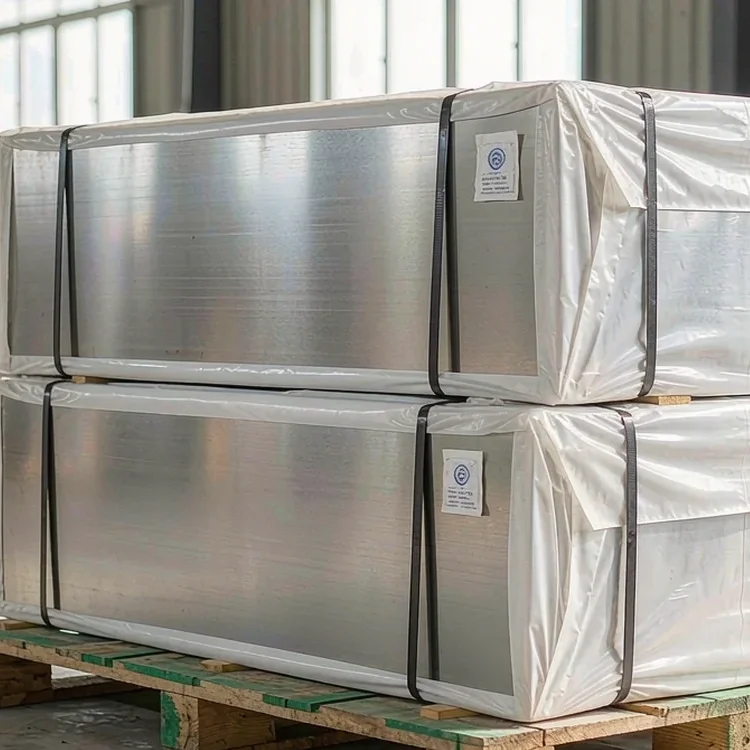
GENCEL supplies laser-cut blanks and formed components in 304/304L and 316/316L, with mill certificates and edge protection for export packing.
Stainless work-hardens, so bending needs more force and produces more springback than mild steel. Three variables decide whether the bend succeeds, and they apply to every Stainless Steel Sheet Plate that goes through a press brake.
As a rule of thumb for annealed 304 and 316 sheet, the inside bend radius should be at least 1 × thickness for 2B sheet and 1.5 × thickness where the bend line runs across the rolling direction and the part is highly stressed. Tight radii are possible with the right tooling, but the risk of outside-fibre cracking rises quickly.
| Thickness | Practical inside radius (annealed) | Notes |
| 1.0 mm | 1.0 mm | Standard V-tooling, minor springback |
| 2.0 mm | 2.0–3.0 mm | Check bend line direction against rolling direction |
| 3.0 mm | 3.0–4.5 mm | Higher tonnage; radius gauges recommended |
| 6.0 mm | 6.0–9.0 mm | Press brake tooling and crowning matter; consider hot forming |
Expect 2–5° of springback on stainless, more on thin 2B sheet and less on thick plate. Compensate in the program rather than in the tooling where possible, and always run a first-off check before a batch.
Bending across the rolling direction (bend line perpendicular to rolling) gives better results; bending parallel to it increases the risk of edge cracking, particularly at tight radii. If the part must bend along the rolling direction, increase the radius or specify a softer, fully annealed condition.
Stainless can be TIG, MIG, laser or plasma welded. The process matters less than three fundamentals: filler selection, heat input, and shielding.
304 / 304L — ER308L is the default. Use ER308L rather than 308 to keep carbon low and reduce sensitisation.
316 / 316L — ER316L, which matches the molybdenum content and preserves chloride resistance in the weld.
Dissimilar joints — a higher-alloy filler (for example 309L for stainless to carbon steel) is normally specified. Get this in the procedure, not from the welder’s habit.
High heat input causes distortion, carbide precipitation and heavy discolouration. Keep stringer beads, control interpass temperature, and avoid weaving wide passes. For 316L in corrosive service, staying below the sensitisation range matters as much as the filler choice.
Any weld on a Stainless Steel Sheet Plate that will see a corrosive or hygienic service needs an inert back purge — argon or forming gas. Without it, the root oxidises, loses chromium and becomes the first place to corrode. This is the single most common cause of weld-related failures we see in returned samples.
Remove heat tint by pickling, brushing with a stainless-only brush, or electrochemical cleaning, then passivate. Heat tint is not cosmetic: it is a chromium-depleted oxide that will pit in chloride service.
Laser cut, bend, weld — in that order, with the tolerances allowed in the right places:
Cut with a kerf allowance and leave bend reliefs where two bends meet, otherwise the corners tear.
Bend after any stress-relieving operation, not before. If the part needs annealing, do it before final forming.
Design the weld joint so the gap is controlled: a butt joint with zero gap on thin sheet is difficult to purge and easy to burn through.
Allow for weld shrinkage of roughly 1 mm per metre on typical fillet welds, more on heavy sections.
Where the plate connects to pipework, the transition details matter as much as the plate itself. Our range of butt welded pipe fittings and stainless steel flanges is dimensioned to match common plate thicknesses, which avoids the thickness step that concentrates stress at nozzle welds.
Dimensional check against the drawing, including bend angle and flatness.
Visual weld inspection for undercut, spatter, incomplete fusion and heat tint.
Dye penetrant on critical welds; radiography for pressure-retaining joints where the specification requires it.
Iron contamination test (ferroxyl) on hygienic surfaces after fabrication.
Surface roughness check where cleanability is specified.
Cracks at bend lines and corrosion at weld roots are the two failure modes that appear most often in service. Both are visible at inspection if the inspection is defined in advance — which is why a written procedure and a first-off approval are worth more than extra polishing at the end. For a deeper look at weld defects and their causes, see our article on common butt weld fitting welding defects.
A Stainless Steel Sheet Plate is highly machinable by laser, press brake and welding torch. The limits are practical, not fundamental: nitrogen for clean laser edges, radius of at least one thickness for bends, matching filler plus a back purge for welds, and pickling and passivation afterwards.
Get those four things into the work instruction and stainless behaves predictably. Skip them and the material takes the blame for a process problem. If you are specifying a fabricated assembly and want the plate, fittings and flanges from one source with one quality record, our team can quote the complete package.
Upload your plate details, bend lines and weld symbols. You will receive a manufacturability review covering radius, tooling, filler and inspection.
Can a fibre laser cut 20 mm stainless steel plate?
Yes, with a high-power machine (typically 12 kW and above) and the right assist gas. Cut quality and speed fall significantly at that thickness, and the heat-affected zone is wider. For pressure-retaining edges, waterjet is often preferred above 15 mm.
Why do my stainless bends crack?
Usually a radius that is too tight for the thickness, a bend line running parallel to the rolling direction, or a work-hardened (cold rolled, unannealed) condition. Increase the radius, rotate the part in the nest, or specify annealed material.
Do I need to pickle welds on 304?
For any corrosive or hygienic service, yes. Heat tint is a chromium-depleted oxide; removing it and passivating restores the surface’s corrosion resistance. Mechanically removing tint with a contaminated brush makes the problem worse.
What filler should I use for 316L plate?
ER316L for matching composition and chloride resistance. Do not substitute ER308L to save cost on a 316L job — the weld will be the weakest point in a chloride environment.
How much distortion should I expect when welding 3 mm sheet?
Without control, several millimetres over a metre is common. With balanced welding sequence, tacking, back purge and restrained fixtures, it can be held to around 1 mm per metre. Thin gauge below 1.5 mm is considerably harder.
Can stainless plate be bent after laser cutting without annealing?
In most cases yes. Laser cutting leaves a narrow heat-affected edge, but the bulk of the plate is unaffected. If the bend line sits directly on a laser-cut edge, deburr it first, and allow a slightly larger radius.



STAINLESS STEEL&GENCEL;
Privacy Policy | SiteMap
Copyright GENCEL STAINLESS STEEL CO.,LIMITED
 Optimized by Seraphinite Accelerator