- Whatsapp: 8613738300923
- Email: [email protected]


Buyers often treat “hot rolled” and “cold rolled” as a price label on a quotation. In practice they describe two different manufacturing routes that produce a Stainless Steel Sheet Plate with different surface, tolerance, flatness, residual stress and forming behaviour. Choosing the wrong one shows up later as wavy laser-cut parts, polishing rework, or a bend line that cracks.
This article compares the two routes from a purchasing and fabrication point of view: how each is made, what the finish designations mean, where the tolerances differ, and which one to specify for tanks, panels, flanges and formed components.

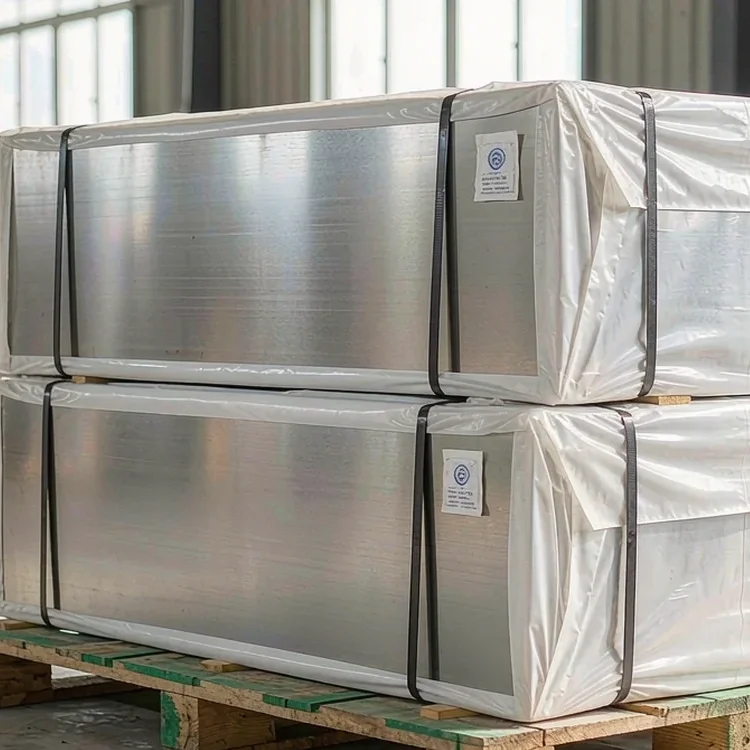
Hot rolled plate is produced above the recrystallisation temperature, is annealed and pickled, and normally carries a No.1 grey finish. It is the economical choice above about 3 mm. Cold rolled sheet is reduced at room temperature, annealed and skin passed, giving a bright 2B or BA finish, tighter tolerances and better flatness — but it is normally available only up to around 3 mm and costs more per tonne.
| Factor | Hot rolled (No.1) | Cold rolled (2B / BA) |
| Typical thickness | 3–100 mm plate, some 2.5 mm | 0.3–3.0 mm sheet |
| Surface | Grey, matte, pickled; may show scale or grinding marks | Bright, smooth, reflective; uniform colour |
| Thickness tolerance | Wider band, typically ±0.3 mm or more on thin plate | Tighter, often ±0.05–0.10 mm on thin gauge |
| Flatness | Good but variable; levelling may be required | Better; skin pass improves flatness and surface |
| Typical use | Tank shells, flange blanks, structural plate, wear plate | Hygienic equipment, panels, enclosures, formed parts |
Slabs are reheated to roughly 1,150–1,250 °C — well above the recrystallisation temperature — and rolled down to thickness while the metal is soft. The oxide scale that forms at high temperature is removed by pickling in nitric-hydrofluoric acid, which gives the characteristic No.1 finish. The result is a Stainless Steel Sheet Plate that is soft, weldable and inexpensive per tonne, at the cost of surface consistency and gauge control. Because the final passes happen at high temperature, the plate is fully recrystallised and relatively soft, but it also carries a slight crown and residual stress from the rolling and cooling cycle.
Hot rolled coil is pickled, then rolled again at room temperature with heavy reduction. The steel work-hardens, so the strip is annealed to restore ductility — either in a continuous bright annealing line (BA) or in a bell furnace followed by pickling and a final skin pass (2B). The skin pass of 0.5–1% is what gives 2B sheet its flat, consistent surface and controlled roughness.
No.1 — hot rolled, annealed and pickled. Matte grey. The default for plate that will be machined, welded or painted.
2D — cold rolled, annealed and pickled, no skin pass. Dull, used where forming is more important than appearance.
2B — cold rolled, annealed, pickled and skin passed. The most common Stainless Steel Sheet Plate finish in industry: bright, smooth, easy to clean.
BA — bright annealed in a controlled atmosphere, no pickling. Mirror-like and preferred for hygienic and decorative work.
No.4 / hairline — mechanical polishing over 2B, giving a directional brushed look.
The finish is not cosmetic only. Roughness affects cleanability and bacterial retention in food equipment, and it affects how easily a passive film re-forms after welding. If the part will be pickled or passivated after fabrication, starting from No.1 is usually acceptable; if it will be used as-delivered, specify 2B or BA.
Send the part list and end use. GENCEL will confirm No.1, 2B or BA, the applicable standard, and the thickness range available from stock.
Cold rolling raises yield strength and hardness while reducing elongation. A 2B sheet in 304 may show a yield strength noticeably higher than the annealed No.1 plate of the same grade, and it will spring back more during bending. That is helpful for stiffness-critical panels and unhelpful when a tight bend radius is required. For a formed Stainless Steel Sheet Plate, this is the single most common reason a bend that worked in mild steel fails in stainless.
Cold rolled sheet also carries more residual stress through the thickness, which is released when a part is laser cut or machined. Long, narrow parts can bow after cutting. Hot rolled plate is softer and more forgiving in this respect, but its crown and residual stress can cause similar movement after heavy machining.
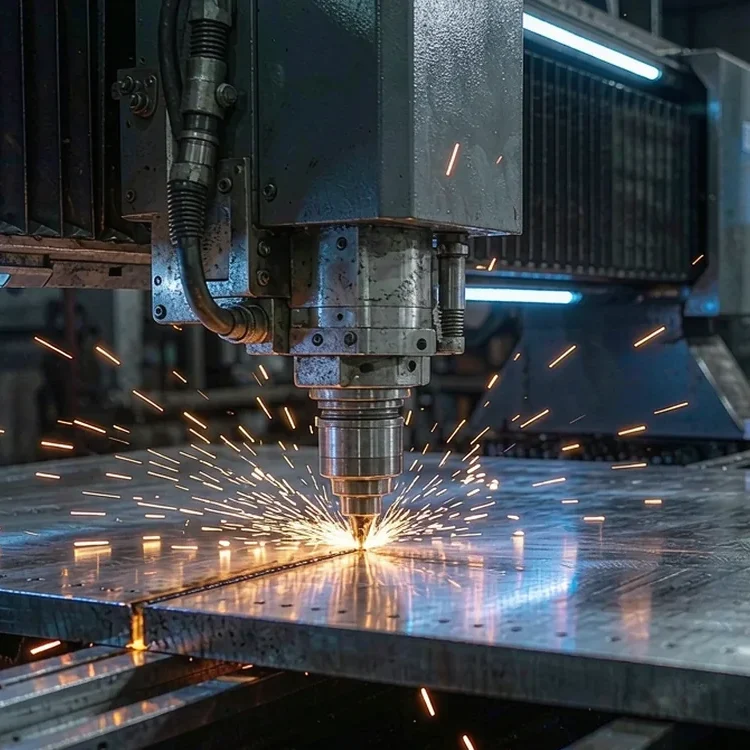
Both routes laser cut well. Cold rolled sheet cuts faster and holds tighter kerf on thin gauge; hot rolled plate above 12 mm is often cut by plasma or waterjet where edge squareness and heat-affected zone matter.
Cold rolled 2B sheet needs a slightly larger minimum bend radius relative to thickness because of its higher yield strength. Hot rolled plate bends more easily but shows a rougher outside surface, and the mill scale can crack along the bend line if the radius is tight.
Hot rolled plate is generally easier to weld because it is softer and less springy during fit-up. Cold rolled thin sheet demands tighter fit-up and lower heat input. In both cases the weld and heat-affected zone must be cleaned and passivated to restore corrosion resistance — a point we cover in our guide to common butt weld fitting welding defects.
Starting from 2B saves polishing time: the surface is already uniform, so a No.4 or mirror finish needs fewer passes. Starting from No.1 usually means grinding out scale first, which adds labour and can change the effective wall thickness.
Cold rolled carries a premium per tonne, but it can reduce total cost by cutting polishing and straightening operations.
Thickness availability overlaps around 2.5–3 mm. Below that, cold rolled is standard; above it, hot rolled.
Width matters. Cold rolled sheet is often limited to 1,250 or 1,500 mm; wide plate is a hot rolled product.
“2B finish” is not a tolerance. Specify the standard and tolerance class separately, or the delivered gauge may not match the drawing.
When the plate is part of a piping assembly, the finish and route also affect how it joins to flanges and fittings. Our stainless steel sheet and plate range is supplied in grades and thicknesses that match the fittings and flanges we produce, so a single purchase order can cover the whole fabrication.
Start from the thickness the design needs. Above 3 mm, hot rolled is usually the practical answer.
Ask what the surface must do: be cleaned, be seen, be painted, or be machined away. That decides No.1 versus 2B or BA.
Check the tolerance class against your fabrication method. Laser cutting and precision forming need the tighter cold rolled band.
Consider post-fabrication processing. If the part will be pickled and passivated, a No.1 starting surface is normally fine.
Confirm availability in the exact width, length and finish before fixing a delivery date.
Hot rolled and cold rolled are not quality grades — they are process routes with different strengths. Hot rolled gives you thickness, width and cost efficiency with a serviceable pickled surface. Cold rolled gives you dimensional accuracy, flatness and a clean bright surface that reduces finishing work.
For most industrial projects the decision is straightforward: plate above 3 mm in No.1 for structure and pressure, 2B sheet below 3 mm for equipment and appearance. The expensive mistakes happen in the overlap zone, where a buyer substitutes one route for the other to save a few percent and then pays for it in rework. If you are also deciding on the grade itself, our comparison of 316 and 304 stainless steel covers where the extra molybdenum is worth paying for.
Send your specification and we will quote both routes with finish, tolerance class, mill certificate and lead time — so the comparison is like for like.
Is cold rolled stainless steel stronger than hot rolled?
Usually yes in yield strength, because cold reduction work-hardens the surface and the final skin pass leaves some residual stress. The difference is modest after annealing, but it is enough to change springback and minimum bend radius. Corrosion resistance is essentially the same for the same grade and finish quality.
Can I use hot rolled plate where the drawing says 2B?
Only if you are willing to machine or polish the surface to the required roughness and accept the wider thickness tolerance. No.1 and 2B are different delivery conditions, not interchangeable labels. On hygienic equipment, substituting No.1 for 2B usually fails inspection.
Why is cold rolled sheet limited to about 3 mm?
Cold reduction requires far more rolling force per pass, and the work rolls can only deliver so much before the strip work-hardens beyond what annealing can economically recover. Above roughly 3 mm, hot rolling is both cheaper and technically more practical.
Does the rolling route affect weldability?
Not the metallurgy, but definitely the practice. Cold rolled thin Stainless Steel Sheet Plate is less forgiving on fit-up and heat input, while hot rolled plate is easier to align but may need the scale removed before welding to avoid inclusions.
Which finish should I choose for a food processing tank?
2B is the usual minimum, with BA or a mechanically polished finish for product-contact surfaces that must be visually clean. Roughness, weld quality and crevice-free design matter more than the finish name alone.
How do I check that I received the route I ordered?
Ask for the mill certificate, which states the delivery condition, and check the surface and tolerance yourself. No.1 plate is grey and matte with a pickled texture; 2B is bright and reflective with a uniform skin-passed surface. A thickness check with a calibrated micrometer confirms the tolerance class.



STAINLESS STEEL&GENCEL;
Privacy Policy | SiteMap
Copyright GENCEL STAINLESS STEEL CO.,LIMITED
 Optimized by Seraphinite Accelerator