- Whatsapp: 8613738300923
- Email: [email protected]


Written by the Gencel Stainless Steel Engineering Team — manufacturer of 3A and ISO 9001 certified sanitary pipe fittings for food, beverage, dairy, pharmaceutical and fine chemical processing lines.
A Y type tee is one of those fittings that looks simple in a catalog and then decides whether a hygienic line cleans properly for the next ten years. The branch geometry controls turbulence, pressure drop, dead leg length and CIP coverage, and it is usually the first thing an auditor asks about after a failed swab test. This guide explains what a sanitary Y type tee actually is, how it differs from a standard tee and a welded U type tee, which specifications belong in a purchase order, and how to write an RFQ that comes back priced correctly the first time.
A sanitary Y type tee — also called a sanitary wye, a lateral tee or simply a Y tee — is a hygienic stainless steel fitting in which one inlet divides into two outlets that leave the junction at an angle instead of turning a sharp 90 degrees. Instead of the perpendicular branch of a standard tee, the two legs form the arms of a Y. Depending on the standard and the manufacturer’s drawing, that branch angle commonly falls in the 30° to 45° range, and the internal transition from run to branch is radiused rather than square.
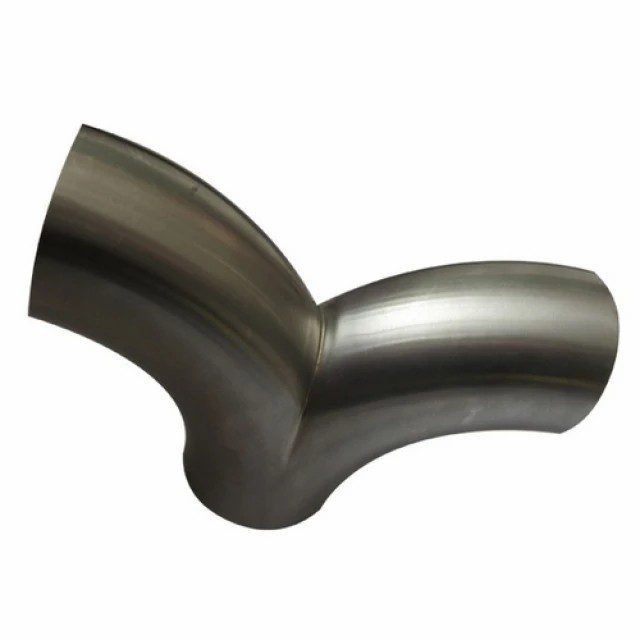
Because the flow changes direction gradually, a Y type tee produces less turbulence and a lower pressure drop than a straight tee of the same bore. Less turbulence means less product hold-up at the junction, gentler handling of shear-sensitive liquids, and better CIP (Clean-in-Place) coverage, because cleaning solution is not forced to turn a sharp corner to reach the branch.
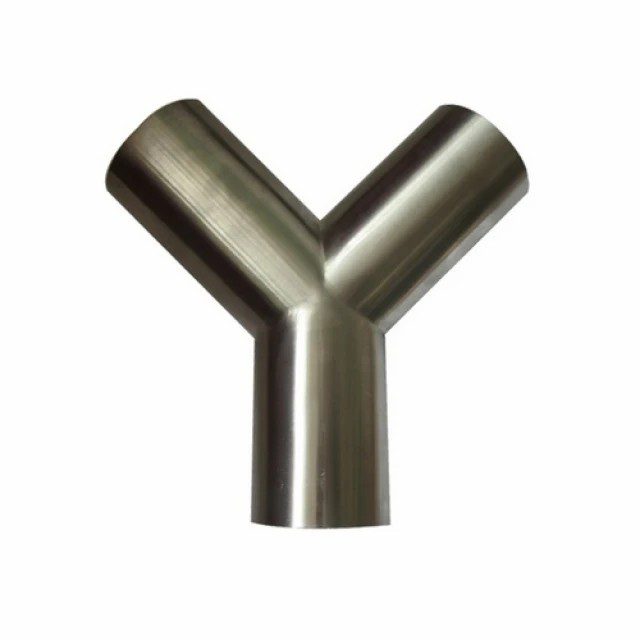
Naming is worth clarifying before you send an RFQ. Some suppliers use “Y type tee” for the full-body drawn fitting, and use “Y type tee” and “Y tee” interchangeably for a more compact version with a shorter branch stub. Always request the dimension drawing, not only the name, so the branch angle, the run length and the branch length are confirmed in writing before production starts. Gencel builds the sanitary Y type tee to 3A dimensions in clamp, weld and threaded ends for exactly this reason.
In a process line the fitting does more than connect three pipes. Its geometry performs five specific jobs, and understanding them tells you whether this is the right body for your duty:
● Distribution: one main line feeds two downstream units — for example a single pasteuriser feeding two fillers, or one CIP supply line serving two circuits.
● Gentle merging: two inlet streams combine into one common outlet. The angled junction reduces shear, which protects emulsions, cultured dairy products, juices with pulp and protein solutions that break under aggressive mixing.
● Low-loss direction change: the radiused branch keeps velocity profiles stable, so pumps downstream see a steadier suction condition and consume less energy over a production year.
● Gravity drainage: installed with the branch pointing in the direction of flow and slope, the angled leg drains rather than pooling, which is exactly what hygienic design rules require.
● Cleanable junction: smooth geometry leaves no shadow where product can hide, so CIP cycles finish faster and use less caustic, acid and rinse water.
Buyers usually compare three bodies. They are not interchangeable, and picking the wrong one is a common cause of rework during commissioning.
| Fitting | Branch geometry | Typical duty | Cleaning behaviour |
|---|---|---|---|
| Standard straight tee | 90° perpendicular branch | Utility lines, water, non-critical take-offs | Sharp corner needs higher CIP velocity to scour |
| Y type tee | Angled branch, commonly 30°–45° | Splitting or merging product flow in hygienic lines | Excellent — low turbulence, short effective dead leg |
| Welded U type tee | 180° U-shaped channel with a branch port | Joining parallel runs, CIP return loops, tight vertical spaces | Good — continuous sweep, but larger footprint in one plane |
If your piping problem is joining two parallel runs or building a CIP return loop rather than splitting product, specify a welded U type tee instead; both bodies are made on the same certified production line, so mixed orders ship together.
Not Sure Which Tee Your Line Needs?
Tell us the flow direction, product viscosity and cleaning regime — Gencel engineers will confirm the body before you order.
When you compare quotations, the differences that decide service life are the material grade, the branch angle and dimensions, the internal surface finish, the end connection combination and the standard the fitting is built to. Gencel manufactures every Y type tee from certified stainless steel stock, then inspects 100% of production before shipment.
| Specification | Value |
|---|---|
| Product name | Sanitary Y type tee / Y tee |
| Material | SS304 / SS316L (EN 1.4301 / 1.4404) |
| Size range | 1/2″–12″ (DN10–DN300) |
| Connection ends | Clamp / butt-weld / thread / weld-thread |
| Inner & outer surface | Ra 0.8 μm–0.5 μm, 240/320 grit polishing |
| Standards | 3A, SMS, IDF, RJT, DIN, ISO |
| Certificates | 3A, ISO 9001:2000, EN 10204 3.1 available |
| Gasket options | EPDM, silicone, PTFE, Viton (FKM) |
| Delivery | Stock 3–5 days / bulk production 30–60 days |
A note on ratings: working pressure is not a single number printed on a fitting. Allowable pressure derates as temperature rises and as diameter increases, and it differs between a clamp joint and an orbital weld. Ask your supplier for the pressure–temperature curve and the gasket temperature limit for the exact size you are buying, rather than accepting a generic catalogue figure.
Because the fitting keeps product moving smoothly and cleans predictably, it appears across most hygienic process industries:
● Food and beverage: distributing sauces, syrups, juices and brine from one transfer line to several packaging machines.
● Dairy: splitting milk, cream and cultured products after pasteurisation, where low shear protects texture and fat structure.
● Brewing and distilling: wort, beer and spirit transfer lines, where oxygen pickup and turbulence at junctions affect flavour stability.
● Pharmaceutical and biotech: purified water, buffer and media distribution; these lines usually specify orbital welds and ASME BPE geometry with documented dead leg limits.
● Cosmetics and personal care: creams, gels and shampoos that are viscous and leave residue in sharp corners.
● Fine and specialty chemicals: 316L bodies handling chlorides, mild acids and solvents, where corrosion resistance drives material choice.
If you are still choosing between branch geometries rather than confirming one, read our side-by-side comparison of the U type tee and the Y type tee before you finalise the specification sheet.
Most quotation delays come from missing information, not from price negotiation. Include these eight data points and you will receive a firm, comparable offer within a day:
● Fitting type and drawing: Y type tee with branch angle and branch length, or your own dimension drawing for a custom body.
● Material grade: choose 316L (1.4404) for high-chloride, acidic or saline products; 304 (1.4301) stays cost-effective for neutral food, beverage and water duties.
● Size: state both systems — inch OD tube size and DN — because 1/2″ to 12″ (DN10 to DN300) maps differently across ISO, DIN and 3A schedules.
● End connections: clamp ends for lines that are stripped regularly, butt-weld ends for permanent hygienic circuits, threaded ends for utility and non-product services.
● Surface finish: specify Ra 0.8 μm or better for product contact; pharmaceutical projects often request Ra 0.5 μm plus electropolishing.
● Standard: confirm 3A, SMS, IDF, RJT, DIN or ISO so clamp ferrules, gaskets and existing spools match your installed base.
● Gasket material: match elastomer chemistry and temperature to your CIP solution — EPDM for caustic, PTFE for high temperature, Viton for oils and fats.
● Quantity, documentation and delivery: piece count, whether you need EN 10204 3.1 certificates, and whether the order ships from stock or on a production schedule.
If you are building a complete line rather than replacing one fitting, it is usually cheaper and lower risk to source tees, elbows, clamps and unions together. Browse the full range of sanitary pipe fittings to keep the same standard, finish and certification across every component.
Even a well-made Y type tee will fail an audit if it is installed badly. Keep these practical points in mind during assembly, and ask your installer to document torque values and gasket batches:
● Keep the slope. Hygienic lines must drain completely; install the fitting so neither leg creates a low point between supports.
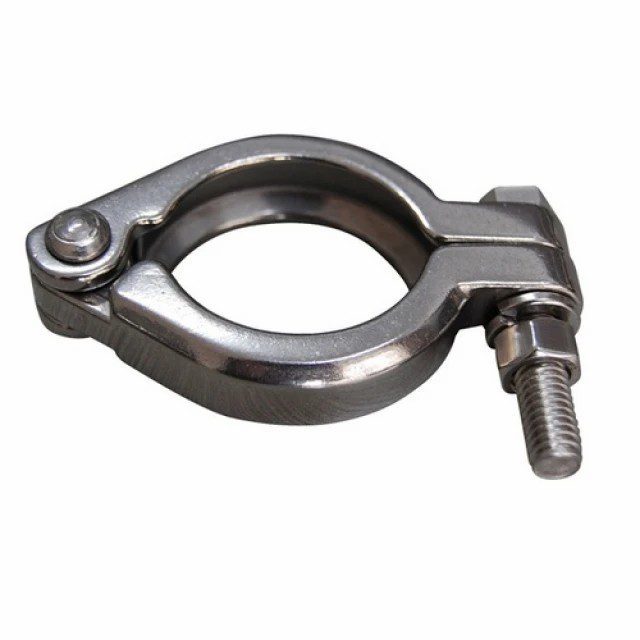
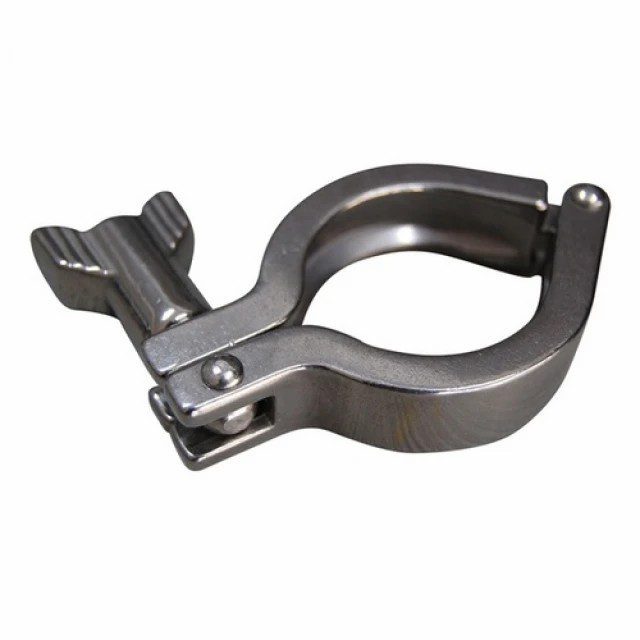
● Match clamp sizes. Mixing ferrule standards is the most common leak cause during commissioning — verify the ferrule face and gasket OD before tightening.
● Avoid over-torque. A crushed gasket extrudes into the bore and creates a cleaning shadow that eventually shows up in microbiological results.
● Orient the branch deliberately. Point the branch in the flow direction for splitting duty, and confirm there is space to remove the clamp without dismantling the run.
● Validate before handover. Riboflavin coverage testing plus a swab or rinse sample at the junction is the cheapest way to prove the design before the first production batch.
More step-by-step detail is available in our guide to installing sanitary pipe fittings, including torque practice and leak testing.
Use this printable checklist before you request a quotation. Suppliers can price from a completed sheet in hours instead of days, and it prevents the specification errors that cause rejected deliveries.
| Checkpoint | Your requirement | Gencel value | Confirmed |
|---|---|---|---|
| Fitting type | Y type tee, 30°–45° branch | ☐ | |
| Stainless steel grade | 304 / 316L (1.4301 / 1.4404) | ☐ | |
| Size (inch / DN) | 1/2″–12″ (DN10–DN300) | ☐ | |
| Branch equal or reducing | Equal / reducing available | ☐ | |
| Connection ends | Clamp / weld / thread / weld-thread | ☐ | |
| Surface finish | Ra 0.8–0.5 μm, 240/320 grit | ☐ | |
| Standard | 3A / SMS / IDF / RJT / DIN / ISO | ☐ | |
| Gasket material | EPDM / silicone / PTFE / Viton | ☐ | |
| Quantity & certificates | EN 10204 3.1 on request | ☐ | |
| Delivery | Stock 3–5 days / bulk 30–60 days | ☐ |
Send the Completed Worksheet — Get a Quote in 24 Hours
Gencel engineers reply with pricing, dimension drawings and the pressure–temperature curve for your size.
A sanitary Y type tee is a hygienic stainless fitting where one inlet splits into two angled outlets, commonly 30°–45°, with a radiused internal junction that keeps product flow smooth and cleanable.
It splits product from one line into two, or merges two streams gently, in food, beverage, dairy, brewing, cosmetic and pharmaceutical processes where low shear and CIP cleaning matter.
A standard tee takes its branch at 90°, creating turbulence and hold-up. A Y type tee takes the branch at an angle, cutting pressure drop and leaving less area for product residue.
Gencel supplies Y type tee sizes from 1/2″ to 12″ (DN10–DN300) in SS304 and SS316L, EN 1.4301 and 1.4404, with EN 10204 3.1 material certificates available on request.
Clamp, butt-weld, thread and weld-thread combinations are all available, so one fitting matches Tri-Clamp assemblies, permanent orbital-welded lines or threaded utility services.
Yes. With Ra 0.8 μm internal polishing and low-dead-leg geometry, it cleans predictably in CIP and SIP cycles; confirm gasket temperature limits before steaming.
Most sanitary Y type tee bodies use a branch between 30° and 45°. Always confirm the exact angle on the dimension drawing, because standards and suppliers vary within that range.
EPDM suits caustic CIP and general food duty, silicone handles wider temperatures, Viton resists fats and oils, and PTFE covers aggressive chemicals and high-temperature service.
Yes. OEM and ODM orders are welcome and we can sign a Trade Secret Confidentiality Agreement. Send your drawing for engineering review and a fast quotation.
Gencel Stainless Steel produces and exports certified hygienic fittings to customers in North America, Europe, Southeast Asia and South America, with 100% inspection before shipment and a six-month warranty after delivery. Tell us the size, grade, end connections and quantity, and we will return drawings and pricing within one working day.
Ready to Price Your Y Type Tee Order?
Stock sizes ship in 3–5 days, bulk production in 30–60 days, with T/T and L/C payment terms.
● U Type Tee vs Y Type Tee: What’s the Real Difference — choose the right branch geometry first.
● Complete Guide to Types of Sanitary Fittings — map every component in your hygienic system.
● How to Install Sanitary Pipe Fittings — a leak-free assembly workflow.
● Troubleshooting Common Problems in Clamped Tee Assemblies — diagnose leaks quickly.
● Common Installation Mistakes to Avoid with Clamped U Type Tees — protect seal integrity.



STAINLESS STEEL&GENCEL;
Privacy Policy | SiteMap
Copyright GENCEL STAINLESS STEEL CO.,LIMITED
 Optimized by Seraphinite Accelerator