- Whatsapp: 8613738300923
- Email: [email protected]


Hydraulic systems are widely used in industrial machinery, construction equipment, agricultural equipment, manufacturing lines, and other applications that rely on pressurized fluid to transmit power. These systems require reliable connections and stable pipe support to maintain operational safety and efficiency. High pressure clamps play an important role in securing hydraulic pipes, supporting tubing assemblies, and reducing movement caused by pressure fluctuations and mechanical vibration.
Unlike standard pipe clamps, high pressure clamps are designed for demanding operating conditions where mechanical strength, fastening stability, and material durability are essential. Selecting suitable clamps helps protect hydraulic pipelines, reduce the risk of connection problems, and support long-term system performance.
Understanding why high pressure clamps are important in hydraulic systems can help equipment manufacturers, engineers, maintenance teams, and purchasing professionals make better component selection decisions.
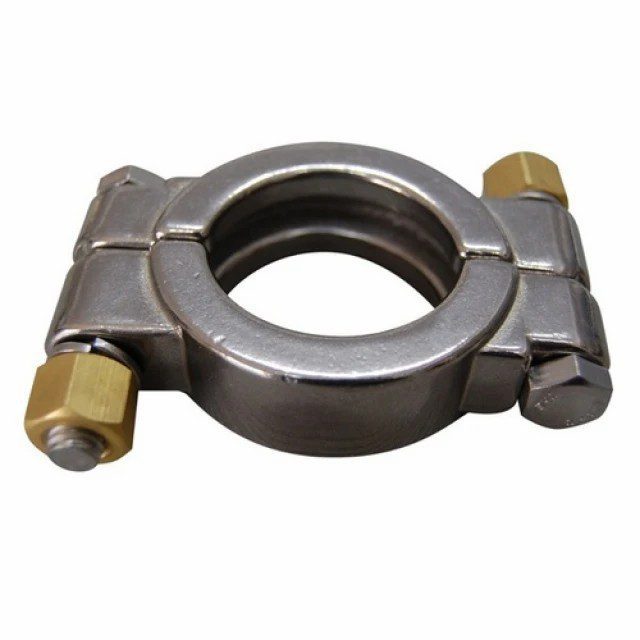
Hydraulic systems often operate under high pressure, and their pipelines must remain properly positioned during operation. Unsupported or poorly secured pipes may move excessively due to fluid flow, equipment vibration, or mechanical movement.
High pressure clamps help secure hydraulic pipes and tubing to equipment frames, brackets, and structural supports. They maintain pipeline alignment and reduce unnecessary movement during operation.
Proper pipe support is particularly important in construction machinery, industrial hydraulic equipment, and mobile hydraulic systems, where continuous movement and mechanical loads can affect pipeline stability.
By providing reliable fastening, high pressure clamps help maintain organized piping layouts and reduce the possibility of damage caused by uncontrolled pipe movement.
Vibration is a common challenge in hydraulic systems. Pumps, motors, valves, and other hydraulic components generate mechanical vibrations during operation. Pressure fluctuations and changes in fluid flow may also contribute to pipeline movement.
Excessive vibration can cause fatigue in hydraulic tubing, loosen connections, and accelerate wear on surrounding components.
High pressure clamps help limit unwanted pipe movement by providing stable support at suitable intervals. Depending on their design, some clamps may also incorporate rubber or elastomer inserts to reduce vibration transmission and protect pipe surfaces.
Selecting the correct clamp structure and installation position helps minimize mechanical stress and improve the reliability of hydraulic pipeline assemblies.
Hydraulic systems rely on pressurized fluid to transmit power efficiently. During operation, pressure changes can create additional forces within pipelines and connected components.
Although high pressure clamps do not directly control internal fluid pressure, they help support hydraulic pipes against external movement and mechanical loading.
A properly selected clamp can maintain stable pipe positioning and reduce the risk of excessive movement caused by operating conditions. This is especially important in hydraulic power units, industrial presses, injection molding machines, and heavy construction equipment.
When selecting clamps, engineers should consider pipe diameter, installation configuration, support spacing, vibration levels, and the mechanical loads expected during operation.
Hydraulic pipelines are exposed to different sources of mechanical stress, including vibration, friction, impact, and repeated equipment movement.
Without adequate support, pipes may rub against nearby structures or other components. Over time, this contact can damage protective coatings, wear down pipe surfaces, and contribute to premature failure.
High pressure clamps help keep pipelines in their intended positions and reduce unnecessary contact with surrounding equipment.
Clamps with suitable contact surfaces or protective inserts can provide additional protection against abrasion. Material compatibility and proper installation are important to prevent clamp-related damage, especially when supporting stainless steel or precision hydraulic tubing.
Pipeline damage and unstable connections can create serious operational problems in hydraulic equipment. Fluid leakage may reduce system efficiency, contaminate surrounding components, and create maintenance or safety concerns.
High pressure clamps contribute to overall system reliability by maintaining proper pipe support and limiting excessive movement.
However, clamps should not be treated as substitutes for pressure-rated pipe fittings, hydraulic connectors, or properly designed pressure-containing components. Their primary function is mechanical support and fastening.
For demanding applications, engineers should evaluate clamp strength, material properties, fastening methods, and compatibility with the hydraulic system’s operating environment.
Frequent vibration, mechanical movement, and unsupported pipe sections can accelerate wear throughout a hydraulic system.
By stabilizing pipelines and reducing unnecessary movement, high pressure clamps help protect hydraulic tubing, fittings, and nearby equipment from avoidable mechanical stress.
For example, properly installed clamps can reduce pipe contact with machine frames and help maintain consistent pipeline positioning during repeated operating cycles.
Choosing corrosion-resistant materials and durable clamp structures can also improve performance in environments exposed to moisture, hydraulic oil, chemicals, or outdoor conditions.
Regular inspections of clamp fasteners, contact surfaces, and mounting points help identify wear or loosening before they develop into larger problems.
Selecting the right high pressure clamp requires evaluating the actual operating conditions and installation requirements of the hydraulic system.
Material Compatibility
Stainless steel clamps are suitable for many environments requiring corrosion resistance. Carbon steel clamps may also be appropriate for applications where mechanical strength and cost efficiency are priorities. Material selection should consider moisture, chemicals, temperature, and exposure conditions.
Pipe Diameter and Dimensions
The clamp must match the outer diameter of the hydraulic pipe or tube. Incorrect sizing may result in insufficient support, excessive tightening, or damage to the pipe surface.
Mechanical Strength
Consider the clamp body thickness, structural design, bolt specifications, and fastening configuration. The selected clamp should withstand the expected external loads and vibration levels.
Vibration Reduction
For systems with significant mechanical vibration, clamps with suitable elastomer inserts may help reduce vibration transmission and protect pipe surfaces.
Installation Requirements
Evaluate mounting space, installation accessibility, support spacing, and maintenance requirements. A practical clamp design can simplify installation and future replacement.
Manufacturing Quality
Check dimensional accuracy, material consistency, surface finish, and quality inspection procedures. Reliable manufacturing quality helps ensure consistent installation and long-term performance.
High pressure clamps are used in various hydraulic applications where secure pipe support and vibration control are required.
Construction Equipment: Used to support hydraulic pipelines in excavators, loaders, cranes, and other heavy machinery.
Industrial Machinery: Help secure hydraulic tubing in injection molding machines, hydraulic presses, and automated production equipment.
Agricultural Equipment: Support hydraulic lines in tractors, harvesters, and other machinery exposed to continuous movement.
Hydraulic Power Units: Help organize and stabilize pipelines connecting pumps, valves, reservoirs, and other hydraulic components.
Mobile Hydraulic Systems: Reduce excessive movement of hydraulic tubing in vehicles and equipment operating under changing mechanical conditions.
The clamp type, material, and mounting configuration should always be selected according to the specific equipment design and operating requirements.
High pressure clamps are important components in hydraulic systems because they provide reliable pipe support, reduce vibration, improve pipeline stability, and help protect hydraulic tubing from mechanical damage. Although they do not directly control internal fluid pressure, properly selected clamps contribute to safer and more reliable hydraulic equipment operation.
When choosing high pressure clamps, engineers and purchasing professionals should consider material compatibility, pipe dimensions, mechanical strength, vibration conditions, installation requirements, and manufacturing quality.
Working with an experienced high pressure clamp manufacturer can help equipment manufacturers and industrial buyers obtain suitable products that meet their technical specifications and long-term application requirements.
1. What is the main function of a high pressure clamp in a hydraulic system?
A high pressure clamp secures and supports hydraulic pipes, helping prevent excessive movement, vibration, and mechanical stress during system operation.
2. Do high pressure clamps control hydraulic pressure?
No. High pressure clamps provide mechanical support and pipe fastening. They do not regulate internal fluid pressure or replace pressure-rated fittings and connectors.
3. What materials are commonly used for high pressure clamps?
Common materials include carbon steel, stainless steel, and aluminum alloy. The appropriate material depends on operating conditions, corrosion exposure, and mechanical strength requirements.
4. How do high pressure clamps reduce pipe vibration?
They hold hydraulic pipes firmly in position, limiting movement caused by fluid flow, pressure fluctuations, and machine vibration.
5. Where are high pressure clamps commonly used?
They are widely used in construction equipment, agricultural machinery, industrial manufacturing systems, hydraulic power units, and mobile hydraulic applications.

STAINLESS STEEL&GENCEL;
Privacy Policy | SiteMap
Copyright GENCEL STAINLESS STEEL CO.,LIMITED
 Optimized by Seraphinite Accelerator