- Whatsapp: 8613738300923
- Email: [email protected]


Bolted clamps are widely used in industrial applications to secure pipes, connect mechanical components, and provide stable fastening under different operating conditions. They are commonly found in industrial piping systems, manufacturing equipment, construction projects, and machinery installations.
Choosing the right bolted clamp is essential for ensuring connection stability, mechanical strength, and long-term performance. An unsuitable clamp may result in loose connections, excessive vibration, corrosion, or premature component failure.
For engineers, equipment manufacturers, distributors, and purchasing professionals, understanding the key selection factors can help identify the most suitable bolted clamp for specific applications. Material, dimensions, load capacity, bolt specifications, operating environment, and manufacturing quality should all be considered before making a purchasing decision.
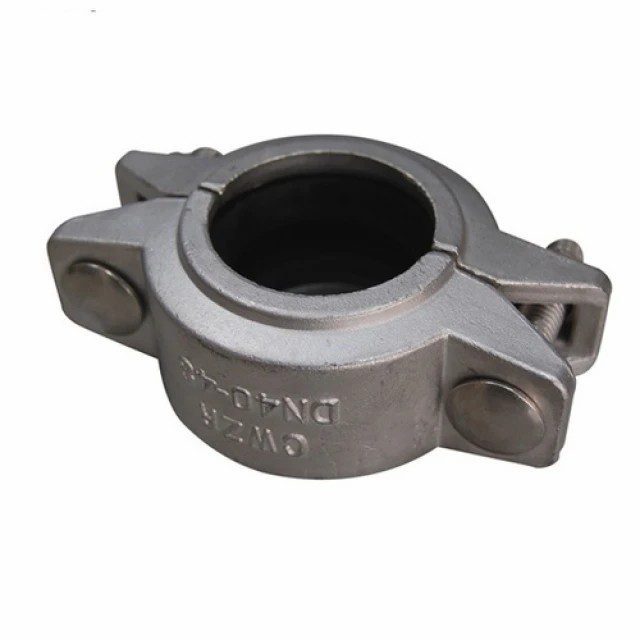
Material is one of the most important factors when selecting a bolted clamp because it directly affects strength, corrosion resistance, and service life.
Stainless steel bolted clamps are commonly used in environments where moisture, chemicals, or frequent cleaning may cause corrosion. Grades such as 304 and 316 stainless steel are popular choices for industrial applications.
304 stainless steel provides good corrosion resistance and mechanical strength for general environments. 316 stainless steel offers improved resistance to chloride-containing environments and certain corrosive chemicals, making it suitable for more demanding conditions.
Carbon steel clamps may also be considered for applications where high mechanical strength and cost efficiency are priorities, provided that suitable surface protection is applied when necessary.
Buyers should select materials based on the working environment, expected service life, and mechanical requirements of the application.
Selecting the correct clamp size is essential for achieving a secure and stable connection. A clamp that is too large may not provide sufficient fastening force, while one that is too small may create excessive installation stress or fail to fit the connected components.
Before purchasing a bolted clamp, buyers should confirm the outer diameter, width, thickness, mounting dimensions, and overall structural design required for their applications.
Dimensional compatibility is particularly important in industrial piping systems and equipment installations, where clamps must match existing pipes, brackets, or mechanical components.
Working with accurate technical drawings and product specifications helps reduce installation problems and unnecessary modification costs.
Load capacity determines whether a bolted clamp can withstand the forces generated during operation. Depending on the application, clamps may need to resist static loads, vibration, mechanical movement, or external pressure.
For heavy-duty applications, the thickness of the clamp body, structural design, bolt strength, and fastening configuration should be carefully evaluated.
Buyers should also distinguish between different load conditions. A clamp designed for light-duty pipe support may not be suitable for applications involving heavy equipment or significant mechanical loads.
It is important to review manufacturer specifications and verify that the selected clamp meets the actual mechanical requirements of the installation.
Bolts are essential components of bolted clamps because they generate the clamping force required to secure connected parts.
When selecting a bolted clamp, consider bolt diameter, length, thread specifications, material grade, and tightening requirements. These factors influence fastening strength and connection reliability.
The bolt material should also be compatible with the clamp body and the surrounding environment. For example, stainless steel bolts are often selected for applications requiring corrosion resistance.
Proper tightening is equally important. Insufficient tightening may cause loosening during operation, while excessive tightening can damage threads, deform the clamp, or create unnecessary stress on connected components.
The operating environment has a significant impact on bolted clamp performance. Temperature, humidity, chemical exposure, vibration, and outdoor conditions can all influence material durability and fastening stability.
For outdoor installations, corrosion-resistant materials or protective surface treatments may be necessary to withstand rain, moisture, and environmental exposure.
In chemical processing facilities, buyers should evaluate the compatibility of clamp materials with the chemicals present in the working environment.
For applications involving continuous vibration, suitable locking mechanisms and regular bolt inspections can help reduce the risk of loosening.
Understanding actual operating conditions helps prevent premature wear and improves the reliability of bolted clamp connections.
Installation convenience is another important consideration, particularly for equipment that requires regular inspection or maintenance.
Bolted clamps should have a practical structural design that allows operators to access fastening points and complete installation without unnecessary difficulty.
Buyers should consider whether special tools are required, whether installation space is sufficient, and how easily the clamp can be removed or replaced.
Regular maintenance should include checking bolt tightness, inspecting corrosion, examining surface damage, and looking for signs of deformation or wear.
Choosing a clamp with a practical design can reduce maintenance time and improve operational efficiency.
Manufacturing quality directly affects the dimensional accuracy, structural consistency, and service life of bolted clamps.
High-quality clamps should have consistent dimensions, smooth edges, reliable welding where applicable, and properly finished surfaces. Poor manufacturing processes may result in uneven contact, weak structural sections, or installation difficulties.
Surface treatment is also important. Depending on the material and application, polishing, passivation, galvanizing, or other protective treatments may help improve corrosion resistance and product durability.
Before placing an order, buyers should evaluate the manufacturer’s production capabilities, quality inspection procedures, and ability to maintain consistent product specifications.
Standard bolted clamps may not always meet the requirements of specialized equipment or industrial installations. In these situations, customized products can provide better dimensional compatibility and installation performance.
Depending on the manufacturer’s capabilities, customization may include clamp diameter, body thickness, bolt specifications, material grade, surface treatment, and structural design.
For OEM projects, buyers should provide detailed technical drawings, material requirements, operating conditions, and expected load information.
Working closely with an experienced manufacturer helps ensure that customized bolted clamps meet the intended application requirements.
Selecting the right bolted clamp requires careful consideration of several factors, including material, dimensions, load capacity, bolt specifications, operating environment, installation requirements, and manufacturing quality.
A suitable clamp should provide reliable fastening performance while meeting the mechanical and environmental demands of its application. Buyers should also evaluate customization capabilities and quality control procedures when choosing a manufacturer.
By reviewing these factors before purchasing, engineers, distributors, and equipment manufacturers can reduce installation risks, improve connection reliability, and achieve better long-term performance from their bolted clamp systems.
1. What is a bolted clamp used for?
A bolted clamp is used to secure pipes, connect mechanical components, and provide stable fastening in industrial equipment, piping systems, construction, and machinery installations.
2. What materials are commonly used for bolted clamps?
Common materials include stainless steel 304, stainless steel 316, and carbon steel. The choice depends on corrosion resistance, mechanical strength, operating conditions, and budget.
3. How do I choose the correct bolted clamp size?
Consider the outer diameter, width, thickness, mounting dimensions, and structural design of the connected components. Accurate measurements help ensure proper fit and secure fastening.
4. What factors affect the load capacity of a bolted clamp?
Load capacity depends on material strength, clamp thickness, structural design, bolt specifications, fastening force, and operating conditions.
5. Are stainless steel bolted clamps suitable for outdoor applications?
Yes. Stainless steel bolted clamps, particularly 316 stainless steel, offer good corrosion resistance and are suitable for many outdoor environments. However, material selection should consider actual exposure conditions.

STAINLESS STEEL&GENCEL;
Privacy Policy | SiteMap
Copyright GENCEL STAINLESS STEEL CO.,LIMITED
 Optimized by Seraphinite Accelerator