- Whatsapp: 8613738300923
- Email: [email protected]


SS sanitary pipe fittings are stainless steel components designed to connect, redirect, branch, or terminate piping systems in applications where hygiene, corrosion resistance, and ease of cleaning are essential. They are widely used in food processing, beverage production, dairy manufacturing, pharmaceutical production, biotechnology, and cosmetics manufacturing.
Compared with standard industrial pipe fittings, sanitary fittings are designed with greater attention to surface finish, connection geometry, and cleanability. These features help reduce product residue accumulation and support hygienic fluid handling when the fittings are properly selected, installed, and maintained.
Understanding the different types, materials, and applications of SS sanitary pipe fittings can help manufacturers, engineers, distributors, and purchasing teams select suitable components for their piping systems.

SS sanitary pipe fittings are stainless steel components used in hygienic piping systems to transport liquids and, in some applications, gases or other process media. The abbreviation “SS” stands for stainless steel, while “sanitary” refers to the hygienic design requirements associated with the intended application.
These fittings are manufactured in different shapes and configurations to accommodate various piping layouts. Common products include sanitary elbows, tees, reducers, clamps, ferrules, unions, and end caps.
Sanitary fittings are designed to provide suitable connections while supporting cleaning and maintenance. Depending on the application, they may feature smooth internal surfaces, carefully designed joints, compatible gaskets, and connections that minimize crevices or areas where residues can accumulate.
However, not every stainless steel fitting is automatically suitable for sanitary service. Buyers should verify material composition, surface finish, dimensional compatibility, connection design, and compliance with the relevant application requirements before selecting a product.
Different sanitary pipe fittings perform specific functions within a hygienic piping system.
Sanitary Elbows: Sanitary elbows change the direction of a pipeline, commonly by 45 or 90 degrees. They help engineers design piping layouts around processing equipment, storage tanks, pumps, and other components while maintaining the required connection geometry.
Sanitary Tees: Sanitary tees create branch connections that divide or combine flow paths. They are commonly used in processing systems that distribute liquids between production lines, tanks, and filling equipment.
Sanitary Reducers: Sanitary reducers connect pipes of different diameters. They help accommodate changes in flow requirements and equipment connection sizes. Concentric and eccentric designs may be selected according to the piping layout and drainage requirements.
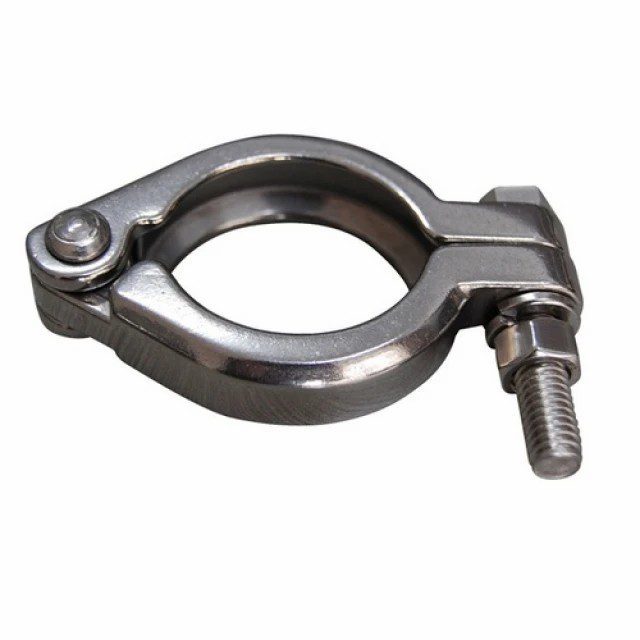
Sanitary Clamps and Ferrules: Clamp connections generally consist of compatible ferrules, a gasket, and a clamp. They allow piping components to be assembled and disassembled for inspection, cleaning, or maintenance. Correct sizing and gasket selection are essential for reliable sealing.
Sanitary Unions: Sanitary unions provide detachable connections between compatible piping components. Their design can make equipment servicing and pipeline maintenance more convenient.
Sanitary End Caps: End caps close the ends of pipes or unused connections. They may be used during equipment installation, maintenance, or system configuration, provided their design and connection type meet the required hygienic specifications.
Selecting the appropriate fitting depends on the pipeline layout, operating conditions, cleaning procedures, and connection standards.
Material selection affects corrosion resistance, durability, maintenance, and compatibility with the process medium. Stainless steel grades 304 and 316L are among the most commonly considered materials for sanitary piping applications.
304 Stainless Steel
SS 304 sanitary pipe fittings are suitable for many general food-processing, beverage, and hygienic applications. They offer good corrosion resistance in a wide range of environments and are often selected when the process medium and cleaning chemicals do not require a higher level of corrosion resistance.
316L Stainless Steel
SS 316L sanitary pipe fittings contain molybdenum, which improves resistance to certain corrosive environments compared with 304 stainless steel. Their low carbon content also helps reduce sensitization risks during welding. They are often considered for pharmaceutical processing, demanding food-production environments, and applications involving more aggressive cleaning conditions.
The best material depends on the actual operating environment rather than the industry name alone. Buyers should consider the process fluid, chloride concentration, cleaning agents, operating temperature, and exposure duration. Material certificates and traceability records may also be necessary for regulated or quality-sensitive applications.
SS sanitary pipe fittings are used in industries that require hygienic fluid transfer, reliable connections, and effective cleaning procedures.
Food Processing Industry
Food-processing facilities use sanitary fittings in pipelines that transport liquid ingredients, sauces, edible oils, dairy-based products, and other process materials. Smooth surfaces and suitable connection designs can help reduce residue accumulation and support routine cleaning.
Beverage Production
Breweries, juice manufacturers, bottled-water facilities, and soft-drink producers use sanitary elbows, tees, reducers, and clamp fittings to connect tanks, pumps, filtration equipment, and filling lines. Material selection and surface finish should match the product and cleaning requirements.
Dairy Manufacturing
Milk processing, yogurt production, cheese manufacturing, and other dairy operations require piping components that support frequent cleaning and hygienic handling. Stainless steel sanitary fittings are commonly used in transfer lines, processing equipment, and storage systems.
Pharmaceutical and Biotechnology Industries
Pharmaceutical and biotechnology facilities may require sanitary piping systems with tightly controlled material specifications, surface finishes, weld quality, and documentation. SS 316L is frequently considered for demanding applications, but the exact requirements depend on the process, cleaning or sterilization methods, and applicable standards.
Cosmetics and Personal Care Manufacturing
Cosmetics manufacturers use sanitary piping components to transfer creams, lotions, liquid soaps, shampoos, and other formulations. Appropriate material selection and cleanable connections help support product quality and reduce the risk of cross-contamination during production.
Across these industries, sanitary fittings must be selected according to the actual process requirements. A component suitable for one application may not meet the material, cleanliness, or regulatory expectations of another.
Although both sanitary and standard industrial pipe fittings connect piping components, they may differ significantly in design priorities and intended use.
Sanitary pipe fittings place particular emphasis on hygienic design, surface quality, cleanability, and compatibility with sanitary connection systems. Depending on the product specification, they may have polished internal surfaces, smooth transitions, and connection geometries designed to reduce crevices.
Standard industrial pipe fittings are often selected primarily for pressure containment, structural strength, temperature resistance, and general fluid transfer. Their surface finish and connection design may not be optimized for hygienic processing.
Another important difference is the applicable specification. Sanitary fittings may be manufactured to standards such as ASME BPE or other relevant sanitary dimensional and design requirements. Standard industrial fittings may follow specifications for conventional pipe fittings, flanges, or threaded components.
These categories can overlap, and no single feature determines whether a fitting is suitable for sanitary service. Buyers should verify the complete product specification, including material grade, dimensions, surface finish, joint design, and relevant compliance documentation.
Choosing the right fittings requires more than matching the pipe diameter. Several technical factors should be reviewed before purchasing.
Material Grade: Select 304, 316L, or another specified material according to the process medium, corrosion risks, cleaning chemicals, and temperature. Request material documentation when traceability is required.
Dimensions and Connection Type: Confirm the pipe outside diameter, wall thickness, fitting dimensions, ferrule profile, and applicable dimensional standard. Clamp, butt-weld, and threaded connections are not interchangeable without verifying compatibility.
Surface Finish: Specify the required internal and external finish. Where surface roughness is controlled, identify the required Ra value and the applicable measurement or acceptance criteria.
Operating Conditions: Consider the working pressure, temperature, fluid characteristics, and any cleaning-in-place (CIP) or sterilization-in-place (SIP) procedures. The fitting must be suitable for the complete operating cycle, not just normal production conditions.
Quality Control: Evaluate dimensional inspection, material verification, welding quality where applicable, surface finish inspection, and other tests required by the product specification.
Supplier Capabilities: Look for a supplier that can provide consistent manufacturing quality, technical documentation, customization where needed, and dependable delivery. For critical applications, sample approval or pre-shipment inspection can help verify compliance before a large order is released.
The quality of sanitary pipe fittings can influence system reliability, cleaning effectiveness, maintenance requirements, and production continuity.
Incorrect dimensions may complicate installation or prevent proper alignment. Poorly finished surfaces and unsuitable joint designs can make cleaning more difficult. Incompatible materials may corrode when exposed to particular process fluids or cleaning chemicals, while unsuitable gaskets can compromise sealing performance.
High-quality fittings should meet the agreed material, dimensional, surface finish, and connection requirements. Manufacturers should apply appropriate inspection procedures and provide supporting documentation according to the order specification.
For international buyers, clear purchasing requirements are especially important. Before ordering, confirm product drawings, material grades, applicable standards, inspection criteria, packaging requirements, and delivery schedules. These steps help reduce misunderstandings and support consistent quality across repeat orders.
SS sanitary pipe fittings are essential components in hygienic piping systems used in food processing, beverage production, dairy manufacturing, pharmaceutical production, biotechnology, and cosmetics manufacturing. Common types include elbows, tees, reducers, clamps, ferrules, unions, and end caps, each serving a specific function in the pipeline.
Choosing suitable fittings requires careful consideration of material grade, surface finish, dimensions, connection compatibility, operating conditions, and quality documentation. By matching these factors to the actual application, buyers can improve piping system reliability, simplify maintenance, and support effective hygienic processing.
For manufacturers, distributors, and purchasing teams sourcing stainless steel sanitary pipe fittings, working with a qualified supplier and confirming technical specifications before production are important steps toward achieving consistent product quality and long-term performance.


STAINLESS STEEL&GENCEL;
Privacy Policy | SiteMap
Copyright GENCEL STAINLESS STEEL CO.,LIMITED
 Optimized by Seraphinite Accelerator