- Whatsapp: 8613738300923
- Email: [email protected]


Choosing the right double pin clamp for sanitary piping systems is important for creating secure, reliable, and hygienic connections. Double pin clamps are commonly used to connect sanitary ferrules in applications where piping components need to be assembled, disassembled, inspected, or cleaned regularly.
However, selecting a double pin clamp should involve more than simply matching the pipe diameter. Tube and ferrule size, stainless steel grade, connection standard, operating pressure, temperature, gasket compatibility, surface finish, and cleaning conditions can all affect the suitability of a clamp.
For food and beverage processing, dairy, pharmaceutical, biotechnology, cosmetics, and other hygienic applications, choosing a clamp that matches the complete piping system can help reduce leakage and maintenance problems.

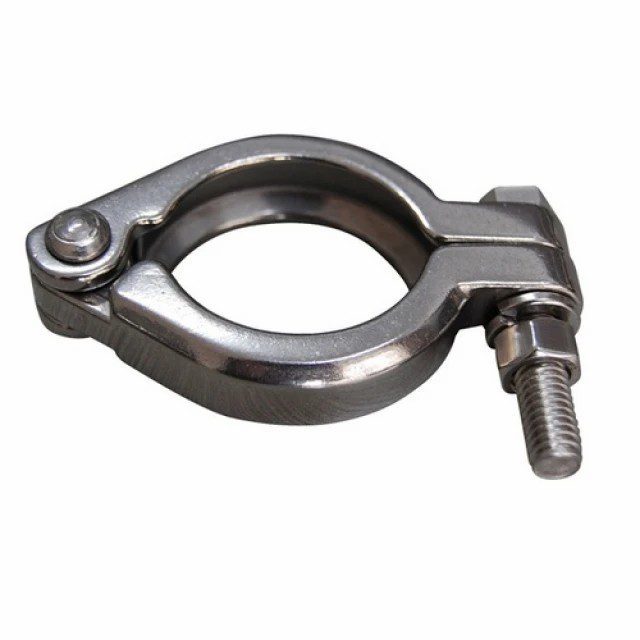
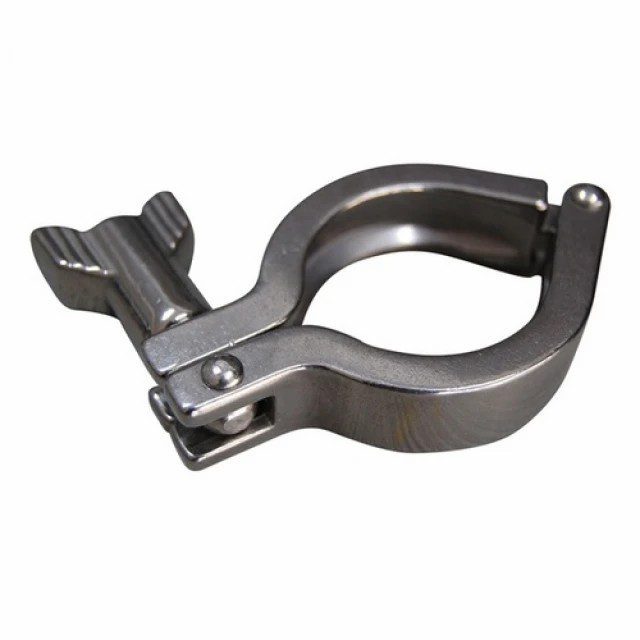
A double pin clamp is a sanitary pipe connection component designed to join two compatible sanitary ferrules. It uses two pins or fastening points to secure the clamp around the ferrules and gasket.
The gasket is positioned between the two ferrules to create the seal, while the clamp provides the mechanical force required to hold the connection together.
Compared with permanently welded connections, clamp connections can be opened and reassembled when equipment needs to be cleaned, inspected, maintained, or replaced. This makes them suitable for hygienic process systems that require regular access to piping components.
A clamp is only one part of a sanitary connection. It needs to work correctly with the ferrules, gasket, tubing, and other components in the piping system.
An incorrectly selected clamp may not fit the ferrules properly or may provide an unsuitable connection for the operating conditions. Differences in dimensions, connection standards, materials, and gasket design can affect sealing performance and maintenance requirements.
Therefore, buyers should evaluate the complete connection rather than selecting a clamp based only on nominal pipe size.
The first step is to determine the size of the sanitary tubing and ferrules that the double pin clamp will connect.
Sanitary piping systems are available in different tube diameters and connection dimensions. The clamp must match the ferrule profile and dimensions to ensure proper assembly.
Before ordering, check the actual specifications of the ferrules rather than relying only on a general description such as “1-inch” or “2-inch.” Different sanitary connection standards may use different dimensions for similar nominal sizes.
For replacement parts, checking the existing ferrule and clamp specifications can help prevent compatibility problems.
Sanitary piping systems may use different connection standards and configurations. A double pin clamp designed for one ferrule standard may not be compatible with another.
When selecting a clamp, confirm the ferrule type, outside dimensions, groove or sealing configuration, and applicable connection standard.
This is particularly important for international purchasing because suppliers may use different terminology or specifications for sanitary fittings.
Providing the manufacturer with drawings, dimensions, samples, or detailed specifications can help ensure that the correct clamp is supplied.
The stainless steel material is another important consideration.
304 stainless steel is commonly used for many general sanitary applications because it provides good corrosion resistance and mechanical properties. 316 stainless steel may be selected for applications requiring greater corrosion resistance, depending on the process environment.
The appropriate grade depends on the fluids being processed, cleaning chemicals, operating conditions, and required corrosion resistance.
For demanding applications, buyers should confirm the material specification and any documentation required for the project rather than selecting a grade based only on cost.
The double pin clamp must be suitable for the operating conditions of the sanitary piping system.
Pressure and temperature can affect the clamp, ferrules, and gasket. A connection used for low-pressure liquid transfer may have different requirements from one exposed to higher pressure, elevated temperatures, or repeated thermal cycling.
When selecting a clamp, consider:
Normal operating pressure
Maximum system pressure
Operating temperature
Maximum and minimum temperatures
Pressure fluctuations
Thermal cycling
Cleaning and sterilization conditions
The complete connection should be evaluated because the performance of the clamp depends on the ferrule and gasket as well as the clamp itself.
The gasket is an essential part of a sanitary clamp connection.
A double pin clamp normally holds two sanitary ferrules together with a gasket between their sealing surfaces. The gasket material needs to be compatible with the process fluid, temperature, cleaning chemicals, and other operating conditions.
Common gasket materials can have different levels of resistance to heat, chemicals, pressure, and repeated cleaning cycles. Therefore, the gasket should be selected according to the actual application rather than simply choosing the same material used for another piping system.
It is also important to make sure that the gasket dimensions match the ferrules and clamp configuration.
Surface finish can be important in sanitary piping applications because smooth, properly finished surfaces can make cleaning easier and help reduce areas where product residue may accumulate.
When choosing a double pin clamp, consider the surface finish requirements of the complete connection, including the ferrules and other wetted components.
Applications in food processing, pharmaceutical manufacturing, biotechnology, and other hygienic industries may have specific requirements for surface condition and cleanability.
Sanitary piping systems are often cleaned regularly, and some applications may involve repeated cleaning or sterilization cycles.
A double pin clamp should therefore be suitable for the cleaning procedures used in the facility. Consider exposure to cleaning chemicals, hot water, steam, temperature changes, and the frequency of disassembly.
The removable design of a double pin clamp can be particularly useful when piping components need to be accessed for inspection or maintenance.
For systems that are frequently opened and reassembled, clamp durability and ease of operation become important purchasing considerations.
Double pin clamps can have different designs depending on their intended application.
When evaluating a clamp, inspect the overall construction, fastening mechanism, pin design, material thickness, and contact surfaces. The clamp should provide consistent mechanical force around the ferrules without causing unnecessary deformation.
For demanding industrial applications, buyers should also consider manufacturing consistency and dimensional accuracy. These factors can influence how easily the clamp fits with the ferrules and how consistently the connection can be assembled.
The correct clamp depends partly on where the sanitary piping system will operate.
For example, a food processing system may have different requirements from a pharmaceutical process line or a cosmetic manufacturing system. The process fluid, cleaning chemicals, temperature, pressure, hygiene requirements, and maintenance frequency can all vary.
Before selecting a double pin clamp, identify the actual application and operating environment. This helps determine the appropriate material, size, gasket, surface finish, and connection configuration.
For industrial purchasing, supplier capability is another factor to consider.
A suitable double pin clamp supplier should be able to provide consistent dimensions, material information, product specifications, and quality documentation where required.
For larger projects or recurring purchases, buyers may also evaluate manufacturing capacity, inspection procedures, customization capabilities, packaging, lead times, and export experience.
If the sanitary piping system has special requirements, provide technical drawings or specifications to the supplier before placing an order. This can reduce the risk of receiving components that do not match the existing system.
Before purchasing a double pin clamp, buyers can check the following requirements:
| Selection Factor | What to Check |
|---|---|
| Tube size | Confirm the sanitary tubing diameter |
| Ferrule | Check ferrule type and dimensions |
| Connection standard | Confirm compatibility with the existing system |
| Material | Consider 304, 316, or another specified grade |
| Pressure | Check normal and maximum operating pressure |
| Temperature | Consider process and cleaning temperatures |
| Gasket | Confirm material, size, and fluid compatibility |
| Surface finish | Check hygienic and cleanability requirements |
| Cleaning | Consider CIP, manual cleaning, or sterilization |
| Construction | Evaluate clamp design and fastening mechanism |
| Application | Match the clamp to the process environment |
| Supplier | Check quality control and technical support |
Choosing the right double pin clamp for sanitary piping systems requires consideration of the complete connection rather than pipe size alone. Tube and ferrule dimensions, connection standards, stainless steel grade, pressure, temperature, gasket compatibility, surface finish, cleaning conditions, and application environment should all be evaluated.
For food, dairy, pharmaceutical, biotechnology, cosmetics, and other hygienic applications, the clamp should be compatible with the complete piping system and its operating requirements.
By confirming these technical details before purchasing, manufacturers, distributors, and industrial buyers can select double pin clamps that are properly matched to their sanitary piping applications and maintenance requirements.
What is a double pin clamp used for?
A double pin clamp is used to connect two compatible sanitary ferrules and create a removable connection in hygienic piping systems.
What material is commonly used for double pin clamps?
Stainless steel is commonly used for sanitary double pin clamps. 304 and 316 stainless steel are frequently considered depending on the application and corrosion requirements.
How do I know what size double pin clamp I need?
The clamp size should match the sanitary ferrules being connected. Check the actual ferrule dimensions and connection standard rather than relying only on nominal pipe diameter.
Does a double pin clamp require a gasket?
Yes. A sanitary double pin clamp normally works with a gasket positioned between two compatible ferrules to create the seal.
Can double pin clamps be used in pharmaceutical applications?
They can be used in pharmaceutical and other hygienic processing systems when the clamp material, dimensions, gasket, surface finish, and other specifications meet the requirements of the application.
What should I provide to a supplier when ordering double pin clamps?
Provide the required clamp size, ferrule standard and dimensions, material requirements, operating pressure and temperature, gasket requirements, application information, and any relevant drawings or specifications.



STAINLESS STEEL&GENCEL;
Privacy Policy | SiteMap
Copyright GENCEL STAINLESS STEEL CO.,LIMITED
 Optimized by Seraphinite Accelerator