- Whatsapp: 8613738300923
- Email: [email protected]


A single pin clamp is a commonly used connection component for sanitary piping systems. It is designed to join compatible sanitary ferrules and hold them together with a gasket between the sealing surfaces. Single pin clamps are widely used in food and beverage processing, dairy, pharmaceutical, biotechnology, cosmetics, and other hygienic applications.
Although the structure of a single pin clamp is relatively simple, its performance can be affected by many factors. Clamp size, material, ferrule compatibility, gasket selection, operating pressure, temperature, installation method, surface finish, and cleaning conditions can all influence the reliability of the connection.
Understanding these factors can help manufacturers, distributors, engineers, and purchasing teams select suitable single pin clamps and reduce problems such as leakage, poor sealing, difficult assembly, and premature component wear.
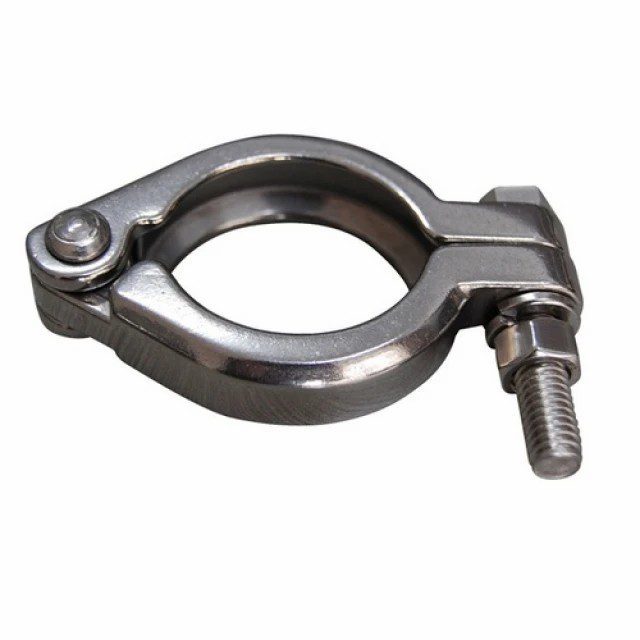
The size of the single pin clamp is one of the most important factors affecting its performance. The clamp needs to match the ferrules being connected in terms of dimensions and configuration.
A clamp that is too large may not provide sufficient and consistent clamping force, while an incorrectly sized clamp may make assembly difficult or result in an unstable connection.
Dimensional accuracy is also important for repeated installation. In sanitary piping systems where connections are frequently opened and reassembled, consistent manufacturing tolerances can help ensure that the clamp fits properly each time.
Therefore, buyers should confirm the actual ferrule dimensions and applicable connection standard rather than selecting a clamp based only on nominal tube size.
The material used to manufacture the single pin clamp can affect its corrosion resistance, mechanical strength, durability, and suitability for different environments.
304 stainless steel is commonly used for many general sanitary applications because it offers good corrosion resistance and mechanical properties. 316 stainless steel may be preferred in applications exposed to more demanding environments where higher corrosion resistance is required.
The appropriate material depends on factors such as process fluids, cleaning chemicals, temperature, humidity, and hygiene requirements.
For industrial applications, buyers should confirm the specified stainless steel grade and material documentation when necessary.
A single pin clamp does not work independently. Its performance depends heavily on the ferrules it connects.
The ferrules need to have compatible dimensions, sealing surfaces, and connection configurations. If the clamp and ferrules are from different standards or have incompatible dimensions, the connection may not close correctly or provide consistent sealing pressure.
Before purchasing a single pin clamp, check the ferrule type, outside dimensions, sealing configuration, and applicable sanitary fitting standard.
This is particularly important when replacing existing clamps or sourcing components from different suppliers.
The gasket is a critical part of a sanitary clamp connection. It sits between the two ferrules and creates the seal when the clamp applies mechanical force.
Different gasket materials have different resistance to temperature, chemicals, pressure, cleaning agents, and repeated sterilization cycles. Selecting an unsuitable gasket can result in leakage, deformation, premature wear, or contamination risks.
The gasket should therefore be compatible with the process fluid and operating environment. Its dimensions should also match the ferrules and clamp configuration.
For hygienic applications, gasket material and quality should be considered together with the clamp rather than treated as a separate purchasing decision.
Operating pressure can influence the performance requirements of a single pin clamp connection.
A connection used for low-pressure liquid transfer may have different requirements from one exposed to higher pressure or pressure fluctuations. The clamp, ferrules, and gasket must work together to maintain a stable seal under the expected operating conditions.
When selecting a clamp, consider both normal operating pressure and maximum system pressure. Pressure fluctuations and sudden changes should also be considered when evaluating the complete connection.
It is important not to assume that a particular clamp has the same pressure capability in every piping configuration. The actual performance depends on the complete connection design and applicable specifications.
Temperature is another important factor affecting single pin clamp performance.
High temperatures can affect stainless steel components, gaskets, and other sealing materials differently. Repeated heating and cooling can also create thermal expansion and contraction that may influence the connection over time.
Sanitary systems may also be exposed to hot water, steam, cleaning solutions, or sterilization processes. Therefore, the clamp and gasket should be selected according to the actual temperature range of the application.
For systems with frequent thermal cycling, buyers should pay particular attention to gasket compatibility and connection stability.
Even a high-quality single pin clamp may not perform properly if it is installed incorrectly.
The ferrules should be properly aligned before the clamp is closed. The gasket should be correctly positioned without twisting, pinching, or displacement. The clamp should also be properly secured according to the manufacturer’s recommendations.
Poor installation can lead to uneven sealing pressure, leakage, gasket damage, or unnecessary stress on the connection.
For systems that are frequently assembled and disassembled, operators should also follow consistent installation procedures to maintain reliable performance.
Surface finish is particularly important in sanitary piping applications. Smooth and properly finished surfaces can make cleaning easier and reduce areas where product residue or contaminants may accumulate.
Although the clamp itself may not always be a wetted component, its design and contact surfaces should be suitable for the hygienic requirements of the installation.
Food processing, pharmaceutical, biotechnology, and other hygienic industries may have specific requirements for surface condition, cleanability, and material compatibility.
When evaluating a single pin clamp, it is therefore useful to consider its surface finish together with the ferrules and other sanitary components in the system.
Sanitary piping systems often undergo regular cleaning, including manual cleaning, CIP (Clean-in-Place), hot-water cleaning, or sterilization processes.
Repeated exposure to cleaning chemicals, elevated temperatures, steam, and rapid temperature changes can affect the service life of clamps and gaskets.
The cleaning process should therefore be considered when selecting materials and connection components. A clamp suitable for a basic food-processing application may not have the same requirements as one used in a pharmaceutical process with frequent sterilization cycles.
Understanding the actual cleaning procedure can help buyers select more suitable clamp and gasket materials.
The construction of the single pin clamp can also influence its long-term performance.
Important factors include material thickness, pin design, fastening mechanism, dimensional consistency, and overall manufacturing quality. A properly manufactured clamp should provide stable mechanical force and maintain a secure connection during normal operation.
For industrial buyers, supplier quality control can be particularly important when clamps are purchased in large quantities. Consistent dimensions and manufacturing tolerances can help reduce differences between individual components.
For customized or demanding applications, buyers may also request drawings, inspection specifications, material certificates, or samples before placing a larger order.
The operating environment can affect how a single pin clamp performs over time.
Food and beverage processing, dairy production, pharmaceutical manufacturing, biotechnology, cosmetics, and chemical processing may involve different fluids, temperatures, cleaning agents, and hygiene requirements.
Environmental factors such as humidity, corrosive substances, vibration, and frequent maintenance can also influence component durability.
For this reason, there is no single single pin clamp specification that is suitable for every application. The clamp should be selected according to the complete operating environment.
Regular inspection can help identify potential problems before they affect the piping system.
Operators can check the clamp, ferrules, gasket, and fastening mechanism for signs of corrosion, deformation, wear, damage, or improper alignment. Gaskets may require periodic replacement depending on the operating conditions and maintenance schedule.
For systems that are frequently opened, the condition of the clamp and gasket should be monitored more closely because repeated assembly and disassembly can gradually affect component performance.
A consistent maintenance procedure can help extend service life and reduce unexpected leakage or downtime.
| Factor | Potential Impact |
|---|---|
| Clamp size | Affects fit and clamping force |
| Material | Influences corrosion resistance and durability |
| Ferrule compatibility | Determines connection and sealing compatibility |
| Gasket | Directly affects sealing performance |
| Operating pressure | Influences connection requirements |
| Temperature | Can affect materials and gasket performance |
| Installation | Affects alignment and sealing consistency |
| Surface finish | Influences cleanability and hygiene |
| Cleaning conditions | Can affect material and gasket service life |
| Manufacturing quality | Influences dimensional consistency and durability |
| Application environment | Determines material and design requirements |
| Maintenance | Helps prevent wear, leakage, and premature failure |
The performance of a single pin clamp depends on much more than the clamp itself. Size, dimensional accuracy, stainless steel grade, ferrule compatibility, gasket selection, pressure, temperature, installation, surface finish, cleaning conditions, and manufacturing quality can all influence the reliability of the connection.
For sanitary piping systems, buyers should evaluate the complete connection and operating environment before selecting a clamp. Matching the clamp with the correct ferrules and gasket is especially important for maintaining a secure and hygienic connection.
By considering these factors during product selection and maintenance, food, dairy, pharmaceutical, biotechnology, cosmetics, and other hygienic processing facilities can improve connection reliability and reduce problems related to leakage, wear, and maintenance.
What factors affect the performance of a single pin clamp?
The main factors include clamp size, stainless steel material, ferrule compatibility, gasket selection, operating pressure and temperature, installation method, surface finish, cleaning conditions, and manufacturing quality.
What material is commonly used for single pin clamps?
Stainless steel is commonly used for sanitary single pin clamps. 304 stainless steel is suitable for many general applications, while 316 stainless steel may be selected for environments requiring greater corrosion resistance.
How does gasket selection affect a single pin clamp?
The gasket creates the seal between the ferrules. Its material, size, temperature resistance, chemical compatibility, and durability can directly affect sealing performance and service life.
Can operating temperature affect single pin clamp performance?
Yes. High temperatures and repeated heating and cooling cycles can affect the clamp, ferrules, and gasket. The selected components should be suitable for the application’s operating and cleaning temperatures.
Why is ferrule compatibility important?
The single pin clamp must match the dimensions and configuration of the ferrules. Incompatible components may result in poor assembly, uneven clamping force, or leakage.
How does installation affect clamp performance?
Incorrect alignment, improper gasket placement, or insufficient fastening can reduce sealing performance. Proper installation helps maintain consistent contact between the clamp, ferrules, and gasket.


STAINLESS STEEL&GENCEL;
Privacy Policy | SiteMap
Copyright GENCEL STAINLESS STEEL CO.,LIMITED
 Optimized by Seraphinite Accelerator