- Whatsapp: 8613738300923
- Email: [email protected]


Round pipe holders are important fastening and support components used in industrial piping systems, construction projects, mechanical equipment, and various installation applications. They help secure round pipes in position, maintain proper alignment, reduce unwanted movement, and provide stable support during operation.
Although round pipe holders are generally designed for long-term use, their performance can deteriorate due to corrosion, vibration, environmental exposure, improper installation, and mechanical stress. Without proper maintenance, these problems may lead to loose connections, damaged support structures, pipe misalignment, and increased replacement costs.
For engineers, maintenance professionals, contractors, and purchasing teams, understanding how to maintain round pipe holders is essential for improving service life and maintaining system reliability. This article explains common maintenance requirements, inspection methods, and practical tips for extending the durability of round pipe holders.
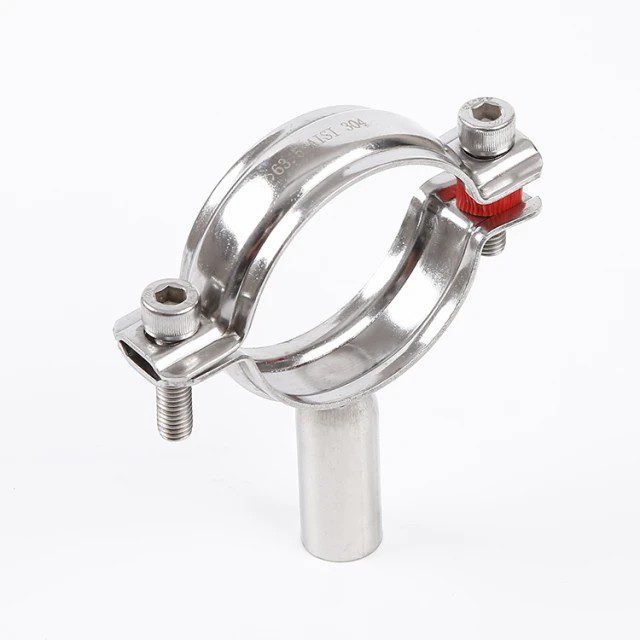
Round pipe holders are continuously exposed to mechanical loads and environmental conditions. Depending on the installation, they may experience vibration, moisture, temperature changes, chemical exposure, and repeated movement from connected piping systems.
Regular maintenance provides several important benefits.
Improved Structural Stability: Properly maintained pipe holders help keep pipes securely positioned and reduce unwanted movement.
Reduced Corrosion Risk: Routine inspections help identify surface deterioration before corrosion affects the structural integrity of the holder.
Longer Service Life: Cleaning, inspection, and timely replacement of damaged components can reduce premature wear.
Lower Maintenance Costs: Preventive maintenance helps avoid unexpected failures, emergency repairs, and unnecessary equipment downtime.
Improved Operational Safety: Secure pipe supports help reduce the risk of pipe displacement and related mechanical problems.
Before developing a maintenance plan, it is important to understand the factors that can affect the service life of round pipe holders.
Corrosion and Environmental Exposure
Moisture, humidity, chemicals, salt, and industrial pollutants can gradually damage metal pipe holders. Carbon steel products are particularly vulnerable to rust when protective coatings deteriorate.
Even stainless steel may experience localized corrosion under certain environmental conditions, especially when exposed to aggressive chemicals or high chloride concentrations.
Maintenance tip: Inspect the surface regularly for rust, discoloration, coating damage, and other signs of corrosion. Choose materials and protective finishes suitable for the installation environment.
Excessive Mechanical Loads
Round pipe holders must support the weight of pipes and, where applicable, their contents and attached equipment. Excessive loads can cause bending, deformation, or damage to mounting points.
Incorrect support spacing and unsuitable holder specifications may also create uneven load distribution.
Maintenance tip: Verify that the selected holder is appropriate for the pipe dimensions and expected loading conditions. Check for deformation and confirm that the supporting structure remains stable.
Vibration and Repeated Movement
Pumps, compressors, motors, and other industrial equipment can generate continuous vibration. Over time, vibration may loosen fasteners, increase wear, and affect pipe alignment.
Thermal expansion and contraction can also create repeated movement in piping systems.
Maintenance tip: Check bolts, nuts, and mounting connections periodically. Where necessary, use suitable vibration-isolation components and support designs to reduce excessive movement.
Improper Installation
Incorrect installation is a common reason for premature pipe holder deterioration. Misaligned mounting points, incorrect fastening, unsuitable pipe dimensions, and excessive tightening can all affect performance.
Maintenance tip: Follow the manufacturer’s installation instructions and verify that the holder is correctly positioned and securely fastened. Avoid applying excessive tightening force that could damage the holder or connected pipe.
Temperature Changes
Industrial piping systems may operate under changing temperatures. Repeated heating and cooling can cause materials to expand and contract, potentially increasing stress on mounting structures and fastening components.
Maintenance tip: Select pipe holders with suitable material properties and temperature resistance. Ensure that the overall support arrangement accommodates expected thermal movement.
A consistent maintenance routine can help identify problems early and prevent unnecessary replacement.
Conduct Regular Visual Inspections
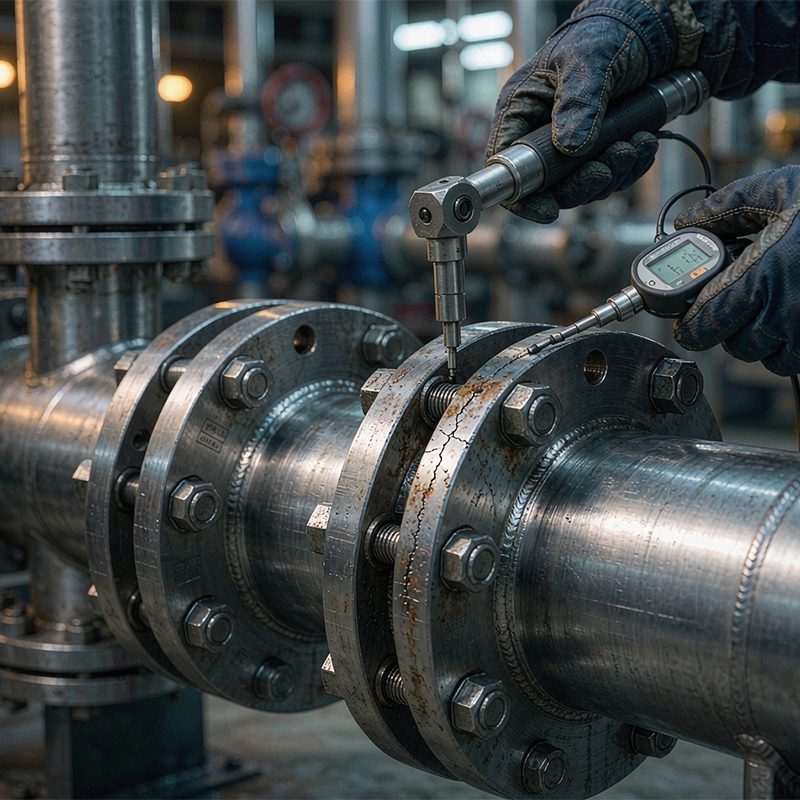
Visual inspection is one of the simplest ways to evaluate the condition of round pipe holders.
During inspection, check for:
Visible rust or corrosion.
Cracks, bending, or structural deformation.
Loose bolts, nuts, or mounting hardware.
Damaged protective coatings.
Unusual gaps between the holder and pipe.
Signs of excessive vibration or movement.
Pay particular attention to holders installed in outdoor locations, humid environments, and areas exposed to chemicals.
Clean the Surface Regularly
Dust, grease, dirt, and chemical residues can accumulate on pipe holders over time. These contaminants may conceal early signs of corrosion or damage.
Use cleaning methods appropriate for the holder material and surface treatment. Mild cleaning agents and non-abrasive tools are generally preferable for routine cleaning.
For stainless steel holders, avoid cleaning products that may introduce chloride contamination or damage the protective surface.
After cleaning, inspect the surface and ensure that the component is suitable for the surrounding environment.
Check Fasteners and Mounting Connections
Bolts, nuts, and mounting brackets are important parts of a round pipe holder assembly. Loose or damaged fasteners may reduce support stability and allow unwanted pipe movement.
During maintenance, examine fastening components for:
Loosening or missing hardware.
Damaged threads.
Corrosion around connection points.
Deformation of mounting brackets.
Signs of repeated movement.
Tighten or replace components according to manufacturer recommendations. Where specified, use the recommended torque values and tightening sequence.
Monitor Corrosion and Surface Protection
Protective coatings help reduce corrosion in many metal pipe holders. However, coatings can deteriorate due to abrasion, impact, moisture, and chemical exposure.
If coating damage is identified, evaluate whether the affected area requires cleaning, surface preparation, or an appropriate protective treatment.
For severely corroded components, replacement may be more appropriate than attempting to restore the original condition.
Check Pipe Alignment and Support Stability
A round pipe holder should maintain the intended pipe position without creating unnecessary stress on the piping system.
Check whether pipes have shifted, sagged, or become misaligned. Also inspect nearby supports and mounting structures to identify potential problems affecting load distribution.
If movement is detected, investigate the underlying cause rather than simply tightening the holder. Excessive pipe movement may indicate incorrect support spacing, thermal expansion issues, or structural problems elsewhere in the system.
Replace Damaged Components Promptly
Round pipe holders with cracks, permanent deformation, severe corrosion, or damaged fastening structures should not continue operating without proper evaluation.
Replacing damaged holders at the appropriate time helps prevent further deterioration and reduces the risk of pipe displacement.
Always select replacement products with compatible dimensions, materials, load capacity, and mounting requirements.
Maintenance is important, but long-term durability also depends on selecting the right product from the beginning.
Select the Appropriate Material
Material selection should match the installation environment and expected mechanical loads.
Common options include:
Stainless Steel: Suitable for applications requiring corrosion resistance and durability. Grades 304 and 316 are commonly used in different industrial environments.
Carbon Steel: Offers good mechanical strength and cost efficiency for many general industrial applications. Protective coatings may be necessary.
Galvanized Steel: Provides a protective zinc coating that helps improve corrosion resistance in suitable environments.
For applications involving aggressive chemicals or marine exposure, material compatibility should be carefully evaluated.
Confirm Pipe Diameter Compatibility
Round pipe holders are designed for specific pipe dimensions. Selecting an incorrect size may result in poor fitting, excessive movement, or uneven contact.
Before purchasing, confirm the pipe’s outside diameter and the holder’s dimensional specifications.
Consider Load Capacity
Different pipe holders have different structural designs and load-bearing capabilities.
Evaluate the pipe weight, fluid weight where applicable, installation orientation, support spacing, and additional external loads. Select a holder that meets the engineering requirements of the complete support arrangement.
Evaluate Surface Treatment
Surface treatment can improve corrosion resistance and product durability.
Depending on the application, available options may include galvanizing, powder coating, polishing, and passivation.
The appropriate finish depends on the base material and operating environment.
Work with a Reliable Manufacturer
A qualified manufacturer can provide accurate dimensions, consistent material quality, suitable surface treatments, and customized designs when standard products do not meet installation requirements.
For OEM projects, customers should also review manufacturing capabilities, dimensional inspection procedures, material documentation, and quality control processes.
Maintenance frequency should be determined according to operating conditions, environmental exposure, product specifications, and the importance of the supported piping system.
A general inspection framework can help maintenance teams organize their work.
| Maintenance Activity | Recommended Frequency |
| Visual inspection | Monthly or according to risk level |
| Check fasteners and mounting points | During scheduled inspections |
| Surface cleaning | As needed |
| Corrosion inspection | During routine maintenance |
| Pipe alignment check | During scheduled system inspections |
| Structural condition assessment | According to operating conditions |
| Replacement of damaged components | Whenever defects affect safe performance |
This schedule is a general guideline rather than a universal requirement. Critical piping systems and harsh industrial environments may require more frequent inspections.
Even when maintenance is performed regularly, certain mistakes can reduce the effectiveness of the process.
Ignoring Early Corrosion: Small areas of rust or coating damage may develop into more serious deterioration if left untreated.
Over-Tightening Fasteners: Excessive tightening can damage threads, deform mounting components, or create unnecessary stress.
Using Incompatible Cleaning Chemicals: Certain chemicals may damage protective coatings or increase corrosion risks.
Replacing Holders Without Checking Specifications: A replacement with incorrect dimensions or load capacity may create new installation problems.
Ignoring Vibration Sources: Repeatedly tightening loose fasteners without addressing excessive vibration may lead to recurring problems.
Neglecting Inspection Records: Without maintenance records, it can be difficult to identify recurring defects and determine when components need replacement.
Avoiding these mistakes helps improve maintenance efficiency and support long-term system reliability.
Proper round pipe holder maintenance is essential for maintaining stable pipe support, reducing corrosion, and extending product service life. Regular visual inspections, surface cleaning, fastener checks, alignment monitoring, and timely component replacement can help prevent common maintenance problems.
However, long-term durability begins with proper product selection. Material quality, dimensional accuracy, load capacity, and surface treatment should all match the actual installation conditions.
For industrial buyers, contractors, and equipment manufacturers, choosing reliable round pipe holders and following a structured maintenance program can reduce replacement costs, improve installation stability, and support efficient long-term operation.
1.What is the main purpose of a round pipe holder?
A round pipe holder is designed to secure and support round pipes in industrial, construction, and mechanical installations. It helps maintain pipe alignment, reduce unwanted movement, and provide stable support during operation.
2.How often should round pipe holders be inspected?
Round pipe holders should generally be inspected monthly or according to the operating environment and maintenance requirements. Installations exposed to moisture, chemicals, heavy loads, or continuous vibration may require more frequent inspections.
3.What are the common signs of round pipe holder damage?
Common warning signs include rust, corrosion, cracks, bending, loose fasteners, damaged coatings, and unusual pipe movement. Identifying these issues early helps prevent further deterioration.
4.Which materials are best for durable round pipe holders?
Stainless steel, carbon steel, and galvanized steel are commonly used. Stainless steel offers good corrosion resistance, carbon steel provides mechanical strength, and galvanized steel provides additional protection against environmental corrosion.
5.How can I prevent rust on metal round pipe holders?
Choose corrosion-resistant materials, apply suitable protective coatings, clean surfaces regularly, and inspect for coating damage. For stainless steel products, use appropriate cleaning agents to avoid damaging the protective surface.

STAINLESS STEEL&GENCEL;
Privacy Policy | SiteMap
Copyright GENCEL STAINLESS STEEL CO.,LIMITED
 Optimized by Seraphinite Accelerator