- Whatsapp: 8613738300923
- Email: [email protected]


High pressure clamps are essential fastening components in industrial piping systems, hydraulic equipment, fluid transfer assemblies, and specialized machinery. They help secure pipes, hoses, fittings, and other connected components under demanding operating conditions. However, standard clamp products may not always meet the specific requirements of every industrial application.
Different equipment designs can involve non-standard dimensions, special connection structures, unique pressure requirements, and challenging operating environments. In these situations, custom high pressure clamps provide a practical solution by allowing manufacturers to adjust product dimensions, materials, fastening mechanisms, and surface treatments according to customer specifications.
For OEM buyers, equipment manufacturers, distributors, and engineering teams, understanding the customization process is important for achieving product compatibility and consistent quality. This article explores the key OEM requirements, manufacturing considerations, and quality control factors involved in producing custom high pressure clamps.
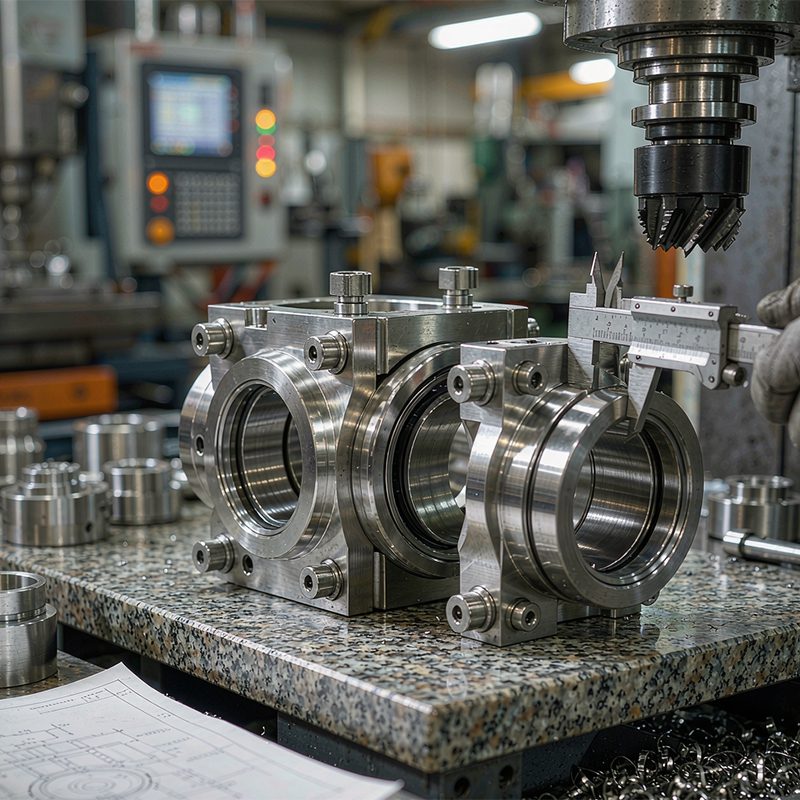
Custom high pressure clamps are specially manufactured fastening components designed to meet specific industrial connection requirements that standard products may not fully satisfy.
Unlike off-the-shelf clamps, customized products can be developed according to customer drawings, technical specifications, equipment configurations, and intended operating conditions.
Common customization options include:
Dimensions: Customized inner diameters, outer dimensions, widths, thicknesses, and mounting dimensions.
Materials: Stainless steel, carbon steel, alloy steel, and other application-specific materials.
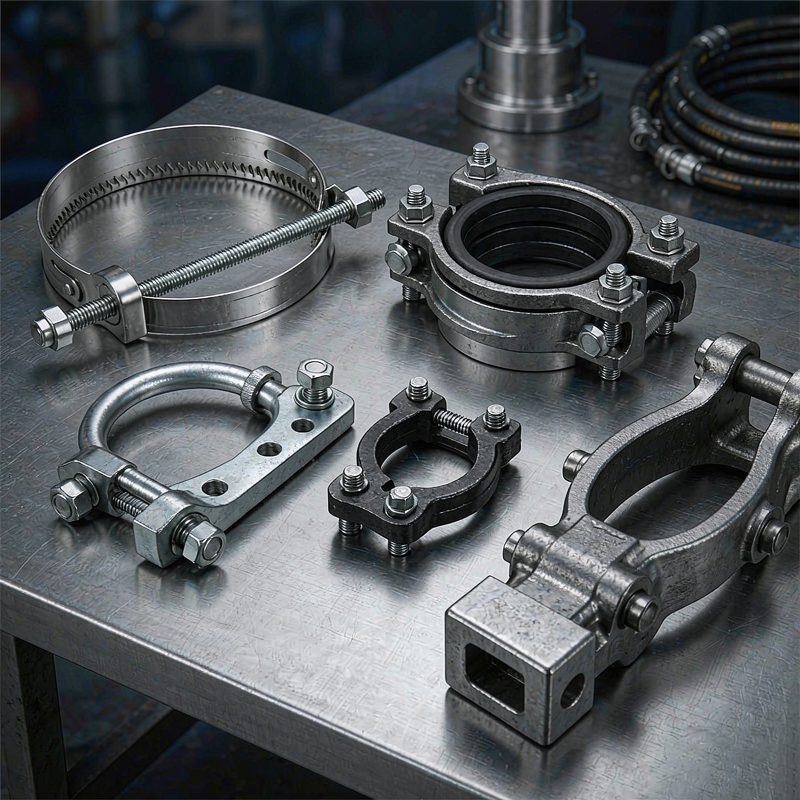
Structural designs: Single-bolt, double-bolt, reinforced, hinged, or specialized locking structures.
Surface treatments: Polishing, passivation, galvanizing, and other suitable protective finishes.
Connection requirements: Customized interfaces and fastening configurations for specific pipes, hoses, or fittings.
These options allow OEM customers to obtain clamps that integrate more effectively with their equipment and industrial systems.
Before starting a customization project, OEM customers should define their technical and commercial requirements clearly. Accurate specifications help manufacturers evaluate feasibility, select suitable materials, and develop appropriate production processes.
Product Dimensions and Technical Drawings
Dimensions are among the most important requirements in custom clamp manufacturing. Even small dimensional deviations can affect installation, fastening force, and compatibility with connected components.
OEM customers should provide detailed technical drawings whenever possible, including:
Inner and outer diameters.
Clamp width and material thickness.
Bolt hole positions and dimensions.
Fastener specifications.
Mounting and connection dimensions.
Tolerances and critical measurement points.
If technical drawings are unavailable, customers can provide physical samples, reference dimensions, or equipment drawings for preliminary evaluation.
Operating Pressure Requirements
Custom high pressure clamps must be designed according to the actual pressure conditions of the application.
OEM customers should identify the normal working pressure, maximum allowable pressure, potential pressure surges, and expected operating cycles.
Manufacturers can then evaluate the required structural strength, fastening configuration, and material properties.
It is important to note that a clamp’s suitability for high-pressure service depends on the complete connection design, including mating components, sealing elements, and installation conditions. Pressure capability should be verified through appropriate engineering calculations and testing rather than estimated from clamp dimensions alone.
Material Selection
Material selection directly influences mechanical strength, corrosion resistance, durability, and manufacturing cost.
Common material options include:
304 Stainless Steel: Suitable for many general industrial applications where corrosion resistance and mechanical performance are required.
316 Stainless Steel: Offers improved resistance to certain corrosive environments, particularly those involving chloride exposure. It is commonly considered for chemical processing, marine-related applications, and selected hygienic installations.
Carbon Steel: Provides a cost-effective option for applications requiring mechanical strength. Protective coatings may be necessary depending on environmental exposure.
Alloy Steel: Can be considered for specialized applications requiring particular strength, toughness, or temperature-related properties.
OEM buyers should communicate the working medium, environmental conditions, and temperature range so that manufacturers can recommend suitable materials.
Structural Design and Fastening Requirements
Different industrial applications require different clamp structures. Some systems prioritize high fastening force, while others require quick installation, compact dimensions, or frequent disassembly.
OEM customers should specify whether they need single-bolt, double-bolt, hinged, reinforced, or quick-release designs.
The manufacturer should evaluate the load distribution, fastening mechanism, connection geometry, and installation accessibility before finalizing the design.
Surface Treatment and Appearance
Surface treatment can improve corrosion resistance, wear performance, and product appearance.
Common options include mechanical polishing, electropolishing, passivation, galvanizing, and other application-specific finishes.
For sanitary applications, surface roughness, cleanability, and compatibility with relevant hygienic requirements should also be considered.
OEM buyers should clarify whether the product requires a particular surface finish, color, protective coating, or appearance standard.
A reliable manufacturing process helps ensure that customized clamps meet the required dimensions, mechanical properties, and application specifications.
Requirement Evaluation and Design Confirmation
The process begins with reviewing customer drawings, samples, operating conditions, and technical requirements.
Engineers evaluate product feasibility, identify potential design issues, and confirm the appropriate manufacturing approach.
For complex projects, 3D modeling or engineering drawings may be used to verify structural details before production.
Raw Material Selection and Inspection
After the design is approved, suitable raw materials are selected according to the agreed specifications.
Manufacturers should verify material grades, thickness, surface condition, and relevant material documentation before production.
This step helps prevent material inconsistencies from affecting the finished clamp.
Cutting and Forming
Raw materials are processed into the required dimensions through suitable cutting, stamping, bending, or machining operations.
The specific manufacturing method depends on the clamp structure, material type, product thickness, and required production volume.
Accurate forming is particularly important for maintaining dimensional consistency and ensuring proper assembly.
Machining and Welding
Depending on the design, clamps may require drilling, threading, turning, milling, or welding.
Machining operations help achieve accurate fastening dimensions and component interfaces. Welding may be used for products requiring permanently joined structural components.
Manufacturers should control machining tolerances and welding quality to maintain structural integrity.
Surface Treatment
After the main manufacturing operations, clamps may undergo polishing, passivation, galvanizing, or other specified surface treatments.
The selected process should be compatible with the base material and intended working environment.
Assembly and Final Inspection
For assembled clamp products, bolts, nuts, hinges, locking components, and other accessories are fitted according to the approved design.
Finished products should undergo dimensional inspection, visual checks, and appropriate functional or mechanical verification before shipment.
Custom high pressure clamp production involves more than simply changing product dimensions. Manufacturers must consider several engineering and production factors to achieve consistent results.
Structural Strength and Load Distribution
The clamp structure must withstand the mechanical loads expected during operation. Factors such as material thickness, bolt positioning, fastening force, and structural geometry can affect overall performance.
Manufacturers should evaluate potential stress concentration areas and ensure that the design is suitable for the intended application.
Dimensional Accuracy and Tolerances
Accurate dimensions are essential for product compatibility and assembly efficiency.
Manufacturers should identify critical dimensions and establish appropriate tolerances before production. Inspection equipment and measurement procedures should be selected according to the required precision.
Production Volume and Manufacturing Efficiency
OEM projects may involve prototype development, small-batch production, or large-scale manufacturing.
Production volume can influence tooling requirements, manufacturing methods, unit costs, and delivery schedules.
For example, a complex custom clamp may require dedicated tooling for mass production, while a small batch may be more economical using flexible machining processes.
Pressure and Temperature Compatibility
The complete connection assembly must be suitable for the expected pressure and temperature conditions.
Manufacturers should consider material properties, thermal expansion, sealing requirements, and possible pressure fluctuations.
Where necessary, engineering validation and testing should be conducted under defined conditions.
Regulatory and Industry Requirements
Different industries may have specific requirements for materials, manufacturing processes, documentation, and product testing.
For example, sanitary applications may require additional attention to surface finish and cleanability, while pressure-related applications may be subject to relevant engineering codes and testing requirements.
OEM customers should communicate applicable standards at the beginning of the project to avoid design changes later.
Quality control is essential for ensuring that customized products consistently meet approved specifications.
A comprehensive quality management process may include the following inspections and tests.
Raw Material Inspection: Verify material grades, thickness, mechanical properties, and relevant documentation.
Dimensional Inspection: Check critical measurements, hole positions, thickness, thread specifications, and overall product geometry.
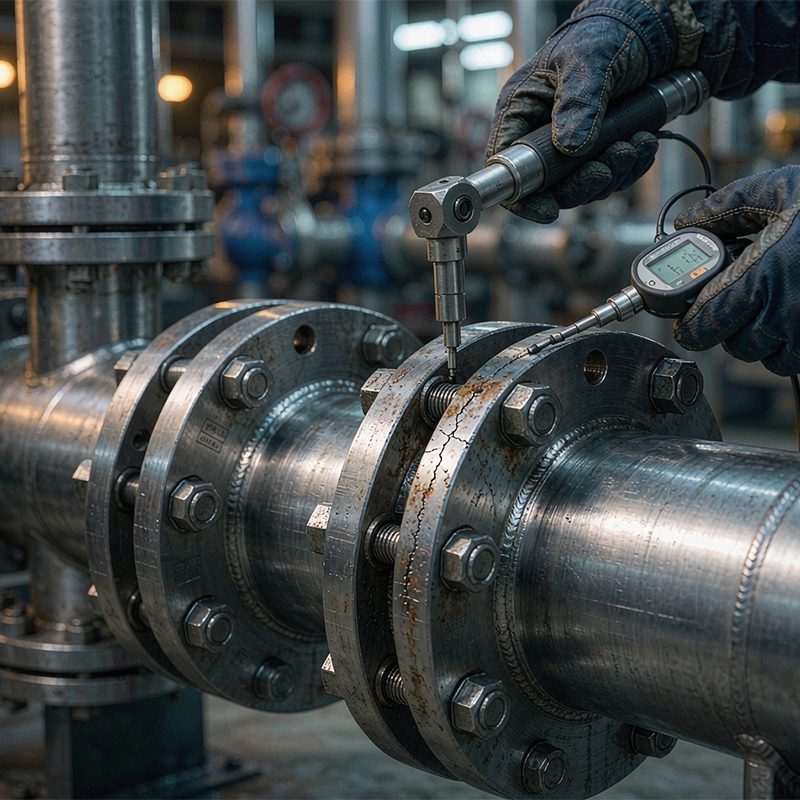
Visual Inspection: Examine surface defects, cracks, burrs, deformation, welding appearance, and coating consistency.
Mechanical Testing: Depending on the design, evaluate tensile strength, fastening performance, or other relevant mechanical properties.
Corrosion Evaluation: Conduct suitable corrosion-related assessments when required by the material specification and operating environment.
Pressure Testing: Where applicable, evaluate the complete connection assembly using an appropriate test procedure and defined acceptance criteria.
Manufacturers should maintain inspection records and provide relevant test documentation when required by OEM customers.
Successful OEM cooperation requires clear communication between the customer and manufacturer throughout the development process.
Provide Complete Technical Information
Prepare product drawings, material specifications, pressure requirements, operating temperatures, and application details before requesting a quotation.
The more complete the information, the easier it is for the manufacturer to evaluate feasibility and provide an accurate proposal.
Request Samples or Prototype Development
For new designs, sample production allows customers to evaluate dimensions, installation compatibility, structural details, and appearance before mass production.
Any issues identified during sample evaluation should be resolved before approving the final design.
Confirm Specifications Before Mass Production
Both parties should confirm the approved drawings, material grades, tolerances, surface treatment, testing requirements, packaging, and production quantities.
A documented approval process helps minimize misunderstandings and unnecessary production changes.
Establish Quality and Delivery Requirements
OEM buyers should agree on inspection standards, acceptance criteria, delivery schedules, packaging methods, and documentation requirements.
Regular communication during production also helps ensure that potential issues are addressed promptly.
Custom high pressure clamps provide flexible fastening solutions for industrial applications with specialized dimensions, material requirements, connection structures, and operating conditions.
A successful OEM project depends on accurate technical specifications, appropriate material selection, reliable manufacturing processes, dimensional control, and effective quality inspection.
For equipment manufacturers, distributors, and industrial buyers, working with an experienced custom clamp manufacturer can help improve product compatibility, manufacturing consistency, and long-term operational reliability.
By clearly defining technical requirements and confirming product specifications before mass production, OEM customers can develop customized high pressure clamps that better meet their equipment and application needs.
1.What are custom high pressure clamps?
Custom high pressure clamps are specially manufactured fastening components designed to meet specific industrial requirements. They can be customized in dimensions, materials, structural designs, fastening mechanisms, and surface treatments.
2.What information should I provide when ordering custom high pressure clamps?
Customers should provide technical drawings, required dimensions, material specifications, operating pressure, temperature range, working environment, and expected order quantity. Physical samples can also help manufacturers understand specific requirements.
3.What materials are available for custom high pressure clamps?
Common materials include 304 stainless steel, 316 stainless steel, carbon steel, and alloy steel. The appropriate material depends on mechanical strength requirements, corrosion exposure, operating temperature, and application conditions.
4.Can manufacturers produce high pressure clamps according to customer drawings?
Yes. OEM manufacturers can develop customized clamps based on customer drawings, technical specifications, or physical samples. They can adjust dimensions, fastening structures, and manufacturing details to match specific equipment requirements.
5.What manufacturing processes are used to produce custom high pressure clamps?
Common processes include raw material cutting, stamping, bending, machining, drilling, threading, welding, surface treatment, and assembly. The exact process depends on the product structure and production requirements.

STAINLESS STEEL&GENCEL;
Privacy Policy | SiteMap
Copyright GENCEL STAINLESS STEEL CO.,LIMITED
 Optimized by Seraphinite Accelerator