- Whatsapp: 8613738300923
- Email: [email protected]


For industries that depend on stable piping systems, choosing the right stainless steel pipe company is an important purchasing decision. Stainless steel pipes are widely used in oil and gas, chemical processing, food and beverage, pharmaceuticals, water treatment, construction, marine engineering, power generation, and other industrial applications. In these industries, inconsistent product quality or unreliable delivery can affect installation schedules, production efficiency, and overall project costs.
Finding a supplier for a single order may be relatively simple. However, finding a reliable stainless steel pipe company for long-term supply requires a more comprehensive evaluation. Buyers need to consider not only product price but also manufacturing capabilities, material quality, production capacity, quality control, customization, delivery performance, technical support, and communication.
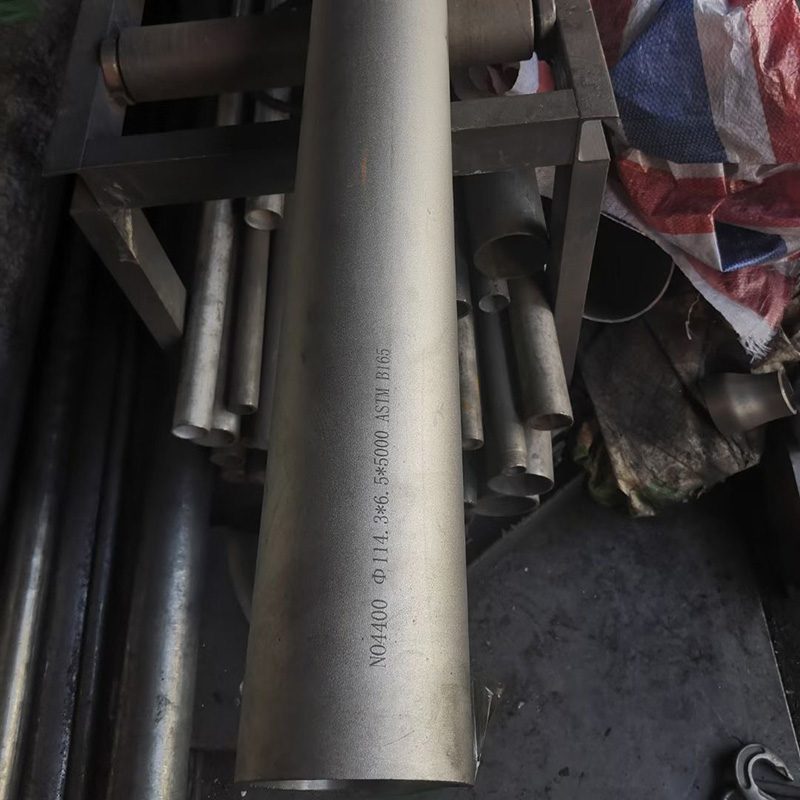
The first step is to understand whether the stainless steel pipe company has sufficient manufacturing capabilities for your requirements.
A professional manufacturer should have appropriate production equipment and processes for producing the types of stainless steel pipes you need. Depending on the products, manufacturing capabilities may include forming, welding, heat treatment, sizing, straightening, cutting, surface treatment, and inspection.
Production capacity is also important. A supplier may provide good products for a small order but struggle to maintain consistent quality and delivery schedules when order volumes increase.
When evaluating a supplier, consider its production facilities, available pipe sizes, wall thickness ranges, stainless steel grades, production capacity, and experience with similar orders.
A manufacturer with strong production capabilities is generally better positioned to support both current and future purchasing requirements.
Different applications require different stainless steel grades. Therefore, buyers should confirm whether a potential supplier can provide the materials required for their projects.
304 and 316 stainless steel are widely used because of their good corrosion resistance and versatility. However, other stainless steel grades may be required for applications involving higher temperatures, stronger mechanical requirements, or more aggressive chemical environments.
A reliable stainless steel pipe company should be able to clearly explain the characteristics and applications of the grades it supplies.
The supplier should also provide appropriate material documentation so buyers can verify the specified grade and relevant material properties.
Product quality should be one of the most important factors when selecting a long-term supplier.
A professional stainless steel pipe manufacturer should have a systematic quality control process covering raw materials, production, dimensional inspection, surface inspection, testing, final inspection, and packaging.
Buyers should ask how the company controls raw materials and how it checks finished products. Depending on the product specification, quality inspections may include dimensional checks, tensile testing, hardness testing, hydrostatic testing, flattening testing, and non-destructive testing.
A strong quality control system helps reduce batch-to-batch variation and ensures that products remain consistent over repeated orders.
Stainless steel pipes are often manufactured according to specific international or industry standards. Depending on the market and application, customers may require compliance with standards such as ASTM, ASME, EN, DIN, or JIS.
Before choosing a supplier, confirm that the company has experience producing products according to the standards required for your project.
It is also important to check whether the supplier can provide relevant inspection reports, material certificates, certificates of conformity, and other quality documentation.
For long-term cooperation, a supplier that understands international standards can make future procurement and technical communication much easier.
Product consistency is especially important when purchasing stainless steel pipes repeatedly.
A long-term supplier should be able to maintain stable dimensions, material quality, surface condition, and mechanical performance from one batch to another.
Inconsistent products can create problems during installation, particularly when pipes need to connect with fittings, valves, flanges, or other components.
Before entering into a long-term agreement, buyers can consider placing a trial order to evaluate product quality and consistency. The results can then be compared with the agreed technical specifications.
A supplier’s ability to deliver products on time is just as important as product quality.
Delays in stainless steel pipe delivery can affect construction schedules, equipment installation, inventory planning, and customer commitments. For businesses with continuous demand, reliable production scheduling is therefore essential.
When evaluating a stainless steel pipe company, ask about its normal production lead time, monthly production capacity, inventory practices, and ability to handle urgent or large-volume orders.
A professional supplier should communicate clearly about production schedules and notify customers promptly if unexpected issues may affect delivery.
Not every industrial project uses standard stainless steel pipes. Some customers may require specific dimensions, lengths, wall thicknesses, surface finishes, end treatments, or material grades.
A reliable stainless steel pipe company should have the technical capability to handle reasonable customization requirements.
Before selecting a supplier, confirm whether it can manufacture products according to customer drawings and specifications. The supplier should also have an engineering or technical team capable of reviewing technical requirements and identifying potential production issues before manufacturing begins.
Customization capability can be particularly valuable for engineering companies and industrial equipment manufacturers with specialized piping requirements.
Traceability is another important factor for long-term industrial supply.
A professional manufacturer should be able to trace finished products back to relevant production information, such as raw material batches, production dates, inspection records, and quality documentation.
Good traceability helps manufacturers and customers identify the source of potential quality problems and take corrective action more efficiently.
It also provides greater confidence for customers working on large projects where detailed material records may be required.
Even high-quality stainless steel pipes can be damaged if they are poorly packaged or handled during transportation.
A reliable supplier should use packaging methods appropriate for the product and transportation conditions. Pipes should be securely bundled and protected against impacts, scratches, moisture, contamination, and other potential sources of damage.
Buyers should also discuss shipping marks, labeling, quantity requirements, loading methods, and special packaging instructions before placing large orders.
Good packaging and logistics management help ensure that products arrive at the customer’s facility in the same condition as when they left the factory.
Long-term supply relationships require effective communication.
A supplier may offer competitive pricing and good products, but poor communication can still create problems with specifications, production schedules, documentation, and delivery arrangements.
When evaluating a stainless steel pipe company, pay attention to how quickly and accurately the sales and technical teams respond to inquiries.
A reliable supplier should be able to provide clear information about product specifications, quotations, production schedules, inspection results, shipping arrangements, and technical questions.
Good communication becomes increasingly important as order volumes and project complexity increase.
Price is an important purchasing factor, but it should not be the only consideration when choosing a stainless steel pipe company.
The lowest quotation may not always provide the lowest overall cost. Poor-quality pipes can lead to installation problems, rejected products, delays, repairs, replacement costs, and additional transportation expenses.
Instead of comparing only the unit price, buyers should evaluate the overall value provided by each supplier.
Important factors include product quality, service life, delivery reliability, inspection capabilities, documentation, customization, technical support, and after-sales service.
A slightly higher purchase price may provide better long-term value if the supplier offers more reliable and consistent products.
For new suppliers, requesting samples or placing a trial order can be an effective way to evaluate actual performance.
Samples allow buyers to inspect dimensions, surface finish, material information, packaging, and other product characteristics before committing to larger quantities.
A trial order also provides an opportunity to evaluate the supplier’s communication, production efficiency, inspection process, documentation, and delivery performance.
After the trial order, buyers can determine whether the supplier is capable of meeting the requirements consistently before establishing a long-term purchasing relationship.
Experience can be an important indicator when selecting a long-term supplier.
A stainless steel pipe company with experience serving industrial customers is more likely to understand common technical requirements, quality expectations, packaging standards, and international shipping procedures.
Industry experience is particularly valuable when products are used in demanding applications such as chemical processing, oil and gas, food processing, pharmaceutical systems, and marine environments.
When possible, buyers should review the supplier’s product range, target industries, export experience, and previous project experience.
A reliable long-term supplier should have the resources and organizational capabilities to support customers over time.
This includes stable raw material sourcing, adequate production capacity, experienced employees, quality management procedures, and effective supply chain management.
Buyers should consider whether the company can continue supplying the same products and specifications as their business grows.
Long-term stability can reduce the need to repeatedly search for new suppliers and can make procurement planning more predictable.
Before selecting a stainless steel pipe company, buyers can create a supplier evaluation checklist to compare different candidates objectively.
The checklist may include:
Stainless steel grades available
Product sizes and specifications
Manufacturing capabilities
Production capacity
Quality control procedures
Testing capabilities
International standards compliance
Material traceability
Customization capabilities
Lead times
Packaging methods
Export experience
Technical support
Customer service
Pricing and payment terms
Using the same criteria for each supplier makes it easier to identify the company that offers the best overall fit.
For businesses that purchase stainless steel pipes regularly, supplier reliability directly affects operational efficiency.
A dependable supplier can help customers maintain stable inventory, reduce procurement risks, improve production planning, and avoid unexpected project delays.
Long-term cooperation can also make communication more efficient. Once a supplier understands a customer’s technical requirements, preferred specifications, packaging standards, and purchasing schedule, future orders can often be processed more smoothly.
This makes supplier selection a strategic business decision rather than simply a purchasing transaction.
Finding a reliable stainless steel pipe company for long-term supply requires more than comparing product prices. Buyers should evaluate manufacturing capabilities, material grades, quality control systems, standards compliance, production capacity, delivery reliability, customization capabilities, traceability, packaging, communication, and industry experience.
A trial order can provide valuable insight into a supplier’s actual product quality and service performance before a long-term relationship is established.
The ideal supplier is not necessarily the company offering the lowest price. Instead, it should be a manufacturer capable of consistently delivering quality stainless steel pipes, meeting technical requirements, maintaining reliable lead times, and providing responsive service.
By conducting a comprehensive supplier evaluation, businesses can reduce procurement risks, improve supply chain stability, and establish a dependable long-term partnership with a professional stainless steel pipe company.
How do I find a reliable stainless steel pipe company?
Start by evaluating the company’s manufacturing capabilities, product range, quality control system, certifications, production capacity, delivery performance, customization capabilities, and industry experience. Requesting samples or a trial order can also help verify actual product quality.
What should I check before choosing a stainless steel pipe supplier?
Important factors include stainless steel grades, product specifications, manufacturing processes, quality testing, applicable standards, material traceability, production capacity, lead times, packaging, technical support, and customer service.
Is the cheapest stainless steel pipe supplier the best choice?
Not necessarily. The lowest price may result in higher long-term costs if product quality, delivery reliability, or technical support is poor. Buyers should evaluate total value rather than unit price alone.
Can a stainless steel pipe company provide customized products?
Many professional manufacturers can provide customized stainless steel pipes according to requirements such as diameter, wall thickness, length, material grade, surface finish, and applicable standards. Customers should provide detailed specifications before production.
Why is production capacity important for long-term supply?
Adequate production capacity helps a supplier handle regular and increasing order volumes while maintaining stable quality and delivery schedules. This is particularly important for businesses with continuous or large-volume stainless steel pipe requirements.
How can I test a new stainless steel pipe supplier?
You can request product samples or place a small trial order. Evaluate product dimensions, material information, surface quality, packaging, documentation, delivery time, communication, and overall service before moving to larger orders.
What makes a stainless steel pipe company suitable for long-term cooperation?
A suitable long-term supplier should provide consistent product quality, stable production capacity, reliable delivery, transparent communication, technical support, proper documentation, and responsive after-sales service.



STAINLESS STEEL&GENCEL;
Privacy Policy | SiteMap
Copyright GENCEL STAINLESS STEEL CO.,LIMITED
 Optimized by Seraphinite Accelerator