- Whatsapp: 8613738300923
- Email: [email protected]


Choosing the right centrifugal pump for industrial applications is a matching problem, not a catalogue-browsing exercise. Plant engineers need a machine that meets the duty point without cavitating. Project contractors need connections that fit the rest of the line. Procurement teams need a specification complete enough to compare quotations on equal terms.
A centrifugal pump converts rotational energy from an impeller into flow and pressure (head). It is the usual first choice for relatively clean, low- to medium-viscosity liquids in food, beverage, dairy, pharmaceutical, cosmetic, chemical, water and general process transfer. It is not universal: heavy slurries, sewage and oilfield services normally need a different machine. GENCEL’s published centrifugal pump line is sanitary stainless steel equipment for hygienic process duty, so the examples below focus on clean-liquid and hygienic industrial applications. The selection logic — fluid, duty point, NPSH, impeller, materials and seal — still applies across clean process plants.
This guide explains how to choose the right centrifugal pump by working through the steps below before you request a performance curve. An RFQ checklist is included at the end.

The liquid defines the pump. Before looking at capacity or motor power, record the product name, density, viscosity at the pumping temperature, normal and maximum temperature, corrosiveness, vapour pressure, hygiene requirements, and whether solids are present.
Viscosity is often the first filter. Centrifugal pumps work best on water-like fluids and on many dairy, beverage and light process media. As viscosity rises, flow, head and efficiency fall, and motor load increases. Thick concentrates, heavy syrups, creams and pastes are often a better fit for a positive-displacement pump. If viscosity changes with temperature or CIP, state both conditions.
Solids need a clear description: type, size, hardness and concentration. An open impeller on a sanitary centrifugal pump can tolerate limited soft particles, but it is not a slurry or sewage pump. Abrasive solids will wear the impeller and casing and should be flagged early.
Temperature and corrosiveness drive material and elastomer choices. Chlorides, acidic products and aggressive cleaning chemicals generally point toward SS316L rather than SS304. For GENCEL sanitary centrifugal pumps with EPDM elastomers, the published temperature range is −10°C to +140°C; if the process or CIP cycle sits near that limit, confirm the elastomer and mechanical seal together. The same sanitary range has a maximum inlet pressure of 0.5 MPa.
Hygiene changes the construction. Food, beverage, dairy, pharmaceutical and cosmetic lines need wetted surfaces that can be cleaned in place, with no unnecessary dead ends. State a hygienic duty at the start so surface finish, impeller type and connections are specified correctly.
Industrial centrifugal pump selection is built around a duty point: required flow and the total dynamic head at that flow. Flow is the process requirement — filling, transfer, circulation or CIP return. Head is the system’s resistance, including static lift, pipe friction and the discharge pressure needed at the destination.
Place the duty point on a published performance curve, preferably near the best efficiency point. A pump far oversized “for safety” often runs at low flow, with extra heat, vibration and seal wear. An undersized pump will miss the required flow once the line is built.
If the same machine must cover production transfer and CIP return, list both points. Size against the more demanding duty and confirm that the second point still sits on a stable part of the curve. GENCEL’s sanitary stainless steel range covers about 1–180 t/h and 0.55–75 kW, but those figures only describe the catalogue envelope. The duty point must be confirmed against a performance curve for the selected model, impeller and speed.
NPSH is a common reason a correctly “sized” pump still fails in the field. NPSHa is a property of the system: static suction head or lift, suction-line friction, liquid temperature and vapour pressure, and the pressure above the liquid surface. NPSHr is a property of the pump and is read from the curve at the duty flow.
NPSHa must exceed NPSHr by a sensible margin. Otherwise the liquid can vaporize at the impeller inlet and collapse as pressure recovers — cavitation — causing noise, vibration, lost flow, impeller pitting and early seal damage. Hot liquids, long or undersized suction lines, suction lifts and high vapour-pressure media all reduce NPSHa.
Treat suction design as part of selection. Prefer a flooded suction where the layout allows it. Keep the suction line short, straight and at least the same diameter as the pump inlet. Avoid unnecessary elbows and reductions close to the pump. The 0.5 MPa maximum inlet pressure on the sanitary range is a limit, not a target.
Closed impellers enclose the vanes between two shrouds. They are often more efficient on clean, low-solids liquids, but the passages are harder to inspect and clean — a problem on hygienic or frequently washed duties.
Open impellers leave the vanes more accessible. They are easier to clean, less prone to trapped product, and more tolerant of limited soft particles, sometimes at a modest cost in hydraulic efficiency. On sanitary process lines, cleanability usually matters more.
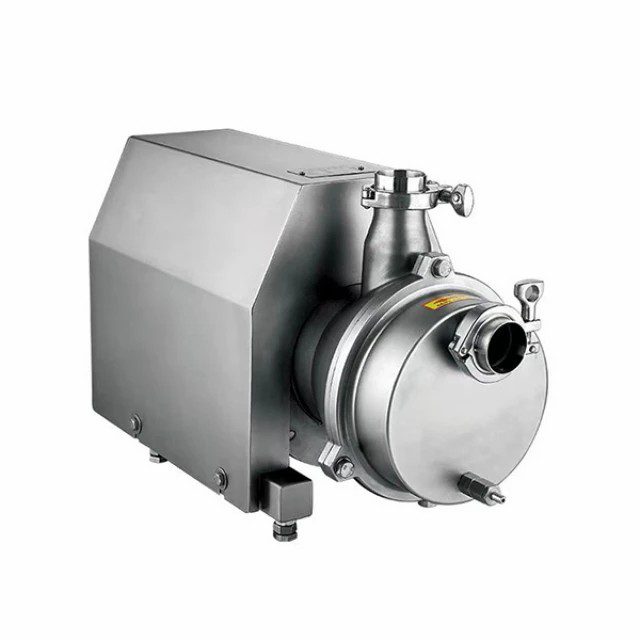
That is why sanitary pumps typically use an open impeller with no dead end. GENCEL’s sanitary stainless steel centrifugal pump follows this construction: an open impeller, no dead end, and wetted parts in SS304 or SS316L. If you are still comparing sanitary and general process designs, see what distinguishes a sanitary centrifugal pump from a standard industrial unit before you freeze the specification.

For hygienic and many general process duties, the choice is usually SS304 or SS316L. SS304 suits milder, low-chloride media. SS316L, with molybdenum and a low carbon content, is the more conservative choice for chlorides, many acidic products, pharmaceutical duties and aggressive CIP chemicals.
Specify the grade for every part in contact with the medium — body, cover and impeller — not only the casing. On GENCEL sanitary pumps, those wetted parts are supplied in the specified grade. State surface finish in the same line item. Mirror polish is the usual hygienic preference because it reduces crevices; matt and sand-blasted finishes are also available where appropriate.
Do not upgrade only the pump and leave incompatible fittings or a mismatched seal elastomer in the same circuit. Product, cleaning chemistry, temperature and neighbouring components all have to agree.
The shaft seal is a frequent source of downtime, yet enquiries often say only “standard mechanical seal.” That is not a specification. The seal must survive the process fluid, maximum temperature, CIP chemicals, operating pressure and any risk of brief dry running during emptying or changeover.
GENCEL sanitary centrifugal pumps use flushed shaft mechanical sealing, which helps keep the seal faces clean and cooler when the same pump may see product one hour and a hot cleaning solution the next. State the fluid, temperature range, CIP media and dry-run risk in the RFQ, and agree face materials and elastomers before the pump is built.
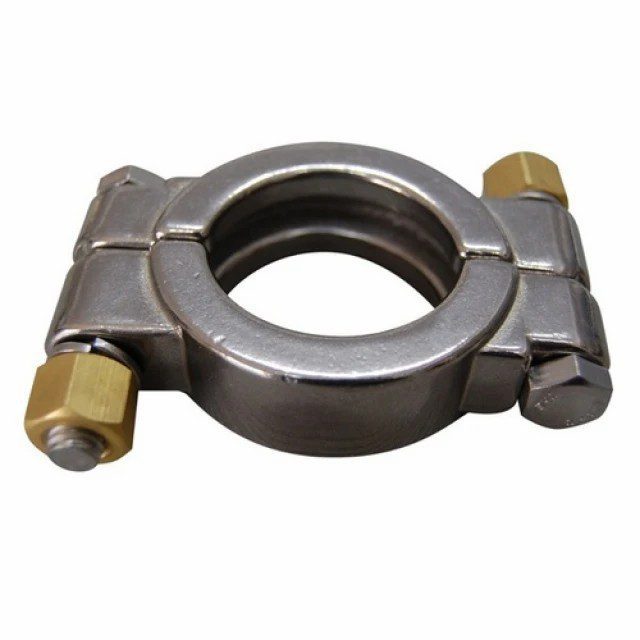
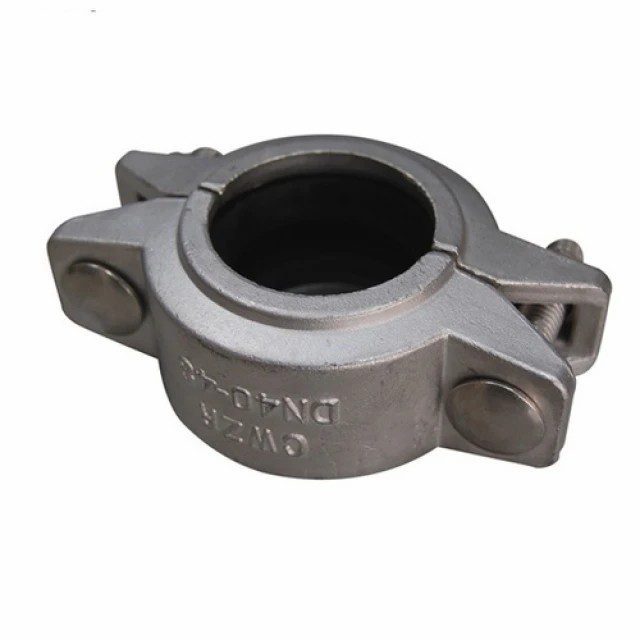
A pump that meets the hydraulic duty but arrives with the wrong end connection will still delay commissioning. Choose the joint from how the line is built and maintained: welding for permanent hygienic joints, clamp connections where the pump must come off the line, screw (threaded) connections where that standard is already used, and flanges where the pump must interface with flanged plant.
On hygienic lines, the dimensional standard matters as much as the joint type. GENCEL sanitary centrifugal pumps are supplied to DIN and SMS standards, which should be called out with the connection style. Nearby unions, bends and valves should follow the same standard so gaskets and clamp sizes match. Keep that coordination tight, but do not let fittings replace the duty as the subject of the enquiry.
If the process is hygienic, cleanability is a selection criterion. Look for an open impeller, no dead ends, drainable casings and a surface finish that can be cleaned in place, so the pump can join a CIP circuit instead of being dismantled after every batch.
CIP return is a common duty for this type of pump, but it is not automatically easier than production. Cleaning solutions may be hotter, more corrosive and required at a different flow. Include CIP temperature, chemistry and flow in the datasheet, and confirm that the seal, elastomer and material grade can handle both regimes. For construction and operating principle, see how a sanitary stainless steel centrifugal pump works.
Motor power should come from the duty point, liquid density and any viscosity correction, with a modest service margin — not from rounding up to the next large frame. An oversized motor wastes energy and can hide a poor hydraulic match. An undersized motor will trip when the line is filled or viscosity is higher than assumed.
Speed belongs in the same decision. GENCEL’s sanitary range is published with speeds up to 3,400 rpm. Higher speed can make a pump more compact, but it also raises NPSHr and can increase wear if solids or poor suction conditions are present. State site voltage, frequency, enclosure and whether a variable-frequency drive will be used. If a drive is planned, confirm the speed range against the curve and the seal’s lubrication needs.
Even a well-chosen pump will disappoint if the installation fights the hydraulics. Allow a straight suction run, proper venting and draining, access for seal and motor service, and pipe support that does not load the casing. Agree alignment, priming (where required) and dry-run protection before start-up.
Common selection mistakes include:
Selecting on flow alone and leaving head for later.
Ignoring NPSH on hot liquids, long suction lines or suction lifts.
Oversizing far to the left of best efficiency.
Specifying a sanitary pump for slurry or sewage, or a non-hygienic pump where CIP and crevice-free construction are required.
Choosing SS304 where chlorides or aggressive CIP chemistry call for SS316L.
Leaving the shaft seal, elastomer and connection standard as “supplier’s option.”
Forgetting that CIP return may be a second duty point.
If those items are written down, a supplier can match a model from a published centrifugal pump range and issue a curve instead of a guess. GENCEL STAINLESS STEEL CO., LIMITED supplies sanitary stainless steel centrifugal pumps, fittings and valves for hygienic process lines, with OEM and ODM support and a minimum order quantity of one. Once the checklist below is complete, review the duty against a performance curve before committing to a frame size.
Use this checklist to brief a manufacturer or to compare quotations. Complete each row with your process data before you ask for a model number.
| Parameter | What to specify in the RFQ |
|---|---|
| Process fluid | Product name, corrosiveness and hygiene or cleanability grade |
| Capacity (flow rate) | Design flow, plus minimum and maximum if the duty varies |
| Head | Total dynamic head at the design flow, including static lift and pipe friction |
| Temperature | Normal and maximum product temperature, including CIP if applicable |
| Viscosity | Value at the pumping temperature, or “similar to water” if that is accurate |
| Solids | Type, size and concentration, or “none” |
| Wetted material | SS304, SS316L, or “advise against the fluid and CIP chemistry” |
| Connection and standard | Welding, screw, clamp or flange; DIN or SMS (or another plant standard) |
| CIP required? | Yes or no, plus CIP flow, temperature and chemicals if known |
| Duty cycle | Continuous, intermittent, or production transfer plus CIP return |
1. How do I choose the right centrifugal pump for an industrial application?
Start with the process fluid, then fix the duty point (flow and total dynamic head), check that NPSHa exceeds the pump’s NPSHr, and only then select impeller type, wetted material, shaft seal, connections and motor speed. Confirm the model on a performance curve. For hygienic duties, also specify cleanability, surface finish and CIP conditions. A centrifugal pump suits relatively clean, low- to medium-viscosity liquids, not heavy slurry, sewage or oilfield service.
2. What process data do I need before selecting a centrifugal pump?
You need the fluid name, density, viscosity at pumping temperature, normal and maximum temperature, solids content, corrosiveness, required flow, total dynamic head, suction conditions (NPSHa or enough layout detail to calculate it), connection type and standard, material preference, seal or elastomer constraints, CIP requirements and duty cycle. Without that data, a supplier can only offer a generic frame, not a verified duty point.
3. How do flow rate and head affect centrifugal pump selection?
Flow rate is the capacity the process needs. Head is the energy the pump must add to overcome static lift, friction and discharge pressure. Together they form the duty point, which must sit on the pump curve, preferably near best efficiency. Selecting on flow alone, or adding a large unused head margin, often pushes the pump into a poor operating region and leads to vibration, heat, seal wear or missed capacity.
4. Why is NPSH important when choosing a centrifugal pump?
NPSH determines whether the liquid stays liquid at the impeller inlet. If available NPSH is lower than the pump’s required NPSH, cavitation can occur, damaging the impeller and seal and cutting flow. Hot liquids, long or narrow suction lines, suction lifts and high vapour-pressure media reduce available NPSH. Review suction layout at the selection stage, not after installation.
5. When should I specify an open impeller instead of a closed impeller?
Specify an open impeller when the pump must be cleaned in place, when dead ends are unacceptable, or when the liquid may contain limited soft particles. Closed impellers can be more efficient on clean, low-solids liquids but are harder to clean. Sanitary centrifugal pumps for food, beverage, dairy, pharmaceutical and cosmetic processing therefore typically use an open impeller with no dead end.
6. Should I choose SS304 or SS316L for a sanitary centrifugal pump?
Choose SS304 for milder, low-chloride media with modest corrosion risk. Choose SS316L when the product or CIP chemistry involves chlorides, acidic conditions or pharmaceutical duty. Apply the same grade to the body, cover and impeller in contact with the medium, and make sure the elastomer and seal materials are compatible with both the product and the cleaning cycle.
7. Can one centrifugal pump cover both production transfer and CIP return?
Yes, but only if both duty points are stated and checked on the curve. CIP return may need a different flow, a higher temperature and a more aggressive fluid than production transfer. The material, seal and elastomer must tolerate both regimes, and the less favourable NPSH and power condition should still leave a workable margin. If the two duties are far apart, two pumps or a drive-controlled operating range may be required.

STAINLESS STEEL&GENCEL;
Privacy Policy | SiteMap
Copyright GENCEL STAINLESS STEEL CO.,LIMITED
 Optimized by Seraphinite Accelerator