- Whatsapp: 8613738300923
- Email: [email protected]


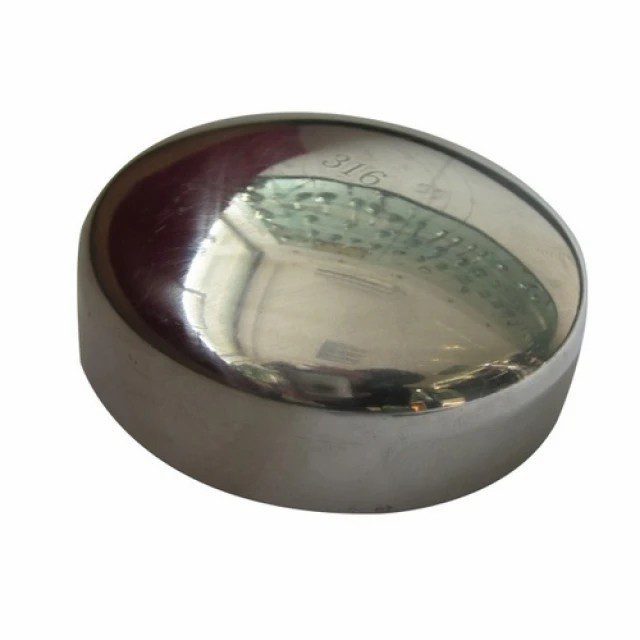
Choosing the right stainless steel end caps for pipes manufacturer is important for importers, distributors, contractors, and industrial companies that need consistent pipe fitting quality and reliable supply. Stainless steel end caps are used in industrial piping, chemical processing, water treatment, food and beverage, pharmaceutical, petrochemical, and other applications where pipe ends need to be securely closed.
Although stainless steel end caps are relatively simple fittings, differences in material quality, dimensional accuracy, manufacturing processes, surface finish, and quality control can affect their performance and compatibility with piping systems.
When comparing manufacturers, buyers should therefore look beyond product price and evaluate the supplier’s overall manufacturing and service capabilities.

Manufacturing experience is a useful starting point when evaluating a stainless steel end caps manufacturer. A company with experience in stainless steel pipe fittings is more likely to have established production processes, experienced workers, appropriate equipment, and knowledge of industry standards.
Buyers should look at how long the manufacturer has produced stainless steel fittings and whether end caps are part of its regular product range. Experience with different sizes, materials, connection types, and industry applications can also be valuable.
However, years in business alone should not determine the selection. Experience should be considered together with production equipment, quality control, certifications, product documentation, and actual manufacturing capabilities.
The material used to manufacture end caps directly affects corrosion resistance, strength, durability, and service life.
304 and 316 stainless steel are common choices for pipe fittings. 304 stainless steel is widely used for general industrial and commercial applications, while 316 stainless steel is often selected for environments requiring greater resistance to certain corrosive media.
A qualified manufacturer should have procedures for controlling incoming raw materials and verifying material specifications. Depending on project requirements, buyers may also request material certificates or other documentation.
It is important to confirm the exact material grade rather than relying on a general description such as “stainless steel pipe fittings.”
A capable manufacturer should have suitable equipment and processes for producing stainless steel end caps accurately and consistently.
Depending on the product design, manufacturing may involve forming, machining, welding, trimming, heat treatment, surface finishing, and other processes. For butt weld end caps, dimensional accuracy at the connection area is particularly important because the fitting needs to match the pipe correctly.
Buyers should also consider whether the manufacturer can maintain consistent dimensions across repeated production batches. This is especially important for distributors and industrial users that place regular orders.
Quality control is one of the most important factors when choosing a stainless steel end caps manufacturer.
A reliable manufacturer should have quality inspection procedures covering raw materials, production processes, dimensions, surface condition, and finished products. Depending on the product and application, inspections may include dimensional checks, material verification, visual inspection, wall thickness measurement, and other applicable tests.
For industrial projects, buyers may also require inspection reports, material certificates, or other quality documents.
Before placing a large order, ask the manufacturer how it controls product quality and how non-conforming products are identified and handled.
Different markets and piping systems may require different product standards. A manufacturer should understand the relevant specifications for the products it supplies.
Depending on the application and market, stainless steel end caps may be manufactured according to standards such as ASME, ASTM, EN, DIN, or other applicable specifications.
For example, ASME B16.9 is commonly referenced for factory-made wrought butt welding fittings. Material requirements may involve applicable ASTM specifications.
Buyers should confirm the exact dimensional and material standards required for their project and verify that the manufacturer’s products comply with those requirements.
A manufacturer with a suitable product range can make sourcing easier for distributors and importers.
When evaluating a supplier, check the available:
Nominal pipe sizes
Metric and inch dimensions
Stainless steel grades
Wall thicknesses or schedules
Butt weld connections
Threaded connections
Sanitary connections
Surface finishes
Standard and customized dimensions
The manufacturer should be able to provide clear product specifications and technical drawings when required.
A broad product range is useful, but it should be supported by consistent quality and reliable production capacity.
Standard end caps may not meet every project’s requirements. Some buyers may need customized dimensions, special materials, non-standard connection designs, specific surface finishes, product markings, or private-label packaging.
If customization is important, ask whether the manufacturer can work from customer drawings, samples, or technical specifications.
For OEM projects, buyers should also understand the manufacturer’s process for sample approval, production confirmation, quality inspection, packaging, and delivery. Clear communication before mass production can help reduce differences between the approved sample and final products.
Production capacity is particularly important for importers and distributors that need regular or large-volume orders.
A manufacturer should have sufficient production equipment, workforce, raw material supply, and production planning to meet expected order quantities.
Buyers should ask about standard production lead times, MOQ requirements, peak-season capacity, and the manufacturer’s ability to handle repeat orders. A supplier that can consistently deliver products on schedule can help distributors maintain stable inventory.
Lead time should also be considered together with quality. A very short production period may not be meaningful if it results in inconsistent product quality.
For international buyers, export experience can make the purchasing process more efficient.
An experienced stainless steel pipe fitting manufacturer should understand international packaging, labeling, shipping, and export documentation requirements. Depending on the destination and order, buyers may require commercial invoices, packing lists, certificates of origin, material certificates, inspection reports, and technical documents.
Export experience may also indicate that the manufacturer is familiar with different international standards and customer requirements.
Importers should confirm whether the manufacturer has experience supplying their target market and can provide the required documentation.
Price is an important part of supplier evaluation, but the lowest quotation should not automatically determine the final decision.
Differences in raw materials, manufacturing processes, inspection procedures, packaging, and product consistency can all affect the actual cost of purchasing stainless steel end caps.
For distributors, inconsistent quality can create additional costs through customer complaints, returns, replacements, and inventory problems.
A better approach is to compare the total value offered by each manufacturer, including product quality, technical support, customization, delivery reliability, documentation, and after-sales service.
Effective communication is especially important when purchasing industrial pipe fittings.
A professional manufacturer should be able to answer questions about material grades, dimensions, standards, connection methods, surface finishes, and other technical specifications.
The supplier should also communicate clearly about quotations, samples, production schedules, inspections, packaging, and shipment arrangements.
For customized or technically demanding products, good communication can help prevent specification errors and reduce unnecessary production delays.
Before placing a large order, buyers can request samples when appropriate. A sample allows them to check dimensions, material, surface finish, connection quality, markings, and overall workmanship.
Buyers can also request relevant documents such as:
Product datasheets
Technical drawings
Material certificates
Inspection reports
Test reports
Quality certifications
Product catalogs
For larger projects, a supplier audit or factory visit can provide additional information about production equipment, quality management, storage, and manufacturing processes.
Before choosing a manufacturer, importers and distributors can ask:
What stainless steel grades do you manufacture?
Which pipe sizes and standards are available?
Can you provide 304 and 316 stainless steel end caps?
What connection types can you produce?
What quality inspections are performed?
Can you provide material certificates and inspection reports?
Do you support OEM and customized products?
What are your MOQ and standard lead times?
Which countries or regions do you export to?
Can you provide product drawings and technical specifications?
The answers can help buyers compare suppliers using consistent criteria.
Choosing the right stainless steel end caps for pipes manufacturer requires more than comparing prices. Buyers should evaluate manufacturing experience, material quality, processing capabilities, quality control, applicable standards, product range, customization services, production capacity, export experience, documentation, and technical support.
For importers, distributors, and industrial users, a reliable manufacturer should be able to provide consistent product quality and stable supply while meeting the required technical specifications. Taking time to evaluate these factors before placing an order can help reduce purchasing risks and establish a more reliable long-term supplier relationship.
1. How do I choose a stainless steel end caps for pipes manufacturer?
Evaluate the manufacturer’s industry experience, material quality, production capabilities, quality control system, applicable standards, product range, customization services, production capacity, export experience, and technical support. Price should be considered together with product quality and supply reliability.
2. What stainless steel materials should a pipe end cap manufacturer offer?
304 and 316 stainless steel are common choices for pipe end caps. 304 is suitable for many general applications, while 316 is often selected for environments requiring greater resistance to certain corrosive media. Other grades may be available for specialized applications.
3. What standards should stainless steel end caps comply with?
Depending on the product and market, stainless steel end caps may be manufactured according to standards such as ASME, ASTM, EN, or DIN. Buyers should confirm the exact dimensional and material standards required for their application.
4. Can a stainless steel end cap manufacturer provide customized products?
Yes. Depending on its manufacturing capabilities, a factory may provide customized dimensions, materials, connection types, surface finishes, markings, packaging, and other specifications based on customer drawings or technical requirements.
5. What quality inspections should a stainless steel end cap manufacturer perform?
Quality control may include raw material verification, dimensional inspection, wall thickness measurement, visual inspection, surface inspection, and other applicable tests. Specific inspection requirements depend on the product standard and application.

STAINLESS STEEL&GENCEL;
Privacy Policy | SiteMap
Copyright GENCEL STAINLESS STEEL CO.,LIMITED
 Optimized by Seraphinite Accelerator