- Whatsapp: 8613738300923
- Email: [email protected]


Choosing the right stainless steel ball valve factory is an important decision for distributors, importers, engineering companies, and industrial buyers. Stainless steel ball valves are widely used in water treatment, chemical processing, food and beverage, pharmaceutical, oil and gas, petrochemical, and general industrial piping systems. Because valve performance can directly affect the safety, reliability, and efficiency of a piping system, buyers need to evaluate more than product appearance or price.
A reliable factory should have suitable manufacturing capabilities, consistent material quality, strict inspection procedures, experienced technical personnel, and the ability to provide products that match specific application requirements. Buyers should also consider production capacity, customization capabilities, certifications, communication, and after-sales support before establishing a long-term cooperation.
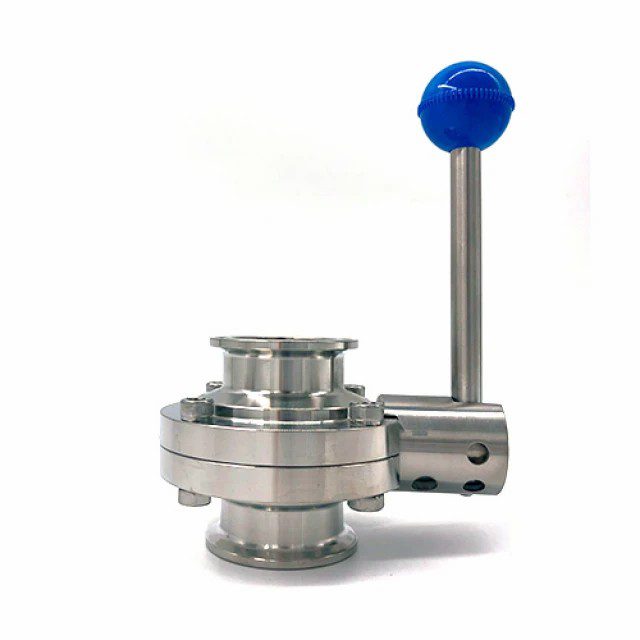
Material selection is one of the first factors to consider when evaluating a stainless steel ball valve factory. Common stainless steel grades include 304 and 316, while 316L is also widely used when improved corrosion resistance or specific hygienic requirements are needed.
A qualified factory should be able to clearly identify the materials used for the valve body, ball, stem, and other critical components. Material traceability is also important for industrial applications where buyers may require documentation or material certificates.
The factory should understand how different stainless steel grades perform under different operating conditions. For example, 316 stainless steel generally provides better resistance to certain corrosive environments than 304 stainless steel. The appropriate material should therefore be selected according to the fluid, temperature, pressure, and application environment rather than simply choosing the most commonly used grade.
A stainless steel ball valve factory should have appropriate equipment and manufacturing processes for producing valves with consistent dimensions and performance. Depending on the product range, manufacturing may involve casting or forging, CNC machining, drilling, grinding, polishing, assembly, pressure testing, and final inspection.
Machining accuracy is particularly important for components such as the valve ball, stem, and sealing surfaces. Small dimensional variations can affect sealing performance, operating torque, and service life.
When evaluating a factory, buyers should therefore look beyond its product catalog and ask about its actual production capabilities. A factory with in-house machining and assembly capabilities may have better control over production consistency and lead times than a company that relies heavily on external suppliers.
Quality control is another important factor when selecting a stainless steel ball valve factory. A professional manufacturer should have inspection procedures covering incoming materials, machining dimensions, component assembly, sealing performance, and finished products.
Ball valves may require different tests depending on their design and application. Pressure testing and leakage testing are particularly important because the valve must maintain reliable shut-off performance under operating conditions.
A factory should also have suitable inspection equipment and trained quality-control personnel. Buyers can ask whether the manufacturer provides inspection reports, test records, material certificates, or other quality documentation when required.
Consistent quality control is especially important for distributors and industrial buyers purchasing large quantities. A factory may produce an excellent sample, but the more important question is whether it can maintain the same quality across repeated production batches.
A suitable factory should offer a product range that matches the buyer’s market and application requirements. Stainless steel ball valves are available in different configurations, including 1-piece, 2-piece, and 3-piece designs, as well as full-port and reduced-port versions.
Connection options may include threaded, socket weld, butt weld, flanged, or other configurations depending on the application. Valve sizes, pressure ratings, seat materials, handle designs, and operating methods can also vary.
A factory with a broad product range can make sourcing more efficient for distributors and engineering companies. However, product variety should be supported by actual manufacturing capability rather than simply a large online catalog.
Customization can be an important consideration for buyers with specific market or project requirements. A capable stainless steel ball valve factory should be able to evaluate customized requirements related to dimensions, materials, connection types, pressure ratings, handles, surface treatment, packaging, labeling, and other product specifications.
OEM services may also include private labeling, customized packaging, laser marking, product identification, and documentation. For distributors, these services can make it easier to develop products under their own brand.
Before placing a customized order, buyers should confirm whether the factory has the technical resources to review drawings, samples, specifications, and application requirements. Clear communication during the design and pre-production stage can help reduce manufacturing errors and unnecessary costs.
Certifications and compliance documents can provide useful information about a factory’s quality-management and manufacturing practices. Depending on the target market and valve application, buyers may require different standards, certifications, or test documentation.
A factory should be able to clearly explain which standards its products are designed or tested according to and provide valid documentation when applicable. Buyers should also verify whether the certification applies to the specific valve model and manufacturing facility rather than assuming that every product in the catalog has the same certification.
For export-oriented projects, understanding the regulatory and technical requirements of the destination market is particularly important before production begins.
Production capacity should also be considered, especially for distributors and customers purchasing valves in large quantities. A factory may have suitable products but lack the capacity to handle regular bulk orders or sudden increases in demand.
Buyers can ask about standard production lead times, monthly capacity, raw material availability, production scheduling, and quality-control procedures during high-volume production.
Stable delivery is not only about manufacturing speed. A reliable factory should have a systematic production process that allows it to maintain product quality while meeting agreed delivery schedules.
Experience in stainless steel ball valve manufacturing can be valuable when products are used in demanding industrial environments. An experienced factory is more likely to understand common manufacturing challenges, material selection issues, sealing problems, machining tolerances, and application requirements.
Technical support is also important when buyers are unsure which valve configuration is suitable. A professional manufacturer should be able to discuss factors such as media compatibility, working pressure, temperature, connection method, valve size, and operating frequency.
Instead of simply recommending the most expensive product, the factory should help customers match the valve design with the actual operating conditions.
Communication is often overlooked when buyers compare stainless steel ball valve factories, but it can have a significant impact on long-term cooperation. Clear communication is particularly important for international B2B orders involving technical drawings, specifications, packaging requirements, inspection documents, and delivery schedules.
A reliable factory should respond clearly to technical questions and provide consistent information throughout the quotation, sampling, production, and shipping stages. Good communication can also help identify potential technical problems before mass production.
After-sales support should be considered as well. Buyers should understand how the factory handles product quality issues, replacement requests, technical questions, and future orders.
Price is naturally important when sourcing stainless steel ball valves, but it should not be the only factor used to compare factories. A lower quotation may result from differences in material grade, component quality, machining accuracy, testing procedures, packaging, or quality control.
Instead of comparing only the unit price, buyers should evaluate the overall value of the product. Material quality, manufacturing consistency, testing, certifications, delivery reliability, customization capability, and service can all influence the actual cost of ownership.
A factory offering a competitive price together with stable quality and reliable service may provide greater long-term value than a supplier competing primarily on the lowest initial price.
Before choosing a factory, buyers can prepare a basic evaluation checklist covering several areas. These may include stainless steel grades, manufacturing processes, product specifications, quality-control procedures, testing capabilities, certifications, production capacity, customization services, lead times, packaging, and after-sales support.
Requesting samples can also help buyers evaluate product construction, surface finish, machining quality, handle operation, and general manufacturing consistency. For larger projects, buyers may also request relevant technical documents and inspection records before placing a bulk order.
Factory communication is another useful part of the evaluation process. The way a manufacturer handles technical questions, drawings, specifications, and sample requirements can provide practical insight into its ability to support long-term B2B cooperation.
Selecting a reliable stainless steel ball valve factory requires more than comparing product prices. Buyers should evaluate material quality, manufacturing capabilities, quality control, product range, customization, certifications, production capacity, technical support, communication, and delivery reliability.
For distributors, importers, and industrial users, the goal is to find a manufacturing partner that can consistently provide stainless steel ball valves that meet the required specifications and application conditions. A careful evaluation before the first bulk order can help reduce quality risks, delivery problems, and unnecessary sourcing costs while establishing a more stable long-term supply relationship.
What should I look for in a stainless steel ball valve factory?
Look for a factory with reliable material sourcing, accurate machining, strict quality control, pressure and leakage testing, suitable production capacity, customization capabilities, relevant certifications, and consistent delivery performance.
How can I check the quality of a stainless steel ball valve factory?
You can evaluate its manufacturing equipment, inspection procedures, material traceability, testing capabilities, quality certificates, product samples, and production experience. For larger orders, requesting inspection reports and material certificates can provide additional quality assurance.
What stainless steel materials are commonly used for ball valves?
304 and 316 stainless steel are among the most commonly used materials. 316L stainless steel is also used for applications requiring specific corrosion-resistance or hygienic characteristics. The appropriate material depends on the fluid, temperature, pressure, and operating environment.
Can a stainless steel ball valve factory provide customized valves?
Many manufacturers can provide customized stainless steel ball valves based on drawings, samples, dimensions, connection types, materials, pressure ratings, handles, markings, packaging, and other requirements. Buyers should confirm the factory’s OEM and customization capabilities before placing an order.
What certifications should a stainless steel ball valve factory have?
The required certifications depend on the product design, application, and target market. Buyers should check whether the factory can provide the relevant quality-management certificates, product certifications, test reports, and material documentation required for their specific market.
Why is factory production capacity important when buying stainless steel ball valves?
Production capacity affects a manufacturer’s ability to handle bulk orders and maintain stable delivery schedules. Buyers should consider production equipment, manufacturing processes, raw material availability, lead times, and the factory’s ability to maintain consistent quality during high-volume production.

STAINLESS STEEL&GENCEL;
Privacy Policy | SiteMap
Copyright GENCEL STAINLESS STEEL CO.,LIMITED
 Optimized by Seraphinite Accelerator