- Whatsapp: 8613738300923
- Email: [email protected]


Sanitary stainless steel clamps are widely used to connect, secure, and seal components in hygienic piping and fluid handling systems. They are commonly found in industries where cleanliness, corrosion resistance, easy maintenance, and reliable connections are important.
Unlike conventional pipe connections that may require threading, welding, or complicated fastening methods, sanitary clamps provide a relatively simple way to connect pipes, fittings, valves, pumps, tanks, and other equipment. Their design also allows components to be disconnected for inspection, cleaning, maintenance, or replacement.
Sanitary stainless steel clamps are particularly common in food and beverage processing, pharmaceutical manufacturing, biotechnology, cosmetics, dairy processing, and other hygienic applications. The appropriate clamp type and material depend on factors such as pipe size, operating conditions, cleaning methods, and the requirements of the specific application.
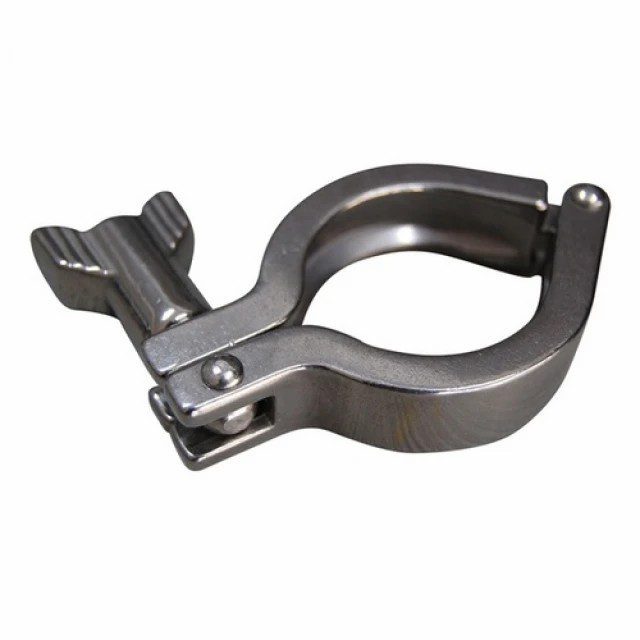
A sanitary stainless steel clamp is a mechanical connection component designed for hygienic piping systems. It typically consists of a stainless steel clamp mechanism used to join two sanitary ferrules, with a suitable gasket positioned between the mating surfaces.
When the clamp is tightened, it applies pressure to the ferrules and gasket, creating a secure connection and helping prevent fluid leakage.
Stainless steel is commonly used because it offers good corrosion resistance, mechanical strength, durability, and compatibility with many cleaning and processing environments. 304 and 316 stainless steel are among the materials frequently selected for sanitary applications, although the appropriate grade should be determined according to the process environment and application requirements.
Sanitary stainless steel clamps are mainly used to create removable and hygienic connections between components in fluid and process systems.
They can connect sections of sanitary tubing, fittings, valves, pumps, tanks, filters, heat exchangers, and other processing equipment. Because the connection can be opened without cutting or permanently modifying the piping, sanitary clamps can simplify equipment maintenance and system reconfiguration.
They are especially useful in applications where equipment needs to be cleaned, inspected, or replaced regularly.
Food and beverage production is one of the most common applications for sanitary stainless steel clamps. Processing systems may handle milk, juice, beer, wine, sauces, edible oils, liquid ingredients, and other food products.
In these systems, piping connections need to support hygienic processing and regular cleaning. Sanitary clamps allow pipes and equipment to be connected while providing relatively easy access for maintenance and cleaning.
They can be used in processing lines, filling systems, storage tanks, pumps, filtration equipment, and other parts of food and beverage production facilities.
Dairy systems require hygienic piping because milk and other dairy products can be sensitive to contamination and residue buildup.
Sanitary stainless steel clamps can be used to connect tubing, valves, pumps, tanks, and processing equipment in milk processing and other dairy applications. Their removable design can also make it easier to inspect connections and maintain the piping system.
The clamp material, gasket material, surface finish, and connection design should be selected according to the specific dairy processing conditions and cleaning procedures.
Pharmaceutical manufacturing uses hygienic process systems for transferring liquids, ingredients, purified water, and other process fluids.
Sanitary stainless steel clamps are commonly used where piping connections need to be secure, cleanable, and accessible for maintenance. Their removable construction can be useful when equipment needs to be inspected or components need to be replaced.
For pharmaceutical applications, additional requirements may apply to materials, surface finishes, gasket selection, cleaning procedures, and documentation. Therefore, the clamp should be selected according to the applicable process and equipment requirements rather than based on size alone.
Biotechnology and laboratory processing systems may use sanitary clamps to connect tubing, vessels, filters, pumps, and other equipment.
These applications can involve relatively specialized process requirements, including frequent cleaning or equipment changes. A removable clamp connection can make it easier to access different parts of the system without permanently altering the piping.
The required stainless steel grade and gasket material depend on the fluids, temperatures, cleaning chemicals, and other operating conditions.
Cosmetic and personal care products such as creams, lotions, shampoos, liquid soaps, and other formulations may be manufactured using hygienic processing equipment.
Sanitary stainless steel clamps can be used in mixing, transferring, filling, and storage systems. They provide a practical connection method for pipes and processing equipment while allowing components to be removed for cleaning and maintenance.
For viscous products or processes involving frequent equipment cleaning, the connection design and internal surface condition should be considered carefully.
Sanitary clamps can also be used in certain purified water, process water, and hygienic fluid handling systems.
They may connect tubing, valves, filtration units, pumps, tanks, and other equipment where cleanable connections are required. However, not every water system requires sanitary clamp connections, so the connection type should be selected based on the system’s hygiene requirements, fluid characteristics, pressure, temperature, and applicable standards.
One major advantage of sanitary stainless steel clamps is their removability. Unlike permanently welded connections, a clamp connection can generally be opened when maintenance or inspection is required.
Another benefit is the relatively simple installation process. Depending on the clamp design, operators can connect or disconnect components without extensive specialized equipment.
Stainless steel also provides good corrosion resistance and durability in many industrial environments. When combined with an appropriate gasket and properly designed sanitary ferrules, the connection can provide reliable sealing for hygienic process systems.
The smooth and cleanable design of sanitary components is another important consideration. In hygienic processing, the piping connection should minimize areas where product residue or contaminants could accumulate.
A sanitary clamp normally works together with sanitary ferrules and a gasket. The ferrules provide the mating surfaces, while the gasket forms the seal between them. The clamp applies the necessary mechanical force to hold the connection together.
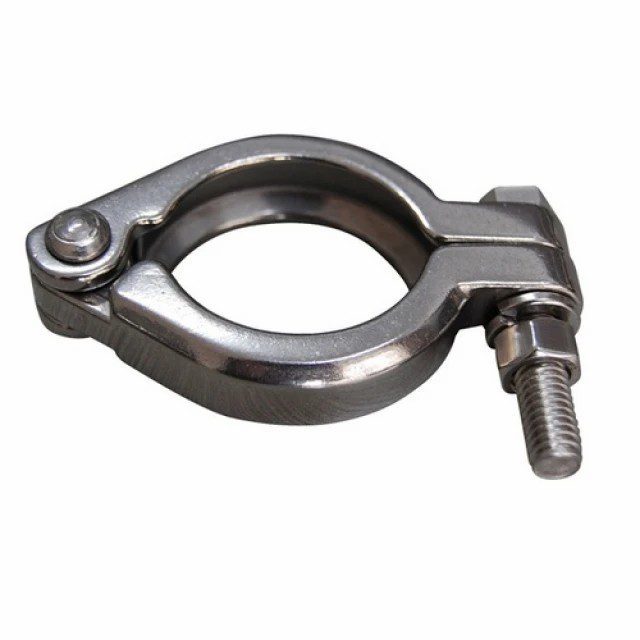
Different sanitary systems may use different connection standards, sizes, and clamp configurations. Common variations include single-pin, double-pin, heavy-duty, and other clamp designs.
When selecting a clamp, it is important to ensure that the clamp, ferrule, gasket, and tubing are compatible. Using components with mismatched dimensions or connection standards can lead to leakage, installation problems, or premature failure.
Choosing the right clamp requires more than simply matching the pipe diameter.
First, determine the tube and ferrule size and make sure the clamp is compatible with the connection standard being used. The stainless steel grade should then be selected according to the process environment. For example, applications involving aggressive cleaning chemicals or demanding corrosion conditions may require a different material selection from less demanding environments.
Operating pressure and temperature should also be considered. The gasket is equally important because its material needs to be compatible with the process fluid, temperature, cleaning chemicals, and applicable hygiene requirements.
Finally, consider surface finish, cleaning method, installation frequency, and any industry-specific requirements. Working with a qualified sanitary fitting manufacturer can help ensure that the complete connection is properly matched to the application.
Welded sanitary connections can provide a permanent connection with a smooth internal transition when properly designed and fabricated. However, they are not as easy to disconnect when equipment needs to be removed or replaced.
Sanitary stainless steel clamps provide a different approach. Their main advantage is convenient assembly and disassembly, making them particularly useful for systems that require regular maintenance, inspection, cleaning, or equipment modification.
Therefore, the choice between clamping and welding depends on the design and operating requirements of the piping system. In some processing facilities, both connection methods may be used in different parts of the same system.
Proper maintenance can help extend the service life of sanitary clamp connections.
Clamps should be inspected periodically for corrosion, deformation, mechanical damage, or other visible problems. Gaskets should also be checked because they can deteriorate over time due to temperature, chemicals, pressure, or repeated cleaning cycles.
During maintenance, the mating surfaces should be kept clean and free from damage. The clamp should be tightened correctly according to the equipment manufacturer’s recommendations. Excessive tightening may damage the gasket or components, while insufficient tightening can result in leakage.
For systems with frequent cleaning or sterilization cycles, maintenance intervals should take the actual operating conditions into account.
Sanitary stainless steel clamps are used to create secure, removable connections in hygienic piping and fluid handling systems. They are widely applied in food and beverage, dairy, pharmaceutical, biotechnology, cosmetics, and other industries where cleanable and reliable connections are required.
Their combination of stainless steel construction, removable design, and compatibility with sanitary ferrules and gaskets makes them suitable for many process systems. However, the correct clamp should always be selected according to tube size, material, pressure, temperature, gasket compatibility, cleaning conditions, and application requirements.
For manufacturers, distributors, and industrial buyers, understanding these factors can help ensure that sanitary stainless steel clamp connections provide reliable performance throughout the service life of the piping system.
What is a sanitary stainless steel clamp used for?
A sanitary stainless steel clamp is used to connect and secure sanitary pipes, tubes, fittings, valves, pumps, tanks, and other components. It provides a removable connection that can simplify cleaning, inspection, and maintenance.
Where are sanitary stainless steel clamps commonly used?
They are commonly used in food and beverage, dairy, pharmaceutical, biotechnology, cosmetics, and other hygienic processing industries.
What stainless steel is commonly used for sanitary clamps?
304 and 316 stainless steel are commonly used. The appropriate grade depends on the process fluid, corrosion conditions, cleaning chemicals, temperature, and other application requirements.
Do sanitary clamps need a gasket?
Yes. A sanitary clamp connection normally uses a gasket between two compatible sanitary ferrules to create the seal.
Are sanitary stainless steel clamps easy to install?
They are generally designed for relatively quick assembly and disassembly compared with permanent welded connections. However, correct installation and tightening are still important for reliable sealing.
How do I choose a sanitary stainless steel clamp?
Consider the tube and ferrule size, connection standard, stainless steel grade, operating pressure and temperature, gasket material, cleaning conditions, surface finish, and the requirements of the specific industry.


STAINLESS STEEL&GENCEL;
Privacy Policy | SiteMap
Copyright GENCEL STAINLESS STEEL CO.,LIMITED
 Optimized by Seraphinite Accelerator