- Whatsapp: 8613738300923
- Email: [email protected]


When designing or upgrading a sanitary piping system, many manufacturers focus primarily on the initial cost of components. However, long-term operational expenses often have a much greater impact on the total cost of ownership. Clamped elbows, commonly used in food processing, beverage production, dairy operations, pharmaceuticals, and biotechnology industries, offer significant long-term cost advantages that extend far beyond their purchase price.
From reducing maintenance expenses to minimizing downtime and improving system flexibility, clamped elbows can help facilities achieve greater operational efficiency and lower overall costs.
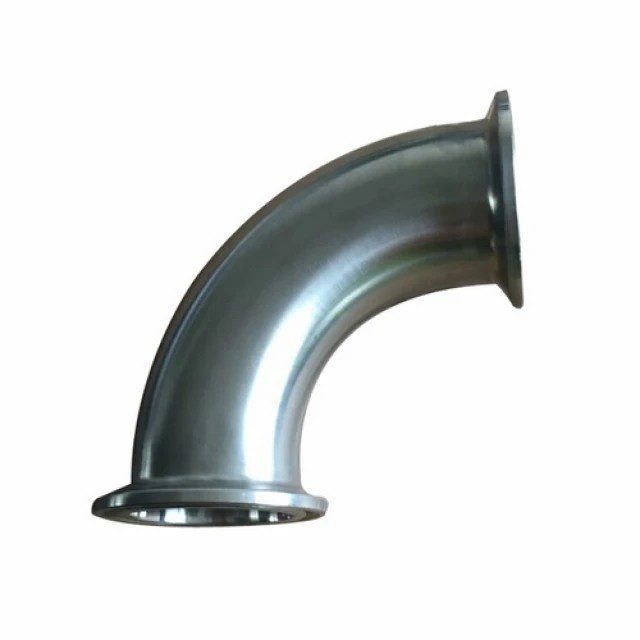
A clamped elbow is a sanitary pipe fitting designed to change the direction of fluid flow while utilizing clamp connections, such as Tri-Clamp fittings, for easy installation and removal. Available in various angles, including 45° and 90°, clamped elbows are widely used in systems that require frequent cleaning, inspection, or modification.
Unlike welded connections, clamped elbows can be quickly disconnected without cutting or reworking the pipeline, making them a highly flexible solution for sanitary applications.
One of the first cost advantages of clamped elbows is their simplified installation process.
Compared with welded fittings, clamped elbows require:
No specialized welding equipment
No welding consumables
Less installation time
Reduced labor requirements
Because installation is faster and less complex, facilities can reduce both labor costs and project completion times.
Lower upfront labor expenses and faster system commissioning.
Routine maintenance is unavoidable in processing facilities. Equipment inspections, cleaning procedures, and component replacements often require access to piping systems.
Clamped elbows make maintenance easier by allowing operators to:
Disconnect fittings quickly
Inspect internal surfaces
Replace components efficiently
Reassemble systems with minimal effort
This reduces the time and labor needed for maintenance activities.
Lower maintenance labor costs and improved maintenance efficiency.
Downtime can be one of the most expensive operational costs in manufacturing environments.
Because clamped elbows can be removed and reinstalled quickly, maintenance and repairs can often be completed faster than with permanently welded connections.
Benefits include:
Faster troubleshooting
Shorter repair times
Quicker equipment upgrades
Reduced production interruptions
Higher equipment availability and increased production output.
Processing requirements often change as manufacturers introduce new products or modify production lines.
Clamped elbows allow piping systems to be reconfigured without extensive cutting, welding, or replacement work.
This flexibility supports:
Process improvements
Capacity expansion
Equipment upgrades
Product line changes
Lower modification costs and improved adaptability to future operational needs.
Hygienic industries require frequent cleaning to maintain product quality and regulatory compliance.
Clamped elbows support:
Easy disassembly for inspection
Effective Clean-in-Place (CIP) procedures
Better access to internal surfaces
Faster cleaning verification
Efficient cleaning reduces resource consumption and labor requirements.
Reduced water, chemical, and cleaning labor costs.
Contamination incidents can result in:
Product recalls
Production losses
Regulatory penalties
Brand reputation damage
The sanitary design of clamped elbows helps minimize contamination risks by providing smooth surfaces and easy access for cleaning and inspection.
Avoidance of costly contamination-related events.
High-quality stainless steel clamped elbows are designed to withstand:
Corrosive environments
Frequent cleaning cycles
Temperature fluctuations
Mechanical stress
Materials such as 304 and 316L stainless steel provide excellent durability and corrosion resistance.
Reduced replacement frequency and lower long-term equipment costs.
When damage occurs in a piping system, replacing a clamped elbow is often much simpler than repairing a welded fitting.
Operators can:
Remove the damaged component
Install a replacement quickly
Resume operation with minimal disruption
No cutting, grinding, or welding is required.
Reduced repair expenses and faster recovery from equipment failures.
Preventive maintenance helps identify issues before they become costly failures.
Clamped elbows facilitate:
Routine inspections
Internal surface checks
Gasket replacement
Component upgrades
Easy access encourages more effective maintenance practices.
Reduced risk of unexpected breakdowns and emergency repairs.
While clamped elbows may sometimes have a higher initial purchase price than basic welded fittings, their overall lifecycle value is often significantly greater.
Long-term savings result from:
Lower installation costs
Reduced maintenance expenses
Less downtime
Improved cleaning efficiency
Longer service life
Greater operational flexibility
When evaluated over years of operation, clamped elbows frequently provide a lower total cost of ownership.
Supports hygienic production while reducing maintenance and cleaning costs.
Provides easy access for cleaning and inspection in contamination-sensitive environments.
Facilitates rapid maintenance and process line modifications.
Supports regulatory compliance and high-purity process requirements.
Offers flexibility and cleanability for complex production systems.
To achieve the greatest long-term value from clamped elbows, consider:
304 stainless steel for general sanitary applications
316L stainless steel for corrosive or high-purity environments
Select gaskets compatible with:
Process media
Cleaning chemicals
Operating temperatures
Regular inspection and gasket replacement help prevent leaks and extend service life.
Proper sizing and configuration improve flow performance and reduce operational inefficiencies.
Clamped elbows offer far more than simple directional flow control. Their ability to reduce installation costs, simplify maintenance, minimize downtime, improve cleaning efficiency, and extend system life makes them a highly cost-effective solution for sanitary processing facilities.
For food, beverage, dairy, pharmaceutical, and biotechnology manufacturers, investing in high-quality stainless steel clamped elbows can result in substantial long-term savings while improving operational reliability and regulatory compliance. When considering the total lifecycle cost of a piping system, clamped elbows often prove to be one of the smartest investments a facility can make.
Are clamped elbows more expensive than welded elbows?
The initial component cost may be slightly higher, but clamped elbows often provide lower overall lifecycle costs due to easier installation, maintenance, and system modifications.
How do clamped elbows reduce maintenance costs?
They can be quickly disassembled and reassembled, allowing faster inspections, cleaning, gasket replacement, and repairs without cutting or welding.
Do clamped elbows help reduce production downtime?
Yes. Their quick-connect design significantly reduces the time required for maintenance, repairs, and equipment upgrades, helping keep production lines running efficiently.
What industries benefit most from clamped elbows?
Food processing, dairy, beverage manufacturing, pharmaceuticals, biotechnology, and other hygienic industries commonly use clamped elbows because of their cleanability and operational flexibility.


STAINLESS STEEL&GENCEL;
Privacy Policy | SiteMap
Copyright GENCEL STAINLESS STEEL CO.,LIMITED
 Optimized by Seraphinite Accelerator