- Whatsapp: 8613738300923
- Email: [email protected]


In industries such as food and beverage, pharmaceuticals,and biotechnology that require extremely high cleanliness,fluid transport pipelines are the lifeline of the production process.Many factories often focus on stainless steel straight pipes when building pipelines,but easily overlook various pipeline fittings.In fact,fittings such as elbows,tees,and reducers are the key factors that affect the cleaning effectiveness and sterility level of the entire pipeline.If the selection of pipe fittings is not appropriate, there may be dead corners in the inner cavity,and the surface polishing may not meet the standards.After long-term operation,material accumulation and bacterial growth may occur,which will bring a large number of production hazards in the future. Today’s guide will discuss the relevant knowledge of SS sanitary pipe fittings based on common problems encountered in practical projects.Whether it is process engineers, procurement,or equipment maintenance personnel,it can be used as a daily reference.

SS is the abbreviation for Stainless Steel,which stands for Stainless Steel.The SS sanitary pipe fittings we refer to are simply stainless steel pipe connectors manufactured according to sanitary standards.It cannot be confused with ordinary industrial pipe fittings on the market.Ordinary pipe fittings only need to meet the basic requirements of pressure bearing and connection.The primary goal of sanitary pipe fittings is to ensure that the conveying medium is not contaminated.They are commonly used to transport fluids such as purified water,pharmaceuticals,dairy products,brewing solutions,cosmetic raw materials,etc.
The entire clean pipeline is built by combining straight pipes with various pipe fittings. Elbows are used to change the direction of fluids, tees achieve fluid diversion or convergence,and reducers connect pipes of different specifications.Unlike ordinary pipelines,the sanitary system requires frequent CIP online cleaning and SIP online steam sterilization,so the internal flow channels of the pipe fittings are designed with smooth transition shapes.Cleaning solution and high-temperature steam can flow smoothly through every part of the pipe fittings,minimizing medium retention and avoiding residual materials from adhering to the inner wall for a long time to form a source of pollution.
The most obvious advantage of using stainless steel sanitary fittings is corrosion resistance, as most weak acid and weak alkaline fluids will not easily corrode the pipe wall.The inner wall treated with mirror polishing is not easily adhered to materials, saving a lot of manpower during each cleaning operation.Meanwhile,stainless steel can withstand repeated high-temperature steam sterilization without experiencing high-temperature deformation or material precipitation like plastic parts.Under long-term stable operation,it can continuously ensure the purity of the transported fluid and reduce the risk of product failure.
Its application scope is far wider than many people imagine.These types of fittings can be found in biopharmaceutical production lines,dairy and fresh milk processing, craft beer,bottled drinking water treatment,skincare and cosmetics production workshops,as well as laboratory sterile water circulation systems.As long as the production line does not allow secondary pollution of fluids,SS sanitary fittings will be given priority consideration.
Of course,it is not without its shortcomings.Firstly,the procurement cost will be higher than that of PP plastic and ordinary carbon steel pipe fittings.For small processing plants with limited budgets,the initial investment pressure is greater.Secondly,the fault tolerance rate in the selection process is very low.If you are tempted to buy fittings with substandard inner surface roughness at a low price,even if all other components of the entire pipeline meet the standards,there will still be hidden hygiene hazards.In addition,if high salt and highly corrosive media are transported and the wrong stainless steel grade is selected,long-term use will gradually lead to pitting corrosion, which is also a pit that many projects have stepped on.

In daily pipeline construction,commonly used pipe fittings are mainly divided into several categories.Sanitary 90 degree elbow is the most commonly used accessory for pipeline turning.Depending on the layout of the pipeline,there are also long radius and short radius options;Sanitary three-way,used to branch off branch pipelines,is a component frequently used for production line expansion and multi-point feeding; Reducing joint,used when the diameter of the pipeline needs to change,smoothly transitions between pipes of different sizes;Cross tees are commonly used in complex pipeline layouts where four fluids intersect;The end cap is installed at the end of the pipeline to seal off idle pipe openings and prevent dust and impurities from entering the interior of the pipeline.Many people only randomly select pipe fittings when designing pipelines,and rarely compare the adaptation scenarios of different categories horizontally.For example,in simple steering conditions,90 degree elbows are preferred;If a branch line needs to be separated,it should be paired with a regular three-way connection;Multiple pipelines are gathered together before considering a cross tee.Although the layout of the cross tee is convenient,the internal cavity structure is more complex. In the design stage, it is necessary to evaluate the cleaning effect in advance to prevent the formation of difficult to clean dead corners. Comparing the selection of various pipe fittings in the early stage can reduce the trouble of pipeline renovation in the later stage.
The pipeline standards for transporting sterile injection water and pharmaceutical solutions are significantly different from those of ordinary juice production lines,with different polishing grades and material requirements.
The wall thickness directly determines the pressure that the pipe fittings can withstand. If the wall thickness is insufficient under high-pressure conditions,there may be safety hazards during long-term operation.
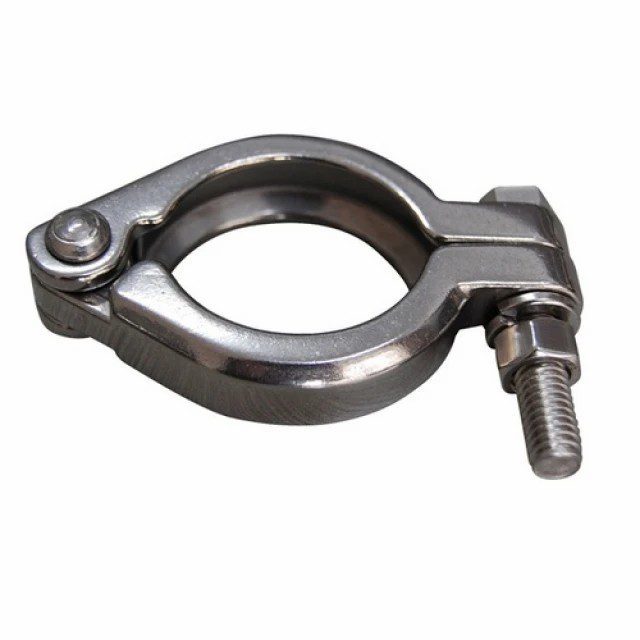
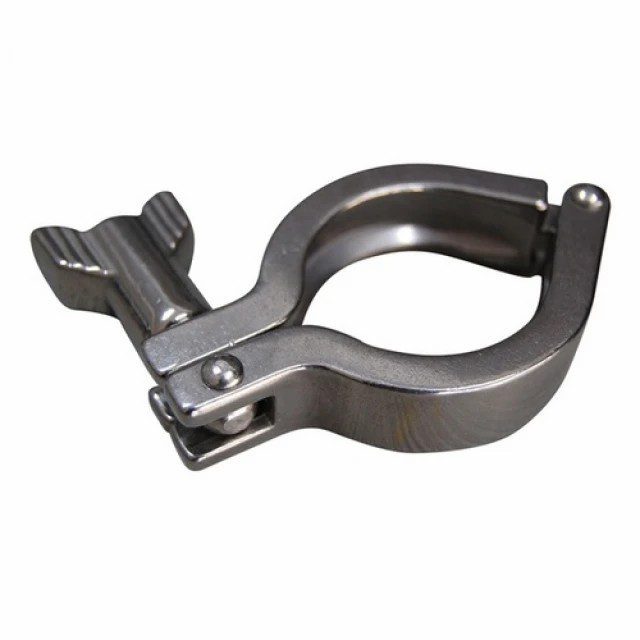
The mainstream products on the market are clamp quick installation,automatic welding, and threaded connection.For pharmaceutical pipelines that require extremely high levels of sterility,the industry mostly recommends clean automatic welding;For pipelines that require frequent disassembly and maintenance,quick installation of clamps will be more convenient.
304 and 316L are the two most common materials,and the pharmaceutical industry tends to prefer 316L.The polishing index focuses on the Ra value,and different industries have clear specifications.
The rated pressure and temperature resistance parameters of the pipe fittings must be higher than the peak value of daily working conditions,and a safety margin should be reserved.Many projects have experienced pipe leakage,corrosion,and failure to meet sterilization requirements.Tracing the root cause is mostly due to skipping the selection process and neglecting a certain working condition.
Many people think that installation is just about connecting pipes, but in fact, there are many details in the installation of sanitary fittings.Before formal assembly,it is necessary to inspect the interior of each elbow and tee one by one to see if there are scratches,metal debris,and residual oil stains on the inner wall.Welding elbows should be welded using clean track automatic welding as much as possible.Manual welding can easily cause uneven welds and create areas where dirt and grime accumulate.If using clamps for connection, the tightening force should be controlled properly.If the force is too small,it is easy to leak,and if the force is too large,it will squeeze and damage the internal sealing gasket.When arranging pipelines,try not to stack a large number of elbows densely in narrow areas,as it will increase fluid resistance and affect the flow of cleaning media.At the same time,reserve maintenance space,which will save a lot of effort in subsequent disassembly and maintenance.
The installation of pipe fittings does not mean a one-time solution,as daily maintenance directly determines their service life.Regularly wipe the outer surface of the pipe fittings to prevent corrosive materials from adhering to the outer wall for a long time.It is recommended to regularly disassemble the pipe fittings with clamp structure and check whether the sealing ring has hardened or cracked.After the production line is shut down,try to immediately complete the CIP cleaning of the entire pipeline,and do not let the original liquid remain inside the pipeline for a long time to crystallize and adhere.If the factory is shut down for a long time,it is necessary to empty all the media inside the pipeline,rinse it clean, and keep the inside of the pipe fittings dry.The pipe mouth should be well protected against dust to avoid rust spots in humid environments.
There are many manufacturers on the market that make sanitary fittings, and the differences in details between each product are actually not small.GENCEL’s SS sanitary fittings strictly follow industry hygiene manufacturing standards,with complete raw material testing data,stable and controllable polishing process,smooth transition of internal flow channels,and minimal cleaning dead corners.The product categories are relatively complete,with stock specifications for 90 degree elbows, various tees, reducers,and end caps.In addition to standard parts,we can also undertake customized non-standard size and special angle pipe fittings.Whether it is pipeline renovation in small and medium-sized food processing plants or large-scale pharmaceutical construction projects,we can basically match the needs and support large-scale procurement,achieving one-stop matching of various pipeline accessories.
Q1: What industries widely adopt SS sanitary pipe fittings?
A1:Biopharmaceuticals,various food and beverage processing,craft brewing,pure water purification,and cosmetics production are the main application areas, and many fluid pipelines in biological laboratories are also commonly used.
Q2: What polishing standards are required for sanitary fittings?
A2:There is no unified fixed standard,it depends on the industry norms. The commonly used internal throwing Ra in ordinary food production lines is≤1.6μm; Aseptic pharmaceutical pipelines require higher standards,with most requiring an inner surface Ra≤0.8μm.
Q3: Can sanitary 90 degree angle elbow work with CIP/SIP pipelines?
A3:The 90 degree sanitary elbow that meets hygiene standards and has no abrupt steps or dead corners in the inner cavity can be properly adapted to CIP online cleaning and SIP high-temperature steam sterilization systems. Before purchasing, you can request the manufacturer to confirm the product flow channel structure diagram.
Q4: What stainless steel grades does GENCEL adopt?
A4:The regular stock mainly consists of 304 and 316L sanitary grade stainless steel. For special corrosion conditions, other materials can also be adjusted according to customer needs.
Q5: What connection types are available for sanitary elbows?
A5:The mainstream connection forms include clamp quick installation, butt welding, threaded filament, etc., which can be freely selected according to pipeline disassembly requirements.
Q6: How to avoid dead space inside sanitary pipe fittings?
A6:Prioritize the use of standard sanitary structures with integrated smooth transitions in the flow channel; Reduce unnecessary blind pipes during the pipeline design phase; When connecting pipes and fittings during construction, ensure that there are no protruding steps at the connection.
Q7: Can GENCEL customize non-standard 90 degree angle elbow?
A7:Customization is supported, and production plans can be communicated for special pipe diameters and non-standard angle elbows.
Q8: What is the service life of stainless sanitary pipe fittings?
A8:This has no fixed term. Under mild medium and standardized maintenance conditions, it can be used stably for more than ten years; If highly corrosive fluids are transported for a long time, the service life will be correspondingly shortened.
Q9: How to store sanitary elbows and fittings to avoid surface damage?
A9:The pipe mouth is enclosed with a plastic dust-proof protective cap, and different pipe fittings are placed separately to prevent friction and scratching between polished surfaces. The storage warehouse should avoid acidic, alkaline, foggy, and humid environments.
Q10: Does GENCEL support bulk wholesale of sanitary fittings?
A10:Supporting large-scale wholesale procurement, it can provide a complete set of pipeline accessories for synchronous supply, facilitating unified stocking for new projects.
SS sanitary pipe fittings may seem like insignificant small parts in the pipeline, but they actually affect the stable operation of the entire clean production line. Many companies focus on the main equipment and neglect the selection, installation, and maintenance of pipe fittings. When product pollution and inadequate pipeline cleaning occur in the later stage, the cost of pipeline renovation will be much higher. From the selection of preliminary plans, on-site installation and construction, to regular maintenance after production, every step cannot be taken lightly. By combining the medium, temperature, pressure, and cleanliness level requirements of our own production line, we can select suitable pipe fittings, materials, and connection schemes to fully leverage the advantages of stainless steel sanitary pipelines in terms of corrosion resistance, ease of cleaning, and ensuring fluid cleanliness.If you are planning to build clean pipelines,renovate pipelines, or have a demand for customized non-standard pipe fittings or large-scale procurement, you can choose a legitimate manufacturer with mature production processes to provide a one-stop solution for various sanitary fittings such as elbows,tees,reducers,etc.,to build a reliable foundation for fluid transportation pipelines.


STAINLESS STEEL&GENCEL;
Privacy Policy | SiteMap
Copyright GENCEL STAINLESS STEEL CO.,LIMITED
 Optimized by Seraphinite Accelerator