- Whatsapp: 8613738300923
- Email: [email protected]


A 180 degree pipe bend is used to reverse the direction of flow in a piping system, creating a U-shaped return path. These fittings are commonly used in industrial process piping, heat exchangers, chemical systems, water treatment, food processing, and other applications where piping needs to make a complete directional change.
When selecting a 180 degree pipe bend, one important consideration is the bend radius. Long radius and short radius 180 degree pipe bends have different geometries that can affect flow behavior, pressure loss, installation space, and application suitability.
Understanding the differences between these two configurations can help engineers, contractors, distributors, and procurement teams select the appropriate pipe bend for their specific piping requirements.

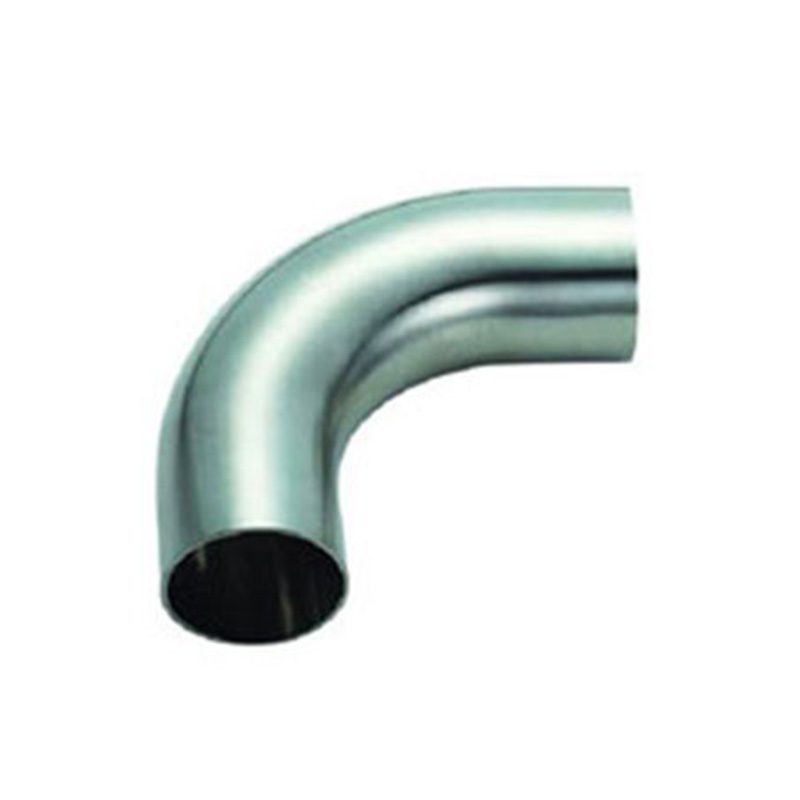
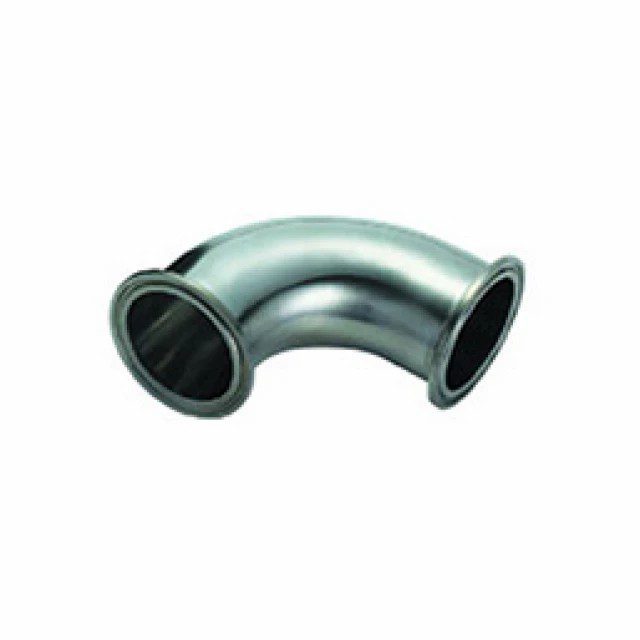
A 180 degree pipe bend is a pipe fitting designed to change the direction of a pipeline by approximately 180 degrees. Instead of simply turning the pipe to another direction, it creates a return path that allows the fluid to flow back in a direction parallel or nearly parallel to the original pipeline.
The bend consists of a curved section and connection ends that are joined to the piping system. Depending on the design, it may be manufactured from stainless steel, carbon steel, alloy steel, or other suitable materials.
The bend radius refers to the radius measured along the centerline of the curved section. This radius is one of the main factors distinguishing long-radius and short-radius designs.
A long radius 180 degree pipe bend has a larger centerline radius. The gradual curvature allows the fluid to change direction over a longer distance.
Because the flow path is less abrupt, long-radius bends generally create smoother flow and lower resistance than tighter bends of the same nominal size and angle.
Long-radius 180 degree bends are often considered when flow efficiency, reduced turbulence, and lower pressure loss are important. They may also be preferred in process piping systems where maintaining consistent flow characteristics is a priority.
However, the larger radius requires more installation space. This can become a limitation in compact equipment layouts or piping systems with restricted space.
A short radius 180 degree pipe bend has a smaller centerline radius and a tighter curvature. Its more compact design allows the pipeline to reverse direction within a smaller physical area.
The main advantage of a short-radius bend is space efficiency. It can be useful when equipment arrangement, structural limitations, or existing piping prevents the use of a larger-radius fitting.
However, the tighter curvature can produce greater changes in flow direction over a shorter distance. Depending on the system, this may result in higher turbulence and pressure loss compared with a long-radius design.
Therefore, short-radius bends are generally selected when installation space is a more significant constraint than flow optimization.
The primary difference between the two designs is the centerline radius. A long-radius bend has a larger curvature radius, while a short-radius bend has a smaller one.
This difference affects several aspects of piping system design.
| Factor | Long Radius 180 Degree Bend | Short Radius 180 Degree Bend |
| Bend radius | Larger | Smaller |
| Installation space | Requires more space | More compact |
| Flow transition | More gradual | Tighter |
| Turbulence | Generally lower | Generally higher |
| Pressure loss | Generally lower | Generally higher |
| Layout flexibility | Better for open layouts | Better for restricted spaces |
| Typical selection priority | Flow performance | Space efficiency |
These are general design tendencies. Actual performance depends on pipe size, fluid properties, flow rate, pressure, surface condition, and the specific fitting design.
Flow behavior is an important factor when choosing between long- and short-radius 180 degree bends.
When fluid passes through a bend, its direction changes and the flow profile is disturbed. A tighter bend can create stronger changes in flow direction and may increase turbulence and pressure loss.
A long-radius design provides a more gradual directional transition, which can help reduce flow resistance. This can be particularly useful in systems where pressure loss needs to be controlled.
Short-radius bends may still be completely appropriate when the system is designed to accommodate their flow characteristics. Engineers should evaluate the total pressure-drop requirements of the piping system rather than assuming that one radius is suitable for every application.
Space requirements are one of the clearest practical differences between the two designs.
A long-radius 180 degree pipe bend requires a larger footprint because its curved section extends farther from the original pipe centerline. This can be acceptable in large industrial piping layouts where sufficient space is available.
A short-radius bend has a tighter curve and can fit into a smaller area. It may be useful around machinery, equipment connections, structural supports, or existing pipelines where available space is limited.
Before selecting the fitting, engineers should consider not only the fitting dimensions but also the clearance required for installation, welding, inspection, insulation, maintenance, and surrounding equipment.
Long-radius 180 degree bends are commonly considered for applications where smooth flow and reduced resistance are important. They can be found in process piping, industrial fluid transportation, heat-transfer systems, and other installations with sufficient space for larger-radius fittings.
Short-radius bends may be more suitable for compact piping arrangements. They can be used where the physical layout requires a tighter directional change and the resulting flow characteristics are acceptable for the application.
The actual application should determine the choice. Factors such as fluid type, flow rate, operating pressure, temperature, pipe size, equipment layout, and maintenance requirements should all be evaluated.
The material of the 180 degree pipe bend should be compatible with the operating environment.
Stainless steel 180 degree bends are widely used where corrosion resistance, durability, and cleanability are required. Common grades include 304, 316, and 316L stainless steel.
304 stainless steel is commonly used for general industrial, water, food processing, and other applications where good corrosion resistance is sufficient.
316 and 316L stainless steel may be considered for more demanding environments where improved resistance to certain corrosive media is required. 316L is also widely used in applications where welding and hygienic requirements are important.
Material selection should be based on the transported medium, temperature, pressure, corrosion conditions, cleaning procedures, and applicable industry standards.
Radius is only one part of selecting a 180 degree pipe bend. The connection type and wall thickness must also match the piping system.
Butt-welded bends are commonly used in industrial piping because they can provide a continuous welded connection. Other connection configurations may be available depending on pipe size and application.
Wall thickness should be selected according to the system’s pressure, temperature, material, pipe schedule, and applicable design standards. The bend and connected pipe should have compatible dimensions to support proper installation and welding.
For critical systems, buyers should provide complete technical specifications to the manufacturer rather than selecting the fitting based only on nominal pipe size.
The choice between a long-radius and short-radius 180 degree pipe bend should be based on the overall piping design.
A long-radius bend may be appropriate when:
Lower flow resistance is important.
The piping system has sufficient installation space.
Smooth flow behavior is a priority.
Pressure loss needs to be minimized.
The application involves continuous or high-volume fluid flow.
A short-radius bend may be considered when:
Installation space is limited.
The piping layout requires a compact return path.
Equipment connections are positioned closely together.
The system can accommodate the associated flow characteristics.
Space efficiency is a major design requirement.
These factors should be evaluated together with the applicable engineering standards and project specifications.
The performance of a 180 degree pipe bend also depends on manufacturing quality. A reliable manufacturer should control material quality, forming accuracy, wall thickness, dimensions, surface condition, and connection geometry.
Manufacturing may involve pipe preparation, bending or forming, heat treatment where required, sizing, end preparation, surface finishing, cleaning, and final inspection.
For stainless steel fittings, buyers may also require material certificates, dimensional inspection reports, surface inspection, and traceability documentation. For demanding applications, additional testing may be specified by the project or applicable standards.
Consistent forming is particularly important because variations in the bend geometry can affect installation accuracy and flow characteristics.
The main difference between a long radius and short radius 180 degree pipe bend is the curvature of the fitting. A long-radius design provides a more gradual flow transition and generally requires more installation space, while a short-radius design offers a more compact configuration but can introduce greater flow resistance.
The right choice depends on the requirements of the piping system. Engineers and buyers should consider flow performance, pressure loss, available space, pipe size, material, wall thickness, connection type, operating conditions, and applicable standards before selecting a bend.
For industrial applications, working with an experienced pipe fitting manufacturer can help ensure that the selected 180 degree bend meets the required dimensions, material specifications, manufacturing standards, and application conditions.
What is the main difference between a long-radius and short-radius 180 degree pipe bend?
The main difference is the centerline radius. A long-radius bend has a larger radius and a more gradual curve, while a short-radius bend has a tighter curve and requires less installation space.
Which has lower pressure loss, a long-radius or short-radius bend?
In general, a long-radius bend produces lower flow resistance and pressure loss than a short-radius bend of comparable size and design. Actual pressure loss depends on the piping system and operating conditions.
Why would I choose a short-radius 180 degree pipe bend?
A short-radius bend may be selected when installation space is limited and a compact return path is required. Its flow characteristics should be considered during system design.
Are long-radius bends better for high-flow applications?
Long-radius bends can be advantageous in applications where reducing turbulence and pressure loss is important. However, the appropriate fitting should be determined based on the complete piping design and operating conditions.
What materials are available for 180 degree pipe bends?
Common materials include stainless steel, carbon steel, and alloy steel. Stainless steel grades such as 304, 316, and 316L are widely used for applications requiring corrosion resistance.


STAINLESS STEEL&GENCEL;
Privacy Policy | SiteMap
Copyright GENCEL STAINLESS STEEL CO.,LIMITED
 Optimized by Seraphinite Accelerator