- Whatsapp: 8613738300923
- Email: [email protected]


Choosing the right stainless steel ball valve factory is an important decision for industrial buyers, engineering companies, distributors, and equipment manufacturers. Stainless steel ball valves are widely used in chemical processing, oil and gas, water treatment, food and beverage, pharmaceutical production, marine engineering, power generation, and other industrial applications.
While many manufacturers may offer similar stainless steel ball valves, their actual manufacturing capabilities can vary significantly. Differences in production equipment, machining accuracy, quality control, testing procedures, production capacity, technical expertise, and customization capabilities can directly affect valve quality and long-term performance.
For this reason, buyers should evaluate more than product catalogs and quotations when selecting a manufacturer. A detailed assessment of the factory’s manufacturing capabilities can help determine whether it is capable of producing consistent, reliable, and application-appropriate stainless steel ball valves.
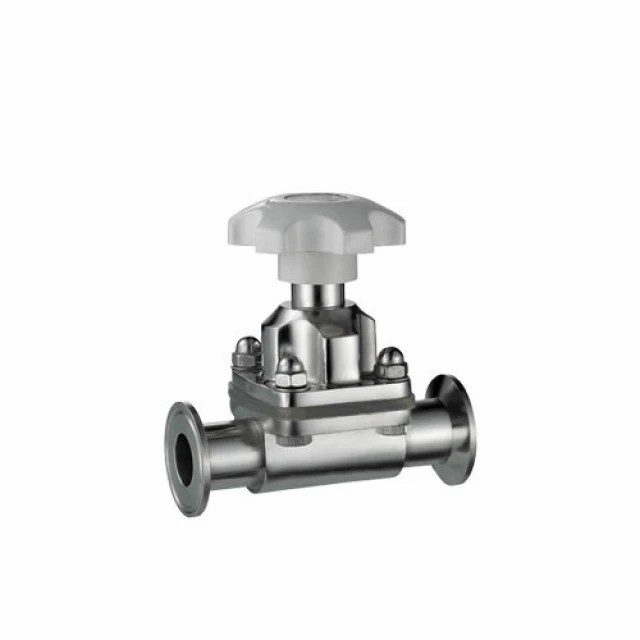
Production equipment is one of the first factors buyers should evaluate.
A professional stainless steel ball valve factory should have appropriate equipment for manufacturing the valve components required for its product range. Depending on the manufacturing process, equipment may include casting or forging facilities, CNC machining centers, drilling machines, threading equipment, grinding machines, polishing equipment, assembly stations, and testing equipment.
Modern production equipment can help improve dimensional accuracy, manufacturing consistency, and production efficiency.
However, equipment quantity alone does not determine manufacturing capability. Buyers should also consider whether the factory uses suitable equipment for its valve designs and whether machines are properly maintained and operated by trained personnel.
A factory with appropriate and well-managed equipment is generally better positioned to maintain stable production quality.
Precision machining is particularly important for stainless steel ball valves because many components must fit together accurately.
Components such as valve bodies, balls, stems, and connection areas require controlled dimensions and appropriate surface finishes. Poor machining accuracy can contribute to leakage, excessive operating torque, premature wear, or assembly problems.
When evaluating a factory, buyers should ask about its CNC machining capabilities, machining tolerances, inspection procedures, and ability to process different valve sizes and configurations.
A professional manufacturer should have suitable machining equipment and inspection methods to maintain consistent component dimensions throughout production.
Manufacturing capability begins before machining starts.
A reliable stainless steel ball valve factory should have a systematic process for sourcing, receiving, inspecting, and storing raw materials.
Common stainless steel materials used for ball valves include 304 and 316 stainless steel, while other grades may be selected for specific applications.
The factory should be able to verify material grades and relevant specifications before materials enter production. Depending on customer requirements, material certificates and traceability records may also be provided.
Proper raw material management helps prevent incorrect materials from entering production and supports consistent product performance.
A professional factory should have clearly defined manufacturing procedures for each major production stage.
Depending on the valve design, the manufacturing process may involve:
Casting or forging
CNC machining
Drilling
Threading
Grinding
Polishing
Component cleaning
Assembly
Pressure testing
Leakage testing
Final inspection
Each stage can affect the final performance of the valve.
For example, machining affects dimensional accuracy, while assembly affects component alignment and sealing performance. Testing then verifies whether the finished valve meets the required performance specifications.
A factory with standardized process controls is more likely to maintain consistent quality across different production batches.
Manufacturing equipment alone cannot guarantee product quality. Quality control procedures are equally important.
A professional stainless steel ball valve factory should have inspection procedures covering raw materials, components, production processes, assembly, testing, and finished products.
Quality control may include:
Material inspection
Dimensional inspection
Surface inspection
Component inspection
Assembly inspection
Pressure testing
Seat leakage testing
Functional testing
Final inspection
Buyers should ask how inspection results are recorded and how non-conforming products are handled.
A systematic quality control process helps prevent defective products from reaching customers.
Pressure and leakage performance are critical for industrial ball valves.
A professional factory should have suitable testing equipment to verify valve performance before shipment.
Depending on valve design and applicable requirements, testing may include shell pressure testing, seat leakage testing, and operational testing.
The testing equipment should be appropriate for the valve sizes and pressure ratings produced by the factory.
Buyers can also ask whether inspection records or test reports are available for specific orders.
Reliable testing capabilities provide greater confidence that valves can perform properly under their intended operating conditions.
Production capacity is another important part of manufacturing capability.
A factory may produce high-quality valves but still be unsuitable for customers requiring large or recurring orders if its production capacity is limited.
When evaluating a stainless steel ball valve factory, buyers should consider:
Monthly or annual production capacity
Available production lines
Equipment quantity
Workforce size
Raw material supply
Standard production lead times
Ability to handle peak demand
Capacity for urgent orders
Adequate capacity helps manufacturers maintain delivery schedules without sacrificing product quality.
A factory’s product range can provide useful information about its manufacturing capabilities.
Buyers should check whether the manufacturer can produce the required valve sizes, pressure ratings, connection types, and body configurations.
Stainless steel ball valves may vary in:
Nominal size
Pressure rating
Port design
Body construction
Connection type
Seat material
Handle configuration
Operating method
A factory with broader production capabilities may be better suited to customers who require multiple valve specifications from the same supplier.
Industrial customers sometimes require valves that differ from standard catalog products.
Customization may involve valve dimensions, stainless steel grades, pressure ratings, connection types, seals, handles, markings, packaging, or other specifications.
A professional stainless steel ball valve factory should have an engineering team capable of reviewing customer drawings and technical specifications.
The factory should also be able to determine whether customized requirements are technically and economically feasible before production begins.
Strong customization capabilities are especially valuable for OEM customers, equipment manufacturers, engineering contractors, and industrial distributors.
Manufacturing capability is closely connected to engineering expertise.
Experienced engineers can help optimize valve designs, select appropriate materials, improve manufacturing processes, and solve production problems.
When evaluating a factory, buyers should consider whether the company has an experienced technical team and whether engineers are involved in product development, quality improvement, process control, and customized projects.
A technically capable manufacturer can often provide more useful support than a supplier that simply purchases standard products from other sources.
Proper assembly is essential for reliable ball valve operation.
Components such as the valve body, ball, stem, seats, seals, and handles must be correctly positioned and assembled according to the required specifications.
An experienced factory should have standardized assembly procedures and trained workers.
Assembly inspections can help identify problems such as incorrect component installation, improper sealing, excessive operating torque, or incomplete assembly.
Good assembly control contributes directly to valve reliability and operating performance.
Surface quality can affect both appearance and functional performance.
Depending on the valve design and application, stainless steel ball valves may require processes such as polishing, grinding, cleaning, or other surface treatments.
A professional factory should have appropriate equipment and procedures for achieving the required surface finish.
For industries such as food processing, pharmaceuticals, and certain sanitary applications, surface condition and cleanliness may be especially important.
Buyers should therefore confirm whether the factory can meet the required surface finish specifications.
The quality of a manufacturer’s inspection equipment can affect its ability to identify defects.
In addition to pressure and leakage testing equipment, a professional factory may use measuring tools and inspection equipment for checking dimensions, surface condition, component accuracy, and valve operation.
The factory should also have procedures for maintaining and calibrating relevant inspection equipment.
Reliable inspection equipment allows manufacturers to detect deviations early and maintain consistent product quality.
Traceability is an important indicator of manufacturing management.
A professional factory should be able to track relevant information such as raw material batches, production records, inspection results, and finished product identification.
Good traceability allows manufacturers to investigate quality problems more efficiently and identify affected products when necessary.
For industrial customers, traceability can also support project documentation and quality management requirements.
Industrial valve manufacturing may involve different standards depending on the product and application.
Depending on customer requirements and target markets, stainless steel ball valves may need to comply with standards such as API, ASME, ISO, EN, DIN, or other applicable specifications.
When evaluating a factory, buyers should confirm whether the manufacturer has experience producing valves according to the standards required for their projects.
It is also useful to review relevant certifications, testing procedures, and product documentation.
Manufacturing capability should ultimately translate into reliable delivery.
A factory with strong production planning can coordinate raw materials, machining, assembly, testing, inspection, and packaging more efficiently.
Buyers should ask about standard lead times and how the factory manages large or urgent orders.
A manufacturer that can provide realistic production schedules and communicate potential delays early is generally more reliable for long-term cooperation.
Manufacturing does not end when the valve passes its final inspection.
Proper packaging is necessary to protect stainless steel ball valves during storage and transportation.
A professional factory should have appropriate packaging procedures for different valve sizes and order quantities.
Packaging should help protect products against scratches, impacts, moisture, contamination, and other potential transportation damage.
For export customers, buyers should also check whether the factory can meet specific labeling, shipping mark, pallet, and loading requirements.
A strong manufacturer should not rely only on existing production processes. Continuous improvement is another indicator of manufacturing maturity.
Professional factories may regularly review production problems, customer feedback, inspection results, and manufacturing efficiency to improve their processes.
Continuous improvement can help reduce defects, improve production efficiency, increase consistency, and strengthen long-term competitiveness.
When evaluating a supplier, buyers can ask whether the factory has procedures for handling quality problems and implementing corrective actions.
Before placing a large order, buyers can request product samples or conduct a factory audit when practical.
Samples can help evaluate:
Material quality
Dimensions
Surface finish
Assembly quality
Valve operation
Packaging
Product markings
A factory audit can provide deeper insight into production equipment, quality control procedures, testing facilities, warehouse management, and production organization.
For large-volume or long-term cooperation, a factory audit can be especially useful for verifying whether the manufacturer’s claimed capabilities match its actual operations.
Not every factory needs to offer the same manufacturing capabilities.
The right manufacturer should have capabilities that match the buyer’s specific requirements.
For example, a customer purchasing standard threaded stainless steel ball valves in moderate quantities may not need highly specialized manufacturing facilities. In contrast, an OEM customer requiring customized dimensions, special materials, large quantities, or demanding testing requirements may need a much more comprehensive manufacturing system.
Therefore, buyers should compare factory capabilities against their actual product specifications, quality requirements, order volumes, and delivery expectations.
A structured checklist can make supplier evaluation more objective.
Important factors may include:
Raw material management
Production equipment
CNC machining capability
Manufacturing processes
Quality control
Pressure testing
Leakage testing
Inspection equipment
Product range
Size and pressure capabilities
Customization
Engineering support
Production capacity
Traceability
Standards compliance
Lead times
Packaging
Factory audit availability
After-sales support
Using the same checklist for multiple suppliers makes it easier to compare their actual manufacturing strengths.
Evaluating the manufacturing capabilities of a stainless steel ball valve factory requires more than reviewing a product catalog or comparing prices. Buyers should examine production equipment, machining capabilities, raw material management, process control, quality inspection, pressure testing, production capacity, customization, engineering expertise, traceability, and delivery performance.
A professional factory should be able to demonstrate not only that it can manufacture stainless steel ball valves, but also that it can produce them consistently according to defined technical and quality requirements.
For industrial buyers, the ideal supplier is one whose manufacturing capabilities match the application’s technical requirements, expected order volume, quality standards, and long-term supply needs.
By conducting a structured evaluation and, when appropriate, requesting samples or performing a factory audit, buyers can reduce sourcing risks and build stronger relationships with reliable stainless steel ball valve manufacturers.
What should I check when evaluating a stainless steel ball valve factory?
Important factors include production equipment, CNC machining capabilities, raw material control, manufacturing processes, quality inspection, pressure and leakage testing, production capacity, customization, engineering expertise, traceability, and delivery capabilities.
Why is CNC machining important for stainless steel ball valves?
CNC machining helps manufacturers maintain accurate component dimensions and consistent tolerances. Proper machining is important for component fit, sealing performance, smooth operation, and overall valve reliability.
How can I verify a factory’s production capacity?
Ask about production lines, equipment, workforce, monthly output, standard lead times, raw material availability, and the factory’s ability to handle large or recurring orders. A trial order can also provide useful practical information.
Can a stainless steel ball valve factory manufacture customized valves?
Many professional factories can customize valve dimensions, materials, connection types, pressure ratings, seals, handles, markings, and packaging according to customer specifications.
What testing capabilities should a professional ball valve factory have?
Depending on the product, a professional factory should have suitable equipment for pressure testing, seat leakage testing, functional testing, dimensional inspection, and other inspections required by applicable standards.
Why is material traceability important?
Material traceability allows manufacturers and customers to connect finished valves with relevant raw material and production records. This can make quality investigations and project documentation more efficient.
Should I conduct a factory audit before placing a large order?
For large-volume or long-term purchases, a factory audit can be useful. It allows buyers to verify production equipment, quality control, testing facilities, warehouse management, and actual manufacturing capabilities before establishing a major supply relationship.

STAINLESS STEEL&GENCEL;
Privacy Policy | SiteMap
Copyright GENCEL STAINLESS STEEL CO.,LIMITED
 Optimized by Seraphinite Accelerator