- Whatsapp: 8613738300923
- Email: [email protected]


Choosing the right sanitary stainless steel clamp is essential for maintaining secure pipe connections, preventing leaks, and ensuring hygienic conditions in food processing, pharmaceutical, beverage, and biotechnology applications. The correct clamp helps simplify equipment assembly, supports routine cleaning, and improves the reliability of sanitary piping systems.
However, not all sanitary clamps are suitable for every application. Differences in material grade, clamp size, connection standards, operating pressure, temperature, and sealing requirements can affect performance and service life. Selecting the right product requires a clear understanding of your system requirements and operating environment.
This guide explains the key factors to consider when choosing a sanitary stainless steel clamp, helping manufacturers, engineers, distributors, and purchasing teams make informed decisions.
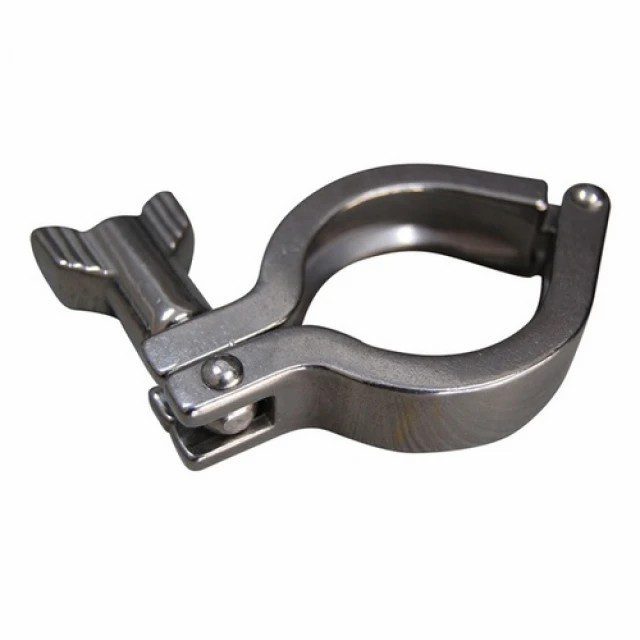
Before selecting a clamp, identify the connection type used in your piping system. Different sanitary connection designs have different structural features and compatibility requirements.
Sanitary Tri-Clamp fittings are widely used in hygienic processing systems because they allow quick assembly and disassembly. A typical connection consists of two ferrules, a compatible gasket, and a clamp that holds the components together. This design is useful for equipment that requires frequent inspection, cleaning, or maintenance.
Other sanitary connection systems may use different fastening structures or dimensional standards. Therefore, you should confirm the connection type before purchasing a clamp. Choosing a product based only on its appearance can lead to compatibility problems, poor sealing, or installation difficulties.
Material selection affects corrosion resistance, durability, and suitability for different processing environments. Stainless steel grades such as 304 and 316 are commonly used for sanitary fittings and clamps, but their properties differ.
304 stainless steel is suitable for many general-purpose sanitary applications where corrosion exposure is moderate. It offers good corrosion resistance and is often a cost-effective option for food processing equipment, beverage systems, and general hygienic piping.
316 stainless steel contains molybdenum, which improves its resistance to chloride-related corrosion compared with 304 under many conditions. It is often preferred for applications involving more aggressive cleaning chemicals, saline environments, or certain pharmaceutical and chemical processing conditions.
When comparing these materials, consider the process medium, cleaning agents, temperature, and exposure conditions. The material of the clamp should also be compatible with the connected fittings and the overall system requirements. In particularly corrosive environments, verify the suitability of the selected grade with your supplier or materials specialist.
Correct sizing is one of the most important factors when selecting a sanitary stainless steel clamp. A clamp that is too large or too small may not fit securely around the connection, potentially causing installation problems or an unreliable seal.
When confirming the size, check the outside dimensions and connection specifications of the mating ferrules rather than relying solely on the nominal pipe diameter. Different sanitary standards and product series may use different dimensions even when their nominal sizes appear similar.
You should also verify the ferrule profile, clamp design, gasket dimensions, and applicable connection standard. If your system uses components from different manufacturers, request dimensional drawings or technical specifications to confirm compatibility before ordering.
For customized equipment or replacement parts, providing the supplier with the existing fitting dimensions, product drawings, or photographs with measurements can help reduce the risk of ordering an incompatible clamp.
Operating pressure and temperature can significantly influence clamp performance. Although sanitary clamps are designed to secure piping connections, their suitability depends on the specific design, size, material, gasket, and assembly conditions.
Start by identifying the normal operating pressure, maximum expected pressure, operating temperature, and any pressure fluctuations in your system. Also consider whether the equipment experiences vacuum conditions, pressure cycling, or thermal expansion during operation.
The gasket is particularly important because its sealing performance depends on its material and operating environment. A clamp that fits correctly may still fail to provide reliable sealing if the gasket is unsuitable for the process temperature or pressure.
Always check the manufacturer’s pressure and temperature ratings for the complete connection assembly. Do not assume that every sanitary clamp has the same pressure capacity or that a clamp alone determines the pressure rating of the entire system.
A sanitary stainless steel clamp works together with a gasket to create a secure connection. The gasket provides the sealing interface between the mating ferrules, while the clamp maintains the connection under the specified assembly conditions.
Common gasket materials include EPDM, silicone, and PTFE-based materials. Each has different characteristics regarding chemical resistance, temperature tolerance, flexibility, and suitability for particular process media.
For example, EPDM may be suitable for many water-based applications and certain cleaning environments. Silicone is often selected where flexibility and a broad temperature range are important. PTFE offers broad chemical resistance, although its mechanical and sealing behavior differs from elastomeric materials.
The right choice depends on the product being processed, cleaning and sanitization procedures, operating temperature, and applicable food-contact or pharmaceutical requirements. Where necessary, request documentation confirming material composition, traceability, and regulatory compliance.
Avoid selecting a gasket based on material name alone. Verify that the specific gasket formulation is suitable for the intended application and compatible with the ferrule and clamp assembly.
Sanitary processing systems must be designed to support effective cleaning and reduce the risk of product contamination. Although the clamp is only one component of the connection, its surface condition, construction, and compatibility with the surrounding fittings should be considered.
For food, beverage, pharmaceutical, and biotechnology applications, look for stainless steel clamps with appropriate surface quality, smooth contact areas, and a design that minimizes unnecessary gaps or contamination risks. The complete connection should be accessible for cleaning and inspection where the process requires it.
Surface finish requirements vary by application. In many cases, the hygienic performance of the system depends more directly on the product-contact surfaces of the ferrules and gasket interface than on the external clamp surface alone.
If the equipment is subject to strict sanitary standards, confirm the applicable design specifications, material documentation, and cleaning requirements with the equipment manufacturer or project engineer.
A suitable sanitary stainless steel clamp should be easy to install, inspect, and remove without compromising connection integrity. This is especially important in production environments where equipment must be cleaned regularly or components need to be replaced quickly.
Consider whether the clamp uses a wing nut, bolt, or another fastening mechanism. Hand-operated designs can simplify routine assembly in suitable applications, while other designs may be preferred where specific tightening or retention requirements apply.
During installation, ensure that the mating ferrules are correctly aligned, the gasket is properly positioned, and the clamp is tightened according to the manufacturer’s instructions. Excessive tightening can damage certain gaskets or components, while insufficient tightening may result in leakage.
Routine inspections should check for visible corrosion, deformation, damaged threads, worn fastening components, and signs of gasket deterioration. Replace damaged components promptly and follow the recommended cleaning and maintenance procedures.
Selecting a reliable sanitary stainless steel clamp manufacturer is just as important as choosing the correct specification. Consistent dimensions, suitable materials, and dependable quality control help reduce installation problems and unexpected downtime.
When evaluating suppliers, review their available stainless steel grades, size range, manufacturing capabilities, inspection procedures, and technical documentation. For demanding applications, ask whether the supplier can provide material certificates, dimensional inspection records, or other documents required by your quality management system.
If you need customized products, confirm whether the manufacturer can support special dimensions, connection requirements, packaging, and OEM orders. Clear communication about the application and operating conditions helps the supplier recommend a suitable product.
Purchasing teams should also consider minimum order quantities, lead times, product consistency, and after-sales support. The lowest unit price may not represent the best overall value if inconsistent quality leads to installation delays or frequent replacements.
Before placing an order, review the following information to ensure that the selected clamp meets your requirements:
Connection type: Confirm whether the system uses Tri-Clamp or another sanitary connection design.
Size and dimensions: Verify the ferrule dimensions, clamp profile, and applicable standard.
Material grade: Choose 304, 316, or another specified grade according to the corrosion environment.
Operating conditions: Confirm pressure, temperature, and any vacuum or pressure-cycling requirements.
Gasket compatibility: Check chemical resistance, temperature limits, and sealing requirements.
Hygienic requirements: Identify the required surface quality, documentation, and applicable industry standards.
Supplier qualifications: Review quality control, traceability, customization options, and delivery capabilities.
For complex systems, provide the supplier with a complete technical specification rather than requesting a clamp based on size alone. This makes it easier to verify compatibility and avoid unnecessary procurement costs.
Choosing the right sanitary stainless steel clamp requires careful consideration of connection type, material grade, dimensions, pressure and temperature conditions, gasket compatibility, and hygienic requirements. Each factor contributes to the reliability and maintainability of the complete piping connection.
For food processing, beverage production, pharmaceutical manufacturing, and other hygienic applications, the best choice is not necessarily the most expensive clamp or the one made from the highest-grade stainless steel. It is the product that meets the actual operating requirements, fits the connected components correctly, and provides dependable performance throughout its intended service life.
Before purchasing, confirm the technical specifications with a qualified manufacturer or supplier. By matching the clamp to your application and verifying the complete connection assembly, you can improve installation reliability, simplify maintenance, and support consistent sanitary processing operations.
1. What is a sanitary stainless steel clamp used for?
A sanitary stainless steel clamp is used to secure hygienic pipe connections in food processing, beverage production, pharmaceutical manufacturing, and biotechnology systems. It helps hold compatible fittings together while allowing convenient disassembly for cleaning, inspection, and maintenance.
2. What is the difference between 304 and 316 stainless steel sanitary clamps?
304 stainless steel offers good corrosion resistance for many general sanitary applications and is often a cost-effective choice. 316 stainless steel contains molybdenum, which improves resistance to many chloride-containing environments. The appropriate grade depends on the process medium, cleaning chemicals, temperature, and corrosion exposure.
3. How do I choose the correct size of a sanitary stainless steel clamp?
Check the dimensions and specifications of the connected ferrules, including their outside dimensions and connection profile. Confirm the applicable standard and gasket compatibility rather than relying only on the nominal pipe diameter. Consult the manufacturer’s dimensional drawings when necessary.
4. Are sanitary stainless steel clamps suitable for high-pressure applications?
Some sanitary clamps are designed for specific pressure requirements, but their suitability depends on the clamp design, size, material, gasket, and installation conditions. Always verify the manufacturer’s pressure and temperature ratings for the complete connection assembly before use.
5. Which gasket materials are commonly used with sanitary stainless steel clamps?
Common gasket materials include EPDM, silicone, and PTFE-based materials. EPDM is suitable for many water-based applications, silicone offers flexibility and useful temperature resistance, and PTFE provides broad chemical resistance. The final choice should be based on the process medium, cleaning procedures, temperature, and applicable compliance requirements.

STAINLESS STEEL&GENCEL;
Privacy Policy | SiteMap
Copyright GENCEL STAINLESS STEEL CO.,LIMITED
 Optimized by Seraphinite Accelerator