- Whatsapp: 8613738300923
- Email: [email protected]


In industrial and commercial equipment, routine maintenance often requires technicians to remove covers, access panels, or protective caps. While this process is necessary for inspection and repair, it also creates a common challenge: small fastening components can easily be dropped, misplaced, or lost. Blind nuts with chains offer an effective solution by keeping critical fasteners securely attached to the equipment, reducing maintenance delays and improving operational reliability.
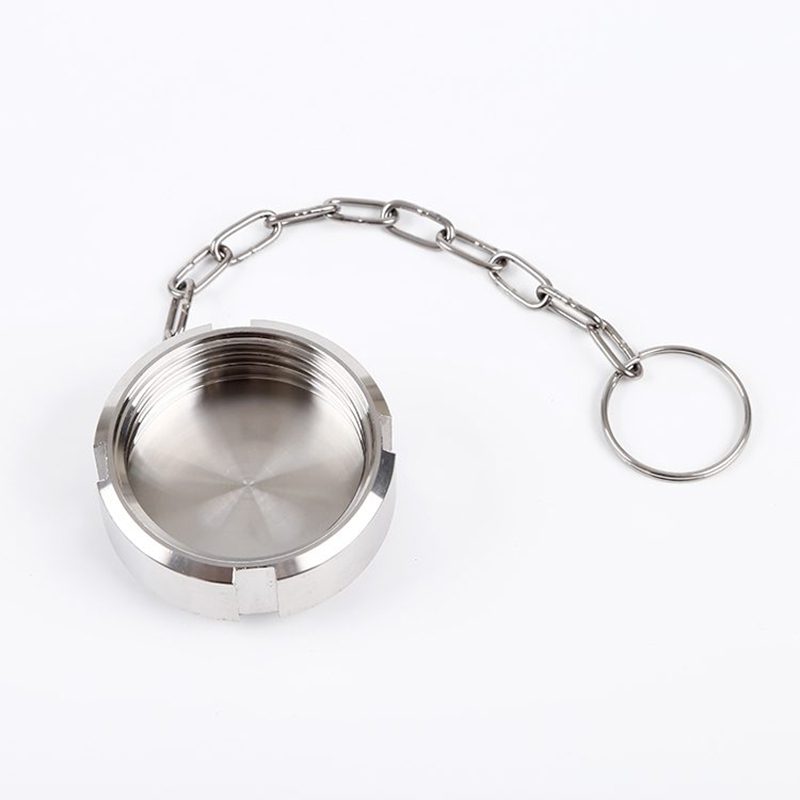
A blind nut with chain is a fastening assembly that combines a threaded blind nut with a retention chain. The chain permanently connects the nut to the equipment, ensuring that it remains attached even when removed from its threaded position.
This simple design helps eliminate one of the most common maintenance issues—the loss of small but essential fastening components.
Maintenance activities often take place in challenging environments such as:
Electrical substations
Manufacturing facilities
Outdoor utility installations
Telecommunications towers
Railway systems
Marine applications
In these locations, dropped fasteners can be difficult to locate and retrieve. A missing blind nut may seem insignificant, but it can lead to:
Extended maintenance time
Equipment downtime
Additional replacement costs
Delayed repairs
Reduced equipment protection
Potential safety risks
When critical fastening components are unavailable, equipment may not be properly secured after servicing.
The primary function of the attached chain is to maintain a permanent connection between the blind nut and the equipment.
When technicians remove the blind nut to access internal components, the chain keeps the nut suspended nearby rather than allowing it to fall or become separated. Once maintenance is complete, the nut can be quickly reinstalled without searching for replacement parts.
This retention feature significantly reduces the likelihood of accidental component loss.
Every minute spent searching for missing hardware increases maintenance costs and operational downtime.
Blind nuts with chains help technicians work more efficiently by:
Keeping fasteners readily accessible
Reducing time spent locating components
Simplifying reassembly procedures
Minimizing interruptions during servicing
Improving overall maintenance workflow
In large facilities where hundreds of access points require periodic inspection, these time savings can be substantial.
Equipment enclosures and protective covers are designed to shield internal systems from environmental hazards such as:
Dust
Moisture
Dirt
Corrosive substances
Unauthorized access
If a blind nut is lost and not replaced immediately, the enclosure may not provide adequate protection. Retained blind nuts help ensure that all fastening points remain available, allowing equipment to be properly secured after every maintenance procedure.
This contributes to greater long-term reliability and reduced risk of operational failures.
Lost hardware can create more than just maintenance problems. In certain environments, loose components may become:
Trip hazards
Foreign object debris (FOD)
Sources of equipment damage
Safety risks in rotating machinery areas
By preventing fasteners from becoming detached, blind nuts with chains help maintain a safer work environment and reduce the possibility of accidents caused by loose components.
Blind nuts with chain assemblies are commonly used in industries where equipment access is frequent and component security is essential, including:
Used on electrical cabinets, switchgear, transformer enclosures, and distribution panels.
Installed on outdoor communication cabinets, network enclosures, and transmission equipment.
Used in railway signaling systems, traffic control equipment, and transit infrastructure.
Applied to machine covers, inspection panels, and maintenance access doors.
Preferred for environments where dropped components are difficult to recover and corrosion resistance is critical.
To maximize maintenance benefits, consider the following factors:
Thread size compatibility
Chain length requirements
Material selection
Corrosion resistance
Environmental exposure conditions
Mechanical strength requirements
Stainless steel options are often preferred for outdoor and harsh-environment applications due to their durability and resistance to corrosion.
Blind nuts with chains provide a practical and cost-effective solution for preventing component loss during maintenance. By keeping fasteners permanently attached to equipment, they reduce downtime, improve maintenance efficiency, enhance safety, and support long-term equipment reliability. Whether used in electrical systems, telecommunications infrastructure, industrial machinery, or transportation networks, blind nuts with chains play an important role in ensuring maintenance operations remain smooth, efficient, and secure.
Why do blind nuts have retention chains?
Retention chains keep the blind nut connected to the equipment, preventing accidental loss during maintenance and inspection procedures.
How do blind nuts with chains reduce downtime?
Technicians do not need to spend time searching for lost fasteners or sourcing replacements, allowing maintenance tasks to be completed more quickly.
Are blind nuts with chains suitable for outdoor installations?
Yes. Many models are manufactured from corrosion-resistant materials such as stainless steel, making them ideal for outdoor and harsh-environment applications.
Can blind nuts with chains improve equipment safety?
Yes. They help ensure that enclosures and access panels can be properly secured after maintenance, reducing the risk of exposure to environmental hazards and unauthorized access.
Which industries commonly use blind nuts with chains?
Industries such as power distribution, telecommunications, transportation, manufacturing, marine, and utility infrastructure frequently use blind nuts with chain assemblies.

STAINLESS STEEL&GENCEL;
Privacy Policy | SiteMap
Copyright GENCEL STAINLESS STEEL CO.,LIMITED
 Optimized by Seraphinite Accelerator