- Whatsapp: 8613738300923
- Email: [email protected]


Sanitary pipe fittings are essential components in piping systems where hygiene, cleanliness, corrosion resistance, and reliable fluid transfer are important. They are widely used in food and beverage processing, dairy production, pharmaceutical manufacturing, biotechnology, cosmetics, breweries, and other industries that require hygienic piping solutions.
China has become an important manufacturing base for stainless steel sanitary pipe fittings, offering a wide range of products, materials, connection types, and customization options. However, not every supplier provides the same level of product quality or manufacturing capability.
Choosing the right China sanitary pipe fitting manufacturer can directly affect system performance, installation efficiency, maintenance requirements, and long-term operating costs. Buyers should therefore evaluate more than price when comparing manufacturers.
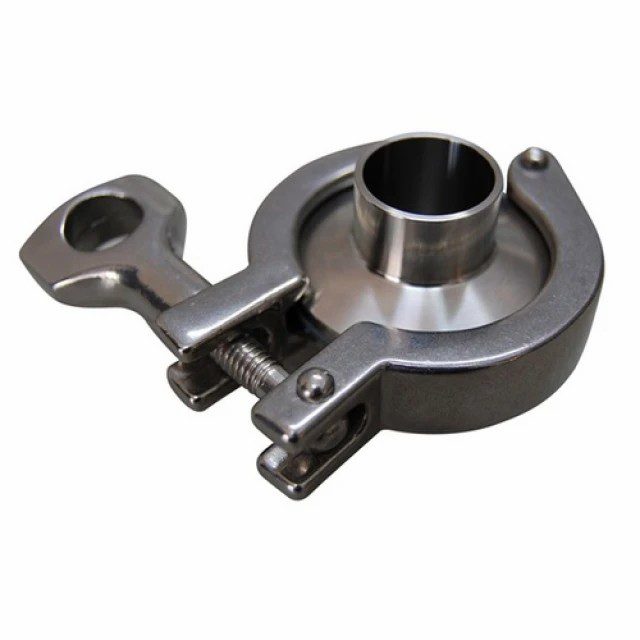
Experience is one of the first factors to evaluate when choosing a sanitary pipe fitting manufacturer.
An experienced manufacturer is more likely to understand the requirements of hygienic piping systems, including dimensional accuracy, surface finish, connection compatibility, welding quality, and material selection.
Before working with a supplier, consider:
How long the company has manufactured sanitary pipe fittings
Whether sanitary fittings are a core product
Which industries the company serves
Whether it has an experienced engineering team
What production equipment is available
Whether it has experience with international customers
A manufacturer with experience in food, beverage, pharmaceutical, dairy, and other hygienic industries may be better prepared to understand application-specific requirements.
Material quality has a direct impact on the durability and corrosion resistance of sanitary pipe fittings.
Stainless steel is commonly used because it provides good corrosion resistance, mechanical strength, and suitability for hygienic applications. Among the commonly selected grades, 304 stainless steel and 316L stainless steel are widely considered for different sanitary piping requirements.
304 stainless steel is suitable for many general sanitary applications. It provides good corrosion resistance and can be used in a variety of food, beverage, water, and processing systems.
316L stainless steel is often selected for more demanding environments where improved corrosion resistance is required. Its lower carbon content can also be advantageous for certain welded sanitary applications.
When evaluating a manufacturer, ask for clear information about the stainless steel grade used for the fittings. For larger or more demanding projects, material certificates may also be required for verification.
A reliable manufacturer should have a comprehensive product range that can meet different piping requirements.
Common sanitary pipe fittings include:
Sanitary elbows
Sanitary tees
Cross fittings
Reducers
Ferrules
Clamps
Unions
Caps
Adapters
Sanitary valves and related components
Different connection configurations may also be available, including clamp, welded, threaded, or other connection options depending on the application.
A manufacturer with a broader product range can simplify procurement and help ensure better compatibility between different components within the same piping system.
Surface finish is particularly important for sanitary pipe fittings.
Smooth internal surfaces can help reduce areas where product residue, bacteria, or contaminants could accumulate. Surface requirements may vary depending on the industry and application.
When comparing manufacturers, ask about:
Internal surface finish
External surface finish
Mechanical polishing
Electropolishing
Surface roughness requirements
Passivation or other treatments
For applications involving food, beverages, pharmaceuticals, or other hygienically sensitive products, surface quality should be treated as an important purchasing criterion rather than simply an appearance-related feature.
Manufacturing accuracy affects how well fittings connect with pipes and other components.
Poor dimensional control may result in installation difficulties, misalignment, leakage, or additional adjustment work.
For welded sanitary pipe fittings, welding quality is especially important. Buyers should consider whether the manufacturer has appropriate welding equipment, experienced operators, and inspection procedures.
Important manufacturing factors may include:
Dimensional accuracy
Pipe wall thickness
Connection dimensions
Welding consistency
Edge preparation
Internal weld quality
Surface treatment after welding
A professional manufacturer should be able to explain its production and inspection procedures clearly.
Sanitary piping projects may require products to comply with particular industry standards, customer specifications, or regional requirements.
Before placing an order, confirm which standards apply to your project and ask the manufacturer to provide relevant documentation.
Depending on the product and application, buyers may need to evaluate:
Product standards
Material standards
Dimensional standards
Surface finish requirements
Quality management certifications
Material certificates
Inspection reports
Other project-specific documentation
Do not assume that every sanitary fitting meets the same requirements simply because the products look similar. Always verify the manufacturer’s documentation against your actual project specifications.
A reliable China sanitary pipe fitting manufacturer should have a systematic quality-control process.
Quality control should cover more than final product inspection. It should ideally begin with raw materials and continue through manufacturing, finishing, assembly where applicable, and final inspection.
A typical process may include:
Raw Material Inspection → Cutting → Forming → Welding → Machining → Polishing → Dimensional Inspection → Surface Inspection → Final Quality Control → Packaging
Depending on the product, manufacturers may inspect:
Material grade
Dimensions
Wall thickness
Connection size
Surface finish
Weld quality
Appearance
Product consistency
When comparing suppliers, ask whether inspection records can be provided for your order.
Standard sanitary pipe fittings may not always meet the requirements of specialized equipment or processing systems.
You may require customized:
Dimensions
Wall thickness
Connection types
Fitting configurations
Surface finishes
Materials
Product markings
Packaging
For OEM equipment manufacturers and system integrators, customization can be particularly important.
A manufacturer with its own engineering and production capabilities may be better positioned to develop or modify fittings according to drawings and technical specifications.
Before requesting a quotation, provide detailed drawings or specifications whenever possible. This helps the manufacturer understand the requirements and reduces the possibility of misunderstandings.
Production capacity should also be considered, especially for large or recurring orders.
A manufacturer may provide high-quality samples but struggle to maintain consistent quality or delivery times when order volumes increase.
Ask about:
Production capacity
Available equipment
Manufacturing lead time
Raw material supply
Production scheduling
Quality inspection capacity
Ability to handle repeat orders
For distributors and long-term industrial customers, stable production capacity is important because supply interruptions can affect downstream operations.
Sanitary pipe fittings are often used as part of larger processing equipment and piping projects. Delayed fittings can therefore delay installation and commissioning.
When evaluating a Chinese manufacturer, ask about:
Sample lead time
Mass production lead time
Order processing
Inspection time
Packaging time
Export arrangements
It is also useful to determine whether the supplier has experience managing international shipments and export documentation.
A reliable supplier should provide realistic lead times rather than simply promising the fastest possible delivery.
Price is an important factor, but it should not be the only basis for selecting a sanitary pipe fitting manufacturer.
Two fittings may appear similar while differing in:
Stainless steel quality
Wall thickness
Dimensional accuracy
Internal surface finish
Welding quality
Inspection standards
Service life
A cheaper product may create additional costs if it requires frequent replacement or causes installation and maintenance problems.
Instead of comparing unit prices alone, consider the overall value offered by each manufacturer.
A useful evaluation can include:
Material Quality + Manufacturing Quality + Surface Finish + Certifications + Delivery + Service + Price
Clear communication is especially important when purchasing customized or application-specific sanitary pipe fittings.
A professional manufacturer should be able to answer questions about:
Product dimensions
Material grades
Connection standards
Surface finish
Application requirements
Customization
Packaging
Delivery
Technical documentation
The supplier should also be willing to review drawings and specifications before production.
Fast and accurate communication during the quotation stage can be a useful indication of how effectively the supplier may support you after placing an order.
For a new supplier, requesting samples before placing a large order is a practical way to evaluate product quality.
You can inspect:
Material and appearance
Dimensions
Connection accuracy
Surface finish
Welding quality
Internal cleanliness
Packaging
If necessary, samples can also be tested according to your own quality-control procedures.
Sample evaluation allows buyers to confirm that the actual product matches the manufacturer’s specifications before committing to larger quantities.
Proper packaging helps protect stainless steel sanitary pipe fittings during transportation and storage.
The manufacturer should take measures to reduce the risk of:
Scratches
Deformation
Contamination
Moisture exposure
Connection damage
Surface damage
For international orders, export experience is another useful consideration. The manufacturer should understand the documentation and packaging requirements associated with overseas shipments.
Before selecting a China sanitary pipe fitting manufacturer, it is useful to compare potential suppliers using consistent criteria.
| Evaluation Factor | What to Check |
| Manufacturing experience | Industry experience and product expertise |
| Material quality | 304, 316L, and other available materials |
| Product range | Elbows, tees, reducers, clamps, ferrules, etc. |
| Surface finish | Polishing and surface roughness options |
| Manufacturing quality | Dimensional and welding accuracy |
| Quality control | Inspection and testing procedures |
| Certifications | Applicable standards and documentation |
| Customization | OEM, drawings, and special specifications |
| Production capacity | Ability to handle current and future orders |
| Delivery | Lead time and export experience |
| Technical support | Engineering and application assistance |
| Pricing | Overall value rather than unit price alone |
| After-sales service | Communication and problem resolution |
Using the same checklist for different manufacturers makes it easier to identify the supplier that offers the best combination of quality, reliability, and value.
Choosing a reliable China sanitary pipe fitting manufacturer requires more than comparing product prices. Buyers should carefully evaluate manufacturing experience, stainless steel material quality, product range, surface finish, welding and machining capabilities, quality-control procedures, certifications, customization options, production capacity, delivery reliability, and technical support.
A dependable manufacturer should be able to provide consistent products that meet the required specifications while maintaining clear communication throughout the purchasing process.
Whether you are sourcing sanitary pipe fittings for food processing, dairy production, beverage systems, pharmaceutical equipment, or other hygienic applications, taking the time to evaluate suppliers carefully can help reduce procurement risks and support reliable long-term operation.
What should I look for in a China sanitary pipe fitting manufacturer?
Look for manufacturing experience, stainless steel material quality, precise production, good surface finishing, quality-control procedures, applicable certifications, customization capabilities, stable production capacity, and reliable technical support.
Is 304 or 316L stainless steel better for sanitary pipe fittings?
The appropriate grade depends on the application. 304 stainless steel is suitable for many general sanitary applications, while 316L is often considered for environments requiring higher corrosion resistance.
Why is surface finish important for sanitary pipe fittings?
A smooth surface can help reduce areas where residue and contaminants may accumulate and can make cleaning easier. Surface requirements should be selected according to the specific hygienic application.
Can Chinese sanitary pipe fitting manufacturers provide customized products?
Many manufacturers can provide customized dimensions, connections, surface finishes, materials, markings, and other specifications. Buyers should provide drawings or detailed technical requirements before production.
Should I request samples before placing a bulk order?
Yes. Samples allow buyers to evaluate dimensions, material, surface finish, connection accuracy, welding quality, and overall product consistency before committing to a large order.



STAINLESS STEEL&GENCEL;
Privacy Policy | SiteMap
Copyright GENCEL STAINLESS STEEL CO.,LIMITED
 Optimized by Seraphinite Accelerator
