- Whatsapp: 8613738300923
- Email: [email protected]


As industries strive to improve sustainability and reduce operating costs, optimizing cleaning processes has become a key priority. In sectors such as food and beverage, dairy, pharmaceuticals, biotechnology, and chemical processing, Clean-in-Place (CIP) systems are essential for maintaining hygiene standards. Among the components that significantly improve CIP efficiency, rotary cleaning balls have gained widespread adoption due to their ability to deliver effective cleaning while minimizing water and chemical usage.
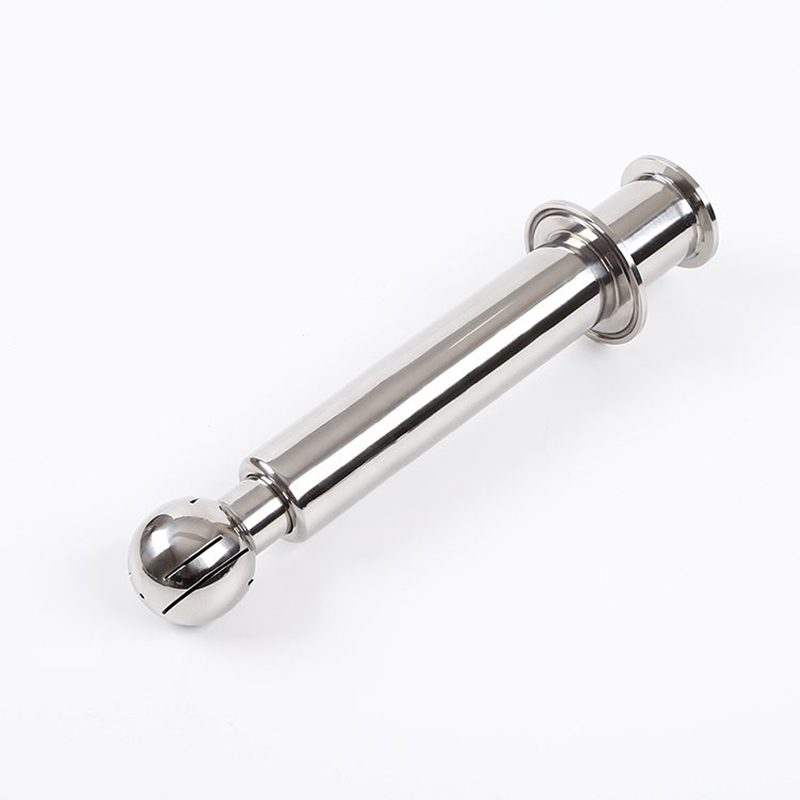
Rotary cleaning balls are sanitary cleaning devices installed inside tanks, vessels, and processing equipment. Unlike static spray balls that discharge cleaning solution in fixed directions, rotary cleaning balls use fluid pressure to generate rotational movement. This creates dynamic spray patterns that distribute cleaning media more evenly across internal surfaces.
The result is more efficient cleaning with fewer resources.
Traditional cleaning methods often require large volumes of water and cleaning chemicals to ensure complete removal of residues and contaminants. Excessive consumption can lead to:
Higher utility costs
Increased chemical expenses
Greater wastewater treatment requirements
Longer cleaning cycles
Higher environmental impact
Reducing resource usage without compromising hygiene is therefore a major goal for modern processing facilities.
One of the primary reasons rotary cleaning balls reduce water consumption is their superior spray coverage.
As the cleaning head rotates, cleaning solution reaches:
Tank walls
Vessel tops
Bottom surfaces
Internal structures
Hard-to-access areas
This comprehensive coverage eliminates the need for excessive rinsing and repeated cleaning cycles, allowing operators to achieve the desired cleanliness level using less water.
Rotary cleaning balls generate stronger cleaning impact than many conventional spray devices.
The rotating jets create mechanical force that helps:
Break down product residues
Remove stubborn deposits
Dislodge contaminants
Improve surface cleaning efficiency
Because the cleaning action is more effective, lower volumes of cleaning solution are often sufficient to achieve the same or better results.
Efficient cleaning coverage and increased mechanical action often allow facilities to shorten CIP cycle times.
Benefits of shorter cleaning cycles include:
Reduced water usage
Lower chemical consumption
Less energy required for pumping and heating
Increased production uptime
By completing cleaning operations faster, manufacturers can improve both productivity and sustainability.
Cleaning chemicals represent a significant operating expense in many industries.
Rotary cleaning balls help maximize chemical efficiency by:
Delivering chemicals directly to target surfaces
Reducing solution wastage
Ensuring more uniform chemical distribution
Minimizing the need for repeated cleaning cycles
This targeted cleaning approach allows facilities to maintain hygiene standards while using smaller quantities of detergents and sanitizers.
Every gallon of water and cleaning solution used during CIP eventually becomes wastewater that must be treated or disposed of properly.
By reducing overall fluid consumption, rotary cleaning balls help facilities:
Lower wastewater treatment costs
Reduce environmental impact
Improve sustainability metrics
Meet environmental compliance requirements
This advantage is especially valuable in regions where water resources are limited or wastewater regulations are strict.
One challenge with manual cleaning methods is variability in cleaning quality. Rotary cleaning balls provide automated and repeatable cleaning performance.
Consistent operation ensures:
Reliable cleaning results
Reduced need for additional rinse cycles
Lower risk of contamination
More predictable resource usage
This consistency contributes directly to reduced water and chemical consumption over time.
Rotary cleaning balls are particularly effective when integrated into automated CIP systems.
Modern CIP setups can optimize:
Flow rates
Spray patterns
Cleaning duration
Chemical concentration
Rinse cycles
Combined with rotary cleaning technology, these optimizations further reduce resource consumption while maintaining high hygiene standards.
Many industries have adopted rotary cleaning balls to improve cleaning efficiency and reduce operating costs, including:
Maintains sanitation while lowering water and detergent usage.
Effectively removes milk residues and protein buildup with reduced cleaning cycles.
Supports strict hygiene requirements while minimizing chemical waste.
Provides reliable cleaning for sensitive production environments.
Helps clean vessels efficiently while controlling cleaning-related expenses.
To maximize water and chemical savings, consider factors such as:
Tank size and geometry
Required cleaning coverage
Operating pressure
Flow rate requirements
Product residue characteristics
Material compatibility
Choosing the correct cleaning device ensures optimal cleaning efficiency and resource utilization.
Rotary cleaning balls play a crucial role in reducing water and chemical consumption within CIP systems. Through superior spray coverage, enhanced mechanical cleaning action, shorter cleaning cycles, and more efficient chemical distribution, they help facilities achieve high hygiene standards while lowering operating costs and environmental impact. As manufacturers continue to focus on sustainability and process optimization, rotary cleaning balls remain a smart investment for improving cleaning performance and resource efficiency.
How do rotary cleaning balls reduce water usage?
Their rotating spray pattern provides better cleaning coverage, reducing the need for excessive rinsing and repeated cleaning cycles.
Can rotary cleaning balls lower chemical consumption?
Yes. More efficient cleaning action allows facilities to use smaller quantities of detergents and sanitizers while maintaining cleaning effectiveness.
Are rotary cleaning balls suitable for CIP systems?
Absolutely. They are specifically designed to improve the performance and efficiency of automated Clean-in-Place systems.
Which industries benefit most from rotary cleaning balls?
Food and beverage, dairy, pharmaceutical, biotechnology, and chemical processing industries commonly use rotary cleaning balls to improve cleaning efficiency.
Do rotary cleaning balls help reduce operating costs?
Yes. Lower water consumption, reduced chemical usage, shorter cleaning cycles, and decreased wastewater treatment requirements all contribute to significant cost savings over time.

STAINLESS STEEL&GENCEL;
Privacy Policy | SiteMap
Copyright GENCEL STAINLESS STEEL CO.,LIMITED
 Optimized by Seraphinite Accelerator