- Whatsapp: 8613738300923
- Email: [email protected]


Valves are the core control components of fluid pipelines.Choosing the wrong valve not only affects flow efficiency,but also poses hidden dangers such as leakage,jamming,and difficult maintenance in the later stages.Ball valves and globe valves are the two most commonly used valves in civil home decoration and industrial pipelines.Although they seem to be able to control fluid flow,their structural design,performance focus,and applicable scenarios have essential differences.Many people blindly follow the trend when purchasing,either installing shut-off valves on high flow main pipes causing a sudden drop in water pressure and energy consumption, installing ball valves on workstations that require precise throttling,or selecting the wrong model for high-pressure conditions,which poses safety hazards.This article does not pile up obscure theories,but focuses on core performance,scenario adaptation,and common questions.With straightforward practical logic,it helps you quickly distinguish between the two and accurately select without rework.

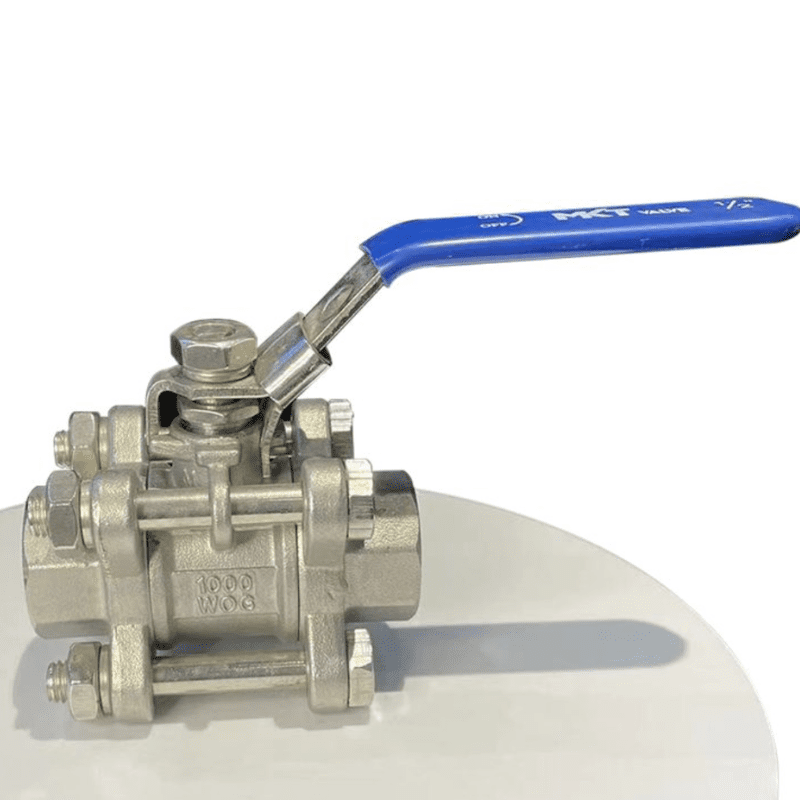
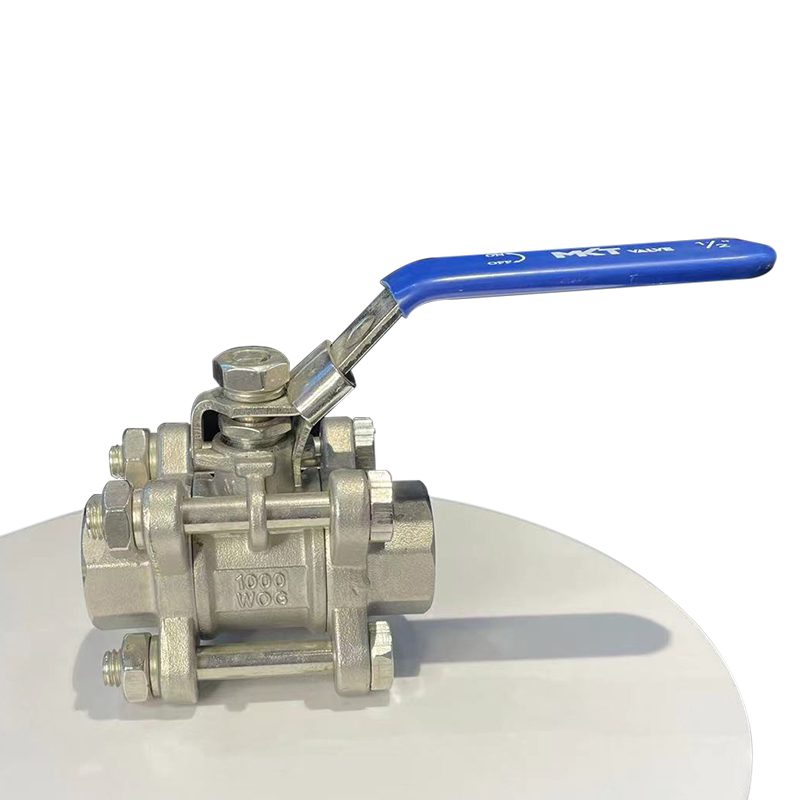
Ball valves belong to the type of plug valves,with the core component being a spherical valve core with a circular through-hole.By relying on the valve stem to drive the ball to rotate 90°,the pipeline can be fully opened or closed,without the original design intention of fine throttling in the middle.They belong to fast opening and fast closing valves.Compact structure,extremely fast opening and closing speed,fluid channel straight through without reducing diameter or bending, and extremely low pressure loss.The mainstream materials include brass,304/316 stainless steel, and cast steel,which are suitable for different pressure,temperature,and medium environments. They can cover both household main pipes and industrial conventional fluid pipelines,with a focus on efficient on-off and high flow transmission.The short board cannot accurately adjust the flow rate,and the semi open state is prone to wear and tear on the sealing surface.

Globe valves belong to the category of throttle valves for opening and closing.The valve core is mostly a conical or plunger structure,which relies on the lifting and lowering of the valve stem to drive the valve core and achieve closure by fitting the valve seat.Opening and closing require multiple rotations,and the lifting and lowering stroke directly controls the opening and closing size of the flow channel.The core advantage is precise flow regulation.The valve body flow channel has bends and reduced diameter,belonging to a non straight structure,with slow opening and closing speed and more laborious operation.However,it has high sealing fit and high throttling accuracy,making it suitable for working conditions that require control of flow rate and adjustment of flow rate.The material also covers brass,stainless steel,and cast steel,with excellent resistance to high temperature and high pressure.It focuses on fine throttling and reliable sealing, but the weakness is the large pressure loss and poor adaptability to high flow scenarios.
Ball valves outperform high flow scenarios.In the fully open state,the through hole of the valve core is perfectly aligned with the inner diameter of the pipeline,and the fluid passes through unobstructed.The flow rate is close to full pipe,and the large diameter model can meet the high flow requirements of high-power equipment and main pipelines, only for on/off without adjustment.
Globe valves have stronger flow controllability,but weaker flow capacity.The flow rate can be accurately adjusted by the valve core lifting,which is suitable for workstations that require speed control and throttling.However,due to the limitations of the flow channel structure,the fully open flow rate can only reach60%-75%of that of a ball valve with the same diameter,which cannot meet the requirements of high flow and fast transmission.
The sealing logic of the two is vastly different,and each has its own emphasis on applicable scenarios.
Ball valves rely on spherical hard seals,with zero leakage after opening and closing in place.They have strong high-pressure sealing resistance and are suitable for high-pressure on-off conditions.However,long-term semi open throttling can quickly wear down the sealing surface, leading to seal failure.
The globe valve adopts line sealing or face sealing,and the valve core and seat are tightly fitted.After closure,the seal is tight.Even if it is used for throttling regulation for a long time,the sealing stability is still online.The sealing performance is very stable under low and high pressure conditions,especially suitable for scenarios that require frequent adjustment,and it is not easy to leak.
The pressure loss of the ball valve is negligible.Direct flow channel+no throttling obstruction, almost no resistance when fluid passes through,no additional pipeline load will be added when transporting long pipelines and high flow rates,and the energy consumption of the matching pump is extremely low.The pressure loss of the shut-off valve is extremely significant.The bending of the flow channel and the obstruction of the valve core create eddy current resistance when the fluid passes through.Even in the fully open state, significant pressure drop will occur.The use of high flow main pipelines will directly lower the overall pipeline efficiency and increase transportation energy consumption.
Ball valves are suitable for a wide range of applications,including hot and cold water,compressed air,non corrosive conventional oil products,and weakly corrosive clean media.Stainless steel material can be adapted to mild acidic and alkaline environments,with balanced resistance to high temperature and high pressure.It is taboo to use media containing a large amount of solid particles,which can easily cause the ball to get stuck.
Globe valves are suitable for more specific media,including clean fluids,media with a small amount of fiber,oil products that require throttling,and water vapor. Stainless steel and hard seals can adapt to medium and high-pressure corrosive media,but the flow channel is narrow and not suitable for media containing a large amount of solid particles or viscous media,which can easily clog the valve core.
The ball valve has a minimalist structure and very few vulnerable parts.Under normal use,the failure rate is extremely low.Maintenance only requires regular inspection of the seal and cleaning of impurities in the valve core.The replacement of accessories is convenient,and the durability is extremely strong.The comprehensive cost of long-term use is low.The internal structure of the globe valve is precise,and the valve core and seat are vulnerable parts.Long term throttling adjustment is prone to wear and jamming,and maintenance requires disassembling the valve core components.The cost of replacing parts is slightly higher.Under frequent adjustment conditions,the maintenance frequency is higher than that of ball valves.
| Comparison dimension | Ball valve | Globe Valve |
| Core structure | Straight-through type, ball-shaped valve core, 90° rotation for opening and closing. | Non-straight-through type, conical/columnar valve core, up-and-down movement for opening and closing |
| Opening and closing speed | Extremely fast, completing the on-off process by rotating 90° | Slow, requiring multiple rotations of the lift valve core |
| Flow characteristics | High flow rate, no regulating capability, minimal pressure loss | Precisely adjustable, small flow rate, extremely high pressure loss |
| Core Function | Quick on-off, prohibition of fine-detail flow control | On-off + high-precision flow adjustment |
| Applicable Scenarios | Main pipelines, high flow rate, high-pressure on-off, low energy consumption requirements | Need throttling control, precise water control, frequent adjustment of working positions |

There is no absolute superiority or inferiority,only adaptation to the scene,grasping two core judgment criteria,no need to worry,choose directly without making mistakes.Priority selection of ball valves:main pipeline,water heater inlet,heating main pipeline,air compressor air circuit,large equipment inlet and outlet, only requiring quick on/off,no flow regulation requirements,pursuing high flow,low pressure loss,long life,and low energy consumption working conditions,choose ball valves with closed eyes.Priority should be given to selecting globe valves:for experimental pipelines,fine water and gas control stations,scenarios that require adjustment of flow rate and flow rate,steam throttling,and medium to high pressure sealing throttling, where large flow rates are not pursued and precise control of fluid conditions is required,globe valves must be selected.Don’t fall into the trap of substitution.Choosing ball valves for high flow connections,globe valves for fine throttling,and combining industrial and home pipelines are the most reasonable solutions.
Core advantages:rapid opening and closing,large flow rate,low pressure loss,strong durability, reliable high-pressure sealing,installation without distinguishing flow direction,easy operation.
The main switch for hot and cold water in the whole house,as well as the main water inlet of the gas water heater,solve the problems of slow equipment startup and unstable water temperature caused by insufficient water pressure. With one click opening and closing,there is no need to shut down the entire house for later maintenance;
Conventional fluid conveying main pipe,compressed air circuit control,efficient on-off,reducing energy consumption of pumps and air compressors,and reducing pipeline pressure drop.
Core advantages:precise flow regulation,excellent sealing performance,resistance to repeated throttling and wear,suitable for fine fluid control.
Radiator flow regulation, solar water heater water control,precise control of water flow rate,balancing heating and water supply efficiency.
Steam pipeline throttling,experimental equipment fluid control, chemical low-pressure fluid regulation,precise control of medium flow rate,avoiding equipment loss or process deviation caused by excessive flow,reliable sealing to prevent leakage.
Q1:Ball Valve vs Globe Valve for High Temp & Pressure?
A1:The hard sealed version of the globe valve is suitable for high-temperature steam and high-pressure fluids,with more reliable sealing and a lift type valve core that is less prone to failure;Ball valves are only suitable for high-pressure switching,and seals are prone to aging at high temperatures,making them unable to throttle.
Q2:Can globe valves be used in large-diameter pipelines?
A2:Okay.Large diameter ball valves are the main flow for opening and closing large diameter pipelines,with fast opening and closing and low pressure loss;There is no large-diameter version of the globe valve,and it is not suitable due to high pressure loss and difficult operation under large pipe diameters.
Q3:Are there special conditions unsuitable for both valves?
A3:It have Containing a large amount of solid particles, high viscosity medium,strong corrosion, fine regulation,and extreme working conditions of ultra-high pressure and high temperature, special gate valves,anti-corrosion valves,or special regulating valves need to be replaced.
Q4: Which valve is more energy-efficient in long-term operation?
A4:Ball valves have lower energy consumption,no resistance in the straight passage,and lower pressure drop;The flow resistance of the shut-off valve is high,and long-term operation consumes high energy.The difference is more obvious in high flow scenarios.
Q5: Best Materials for Ball and Globe Valves in Corrosive Media?
A5:304 stainless steel is selected for weak corrosion,and 316 stainless steel or PTFE lining is used for strong corrosion;Globe valves can be adapted to corrosion throttling,while ball valves are only suitable for weak corrosion on/off,and brass should not be used to contact acid and alkali.
Q6: How to judge if ball valves or globe valves need maintenance?
A6:Opening and closing stuttering,closing dripping,sudden decrease in flow rate,and water leakage from the valve body require immediate maintenance and replacement;Check the ball seal of the ball valve and the wear of the valve core and seat of the globe valve.
Q7: Can ball valve be used for precise flow regulation instead of globe valve?
A7:Absolutely not.Ball valves are only used for fully open and fully closed valves.Half open throttling will cause rapid wear and tear on the seal,leading to leakage and inability to accurately regulate flow.They cannot replace globe valves.
Q8: Difference in installation difficulty between ball valves and gate valves?
A8:Ball valves are easy to install and do not require differentiation of flow direction;Globe valves have strict flow requirements,precise positioning,and slightly higher installation difficulty.They can be quickly installed in conventional scenarios.
Q9: Which valve is more suitable for pipelines that need frequent on-off operations?
A9:High frequency switch ball valve without adjustment,easy to operate;Frequent adjustment of the cut-off valve is required to ensure wear-resistant sealing;Ball valves are strictly prohibited from being opened at high frequencies,as they are prone to damage.
Ball valves and globe valves are completely different types of valves, and are not interchangeable. Ball valves focus on high flow,low pressure loss, and fast switching, pursuing high efficiency and long service life;Globe valves focus on fine throttling,sealed flow control,and frequent adjustment,pursuing precision and stability.In addition to closely following the requirements of the scenario,choosing the right brand is also crucial for daily selection.Brands such as GENCEL, which focus on the field of fluid control,have launched differentiated product lines for ball valves and globe valves based on their different operating characteristics:their ball valves focus on high-pressure sealing,high flow on-off,full durability,and are suitable for main pipelines and industrial high-frequency on-off scenarios;The globe valve focuses on throttling accuracy and sealing wear resistance,and is precisely matched with fine flow control stations.The material and process meet the dual standards of home decoration and industry,which can further improve the service life of the valve and reduce the frequency of maintenance in the later stage.

STAINLESS STEEL&GENCEL;
Privacy Policy | SiteMap
Copyright GENCEL STAINLESS STEEL CO.,LIMITED
 Optimized by Seraphinite Accelerator