- Whatsapp: 8613738300923
- Email: [email protected]


When it comes to controlling the flow of liquids and gases in industrial systems, choosing the right valve can make all the difference. Ball valves and gate valves might look similar at first glance, but they work in fundamentally different ways. Ball valves offer fast, reliable, and tight on/off control, making them the go-to choice for modern industries. At GENCEL STAINLESS STEEL – Professionally Ball Valve Manufacturer, we specialize in delivering durable, high-performance ball valves tailored for industrial and OEM needs.
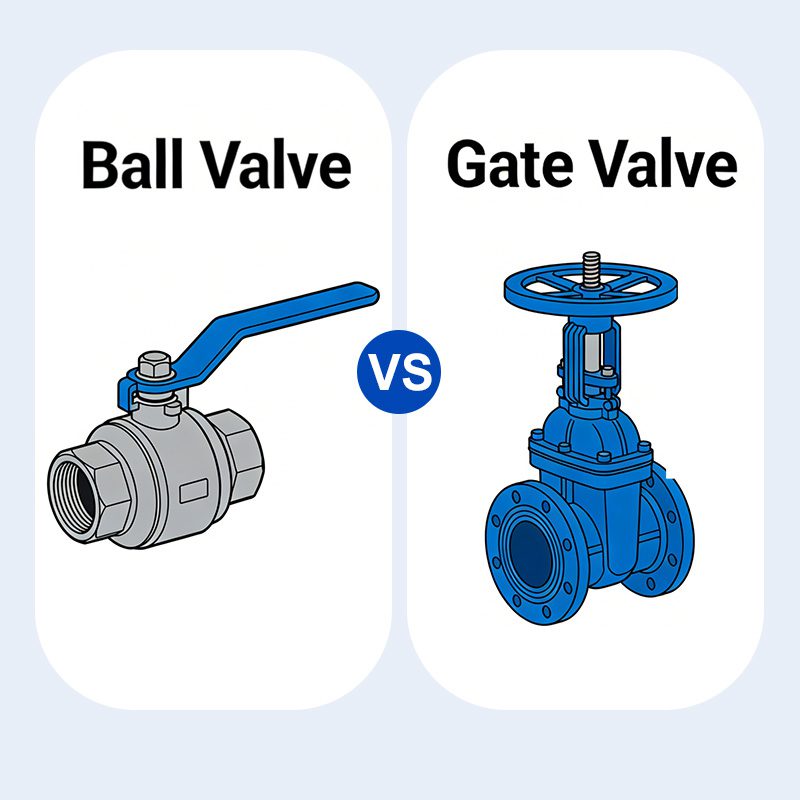
Gate valves operate using a solid gate that moves up or down to either allow or block the flow of fluid. This linear movement is simple but effective for applications that don’t require rapid on/off switching.
Gate valves are ideal for situations where slow, controlled operation is preferred. You’ll often find them in:
Gate valves are slower to operate because they require multiple turns of the handwheel or actuator. For high-frequency applications, their slower cycle time and higher maintenance needs can be limiting.
Key Points:
Unlike gate valves, ball valves use a pivoting ball with a hole through its center. Turn it 90°, and flow starts or stops almost instantly. This quarter-turn operation provides speed, reliability, and tight shutoff, making ball valves ideal for both liquids and gases.

Ball valves are maintenance-friendly and highly durable, capable of handling high-frequency operations without compromising performance. They are also easy to automate, which is perfect for modern industrial systems.
Key Points:
| Feature | Gate Valve | Ball Valve | Typical Use | Maintenance | Cost |
|---|---|---|---|---|---|
| Operation | Linear, slow | Quarter-turn, fast | Plumbing, pipelines | Medium | Low |
| Media | Thick liquids | Liquids & gases | Industrial & HVAC | Low | Medium-High |
| Cycle Frequency | Low | High | On/off operations | Low | Higher upfront |
| Seal Reliability | Moderate | High | Critical shutoff | Less frequent | Higher ROI |
| Automation | Complex | Easy | Automated systems | Low | Cost-effective |
Quick Takeaways:
At GENCEL STAINLESS STEEL, our ball valves are designed for durability, multi-port options, and reliable performance under high-frequency cycles. Industries around the globe trust our valves for smooth, leak-free operation in demanding environments.
Key Points:
While ball valves may have a higher initial cost than gate valves, their longer lifespan and lower maintenance requirements make them a smart investment.
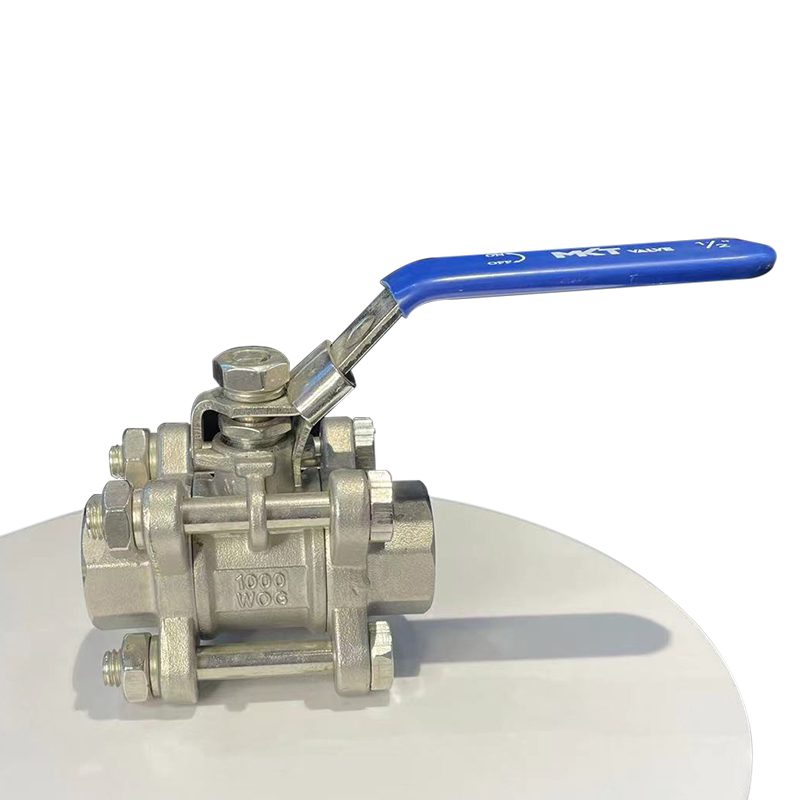
Most ball valves, especially 3-piece designs, are easy to maintain or repair without shutting down operations. This ensures minimal downtime and higher ROI for industrial systems.
Ball valves require less torque to operate, making them ideal for automated systems. Combining ball valves with actuators reduces labor costs and enhances system efficiency.
Key Points:
When selecting the right valve, consider:
For industrial buyers and OEMs, GENCEL STAINLESS STEEL provides customized, durable ball valves that meet these demands – ensuring safe, reliable, and efficient operations.
What is the difference between a ball valve and a gate valve?
Ball valves offer fast, quarter-turn on/off control, while gate valves provide slow, linear operation.
Which valve is better for high-frequency applications?
Ball valves handle frequent cycles better due to their faster operation and durability.
Can ball valves handle high-pressure liquids?
Yes, especially stainless steel and high-performance designs from GENCEL STAINLESS STEEL.

What maintenance is required for a 3-piece ball valve?
Seats and seals can be replaced without removing the valve, minimizing downtime.
Can ball valves be automated easily?
Absolutely. Their quarter-turn operation requires less torque, making automation simple and cost-effective.
When should I avoid using a ball valve?
Avoid when gradual flow control is required; ball valves are best for on/off operation.
Are ball valves suitable for gases?
Yes, they create a tight seal for both liquids and gases.
Why choose GENCEL STAINLESS STEEL for ball valves?
We deliver durable, customizable, and high-performance valves trusted by OEMs and industrial clients worldwide.
Can a ball valve be used in multi-port applications?
Yes, multi-port ball valves allow flow diversion and flexible system design.
What is the lifespan of a ball valve?
High-quality stainless steel ball valves last significantly longer than gate valves with minimal maintenance.
Choosing the right valve doesn’t have to be complicated. Ball valves provide speed, reliability, and low maintenance – perfect for industries that demand precision and efficiency. GENCEL STAINLESS STEEL – Premium Ball Valve Manufacturer offers durable, high-performance ball valves suitable for a wide range of industrial and OEM applications.
Invest in ball valves that save time, reduce maintenance, and deliver dependable performance – because in critical systems, every second counts.

STAINLESS STEEL&GENCEL;
Privacy Policy | SiteMap
Copyright GENCEL STAINLESS STEEL CO.,LIMITED
 Optimized by Seraphinite Accelerator