- Whatsapp: 8613738300923
- Email: [email protected]


In industries like food processing, pharmaceuticals, and biotechnology, contamination is not an option. A sanitary pipe fitting is a specially designed component used to connect pipes in systems requiring absolute cleanliness. Unlike standard industrial pipes, these fittings are engineered to be crevice-free, smooth, and easy to clean, ensuring product purity and preventing bacterial growth in hygienic systems.
To understand how these fittings work, one must first look at their fundamental design philosophy. The primary enemy of a hygienic system is a place where product or cleaning solution cannot reach—a “bug trap.” Sanitary pipe fittings are meticulously crafted to eliminate these hiding spots. They are typically made from stainless steel, such as 304 or 316L, which offers excellent corrosion resistance and durability.
The “how it works” aspect is rooted in two key principles: mechanical connection and cleanability. The fittings create a secure, leak-proof joint that can withstand pressure and temperature fluctuations. More importantly, the interior surface is polished to a high smoothness (often less than 0.8µm Ra), allowing for easy drainage and preventing particles from adhering. This ensures that Cleaning-in-Place (CIP) and Sterilization-in-Place (SIP) processes can effectively sanitize the entire system without needing to dismantle it.

How does a simple fitting maintain such high standards during operation? It relies on a few critical components working together. The most common type in ultra-hygienic applications is the tri-clamp (or tri-clover) fitting, which consists of a ferrule, a gasket, and a clamp.
When two ferrules (welded to pipe ends) are aligned with a gasket between them, the clamp is tightened over the assembly. This compresses the gasket to form a tight seal. Because the gasket is designed to be flush with the inner diameter of the pipe, there is no gap where bacteria can accumulate. This simple yet effective design allows for quick dismantling for inspection or manual cleaning if required, making it incredibly versatile.
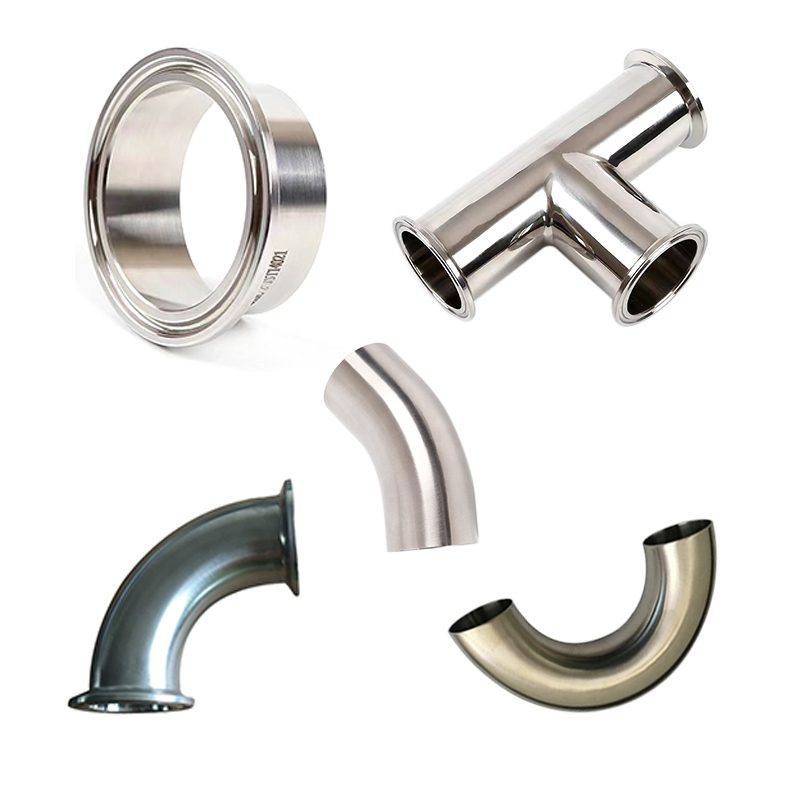
To help you visualize the components of a typical system, here is a breakdown of common sanitary fittings and their primary roles. Each is designed with the same hygienic principles but serves a unique purpose in the piping route.
| Fitting Type | Primary Function | Typical Application in System |
|---|---|---|
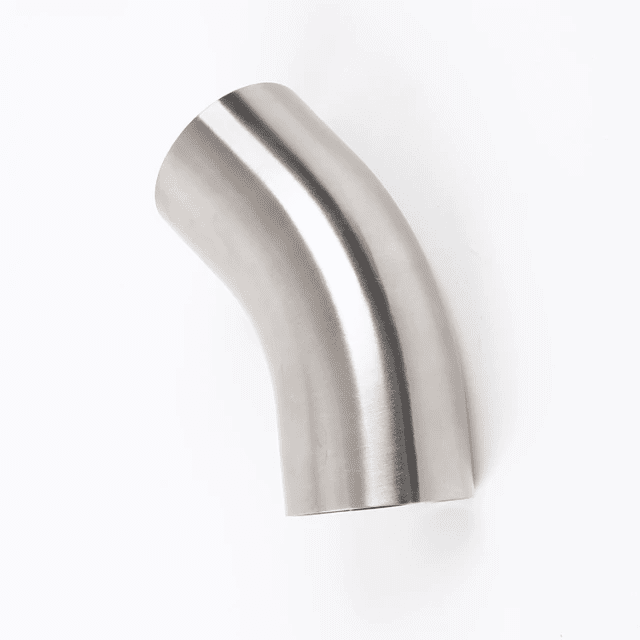
| Sanitary Elbow | Change the direction of product flow. | Navigating around tanks or equipment in a dairy processing line. |
| Sanitary Tee | Merge or split a product stream. | Combining two ingredients or diverting flow to different tanks. |
| Sanitary Reducer | Connect pipes of different diameters. | Transitioning from a large storage tank outlet to a smaller filling line. |
| Sanitary Ferrule | The end piece welded to pipe for connection. | Providing the standard connection point on all pipe ends for clamping. |
| Sanitary Gasket | Create a leak-proof, crevice-free seal between ferrules. | Placed between two ferrules inside a clamp to ensure a bacteria-tight seal. |
The choice of material and finish is where the science of hygiene meets manufacturing precision. As a GENCEL Stainless Steel Manufacturer, we emphasize that the grade of steel directly impacts the longevity of your system. 304 stainless steel is common for general applications like beverages, while 316L stainless steel offers superior resistance to chlorides and harsh chemicals, making it ideal for pharmaceutical and biotech environments.
The “L” in 316L stands for low carbon, which prevents weakening at weld points. Furthermore, the surface finish—whether mechanical polished or electropolished—determines how easily the system can be cleaned. Electropolishing removes a microscopic layer of metal, smoothing the surface to a near-perfect level and significantly enhancing its corrosion resistance. This meticulous attention to detail is what allows a sanitary pipe fitting to perform flawlessly over years of service.
Q1: What is the main difference between a sanitary fitting and a standard pipe fitting?
The main difference lies in the interior surface finish and design. Standard fittings often have threads or rough surfaces where bacteria can hide. Sanitary fittings are smooth, polished, and crevice-free to allow for thorough cleaning and sterilization.
Q2: How do I know which grade of stainless steel to choose for my sanitary pipe fittings?
It depends on your application. 304 stainless steel is suitable for general food, dairy, and beverage applications. 316L stainless steel is recommended for more corrosive environments, such as those involving high chlorides, acids, or pharmaceutical applications, due to its enhanced corrosion resistance.
Q3: Can sanitary fittings be used for both liquid and powder handling?
Yes, they are versatile. For liquids, the focus is on smooth drainage and cleanability. For powders, the smooth interior surface prevents product from caking and accumulating, which can cause blockages and contamination.
Q4: What does “Tri-Clamp” mean in a sanitary system?
“Tri-Clamp” refers to the most common type of sanitary connection. It uses a three-piece assembly: two ferrules (welded to pipes or equipment) with a gasket between them, all held together by a quick-release clamp. It is valued for its sanitary seal and ease of disassembly.
Q5: Are your sanitary fittings at GENCEL compatible with other brands?
Yes, our sanitary pipe fittings are manufactured to international standards (such as 3A, DIN, and SMS), ensuring dimensional compatibility with other industry-standard components. This makes them a reliable choice for both new installations and system expansions.
Sanitary pipe fittings are the unsung heroes of hygienic systems, ensuring product integrity through impeccable design and material science. They work by providing smooth, crevice-free connections that are easy to clean and maintain. By choosing high-quality components, you are not just buying hardware; you are investing in the safety and success of your entire production process. For a reliable supply of premium fittings, explore the range available at GENCEL Stainless Steel Manufacturer to ensure your system meets the highest standards of hygiene.

STAINLESS STEEL&GENCEL;
Privacy Policy | SiteMap
Copyright GENCEL STAINLESS STEEL CO.,LIMITED
 Optimized by Seraphinite Accelerator