- Whatsapp: 8613738300923
- Email: [email protected]


Conventional fluid fittings are widely used in sewage, chemical, HVAC and other scenarios, but they are difficult to implement in high clean production processes such as food and pharmaceuticals. A tiny gap or an inconspicuous edge in a pipeline can become a source of pollution, causing the entire batch of raw materials to be scrapped and products to be urgently recalled, or triggering severe fines from regulatory authorities. Many companies have already paid a painful price for such problems. Sanitary ball valves and matching fittings are not simply improved versions of ordinary valves, but are core components tailored for sterile and residue free harsh working conditions. Its design abandons all redundant structures, and every process and detail revolves around the core requirements of cleanliness, ease of cleaning, and no accumulation of dirt. This guide focuses on the core points of practical operation, helping frontline practitioners in procurement, technology, and production to accurately identify product advantages and disadvantages, avoid compliance risks, and fully understand the application key of sanitary ball valves and fittings.

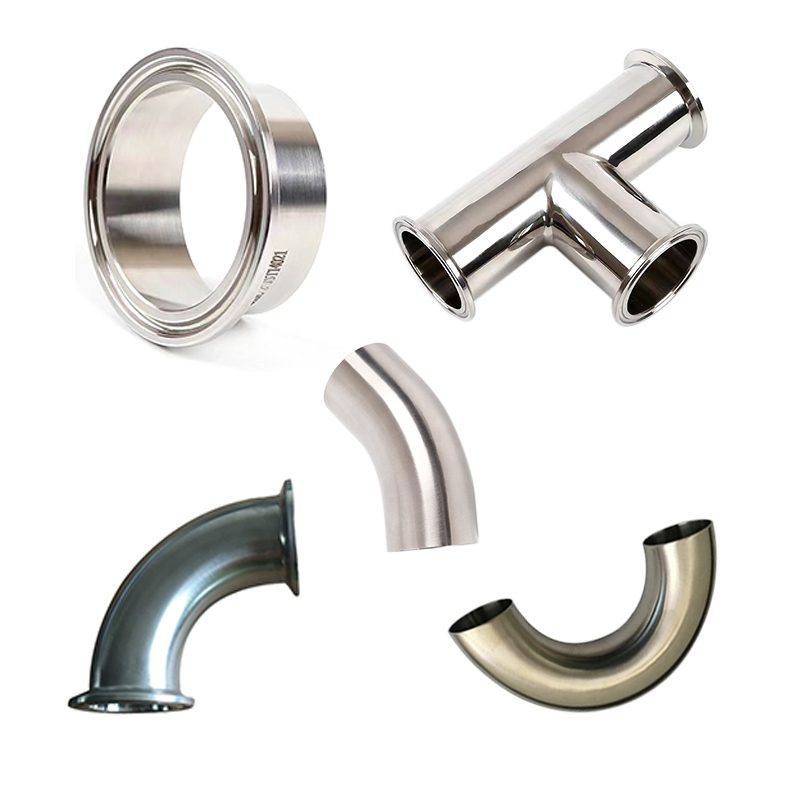
Sanitary ball valve, which achieves precise fluid switching and control by rotating the ball 90 degrees, is a sanitary grade valve designed for fluid transmission scenarios with strict cleanliness requirements. The matching fittings such as elbows, tees, clamps, etc. need to work together with ball valves to form a closed-loop pipeline system, eliminating hygiene blind spots caused by material storage and medium retention throughout the process, and maintaining a clean bottom line from the transmission link. The essential difference from industrial grade pipe fittings is that pollution prevention is taken as the core principle from the design source. No dents, no exposed threads, no splicing gaps, material selection, surface treatment, and connection methods all follow exclusive standards in the field of hygiene. Due to direct contact with food, pharmaceuticals, and cosmetic ingredients, it is necessary to meet the basic requirements of not releasing harmful substances and not breeding bacteria, which is a bottom line that ordinary pipe fittings cannot achieve.
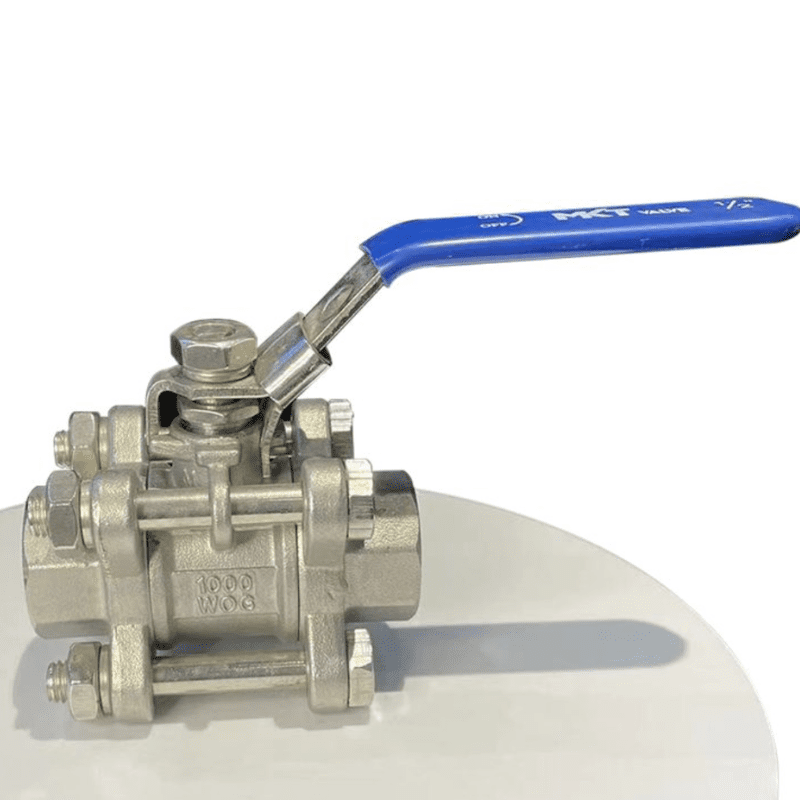
Flow control and switching are the basic functions of sanitary ball valves, and withstanding rigorous cleanliness tests is their core capability. The sealed structure has no dead corners, fundamentally avoiding cross contamination of different batches of media; Support online cleaning and sterilization without dismantling pipelines, saving labor costs and effectively avoiding secondary pollution caused by disassembly and assembly; The main material has strong chemical inertness, does not react with the transported raw materials, does not change the composition of the raw materials, does not produce cross flavors, and does not affect the efficacy of the medicine; The bidirectional sealing has high tightness, which not only prevents internal medium leakage from causing loss and pollution, but also blocks external dust and bacteria from entering the pipeline system. The design core of ordinary valves is only to achieve fluid flow control, while sanitary valves firmly safeguard production safety while controlling fluid flow. This critical safety line of defense cannot be undertaken by industrial grade pipe fittings, and it is also the core reason why the two must not be mixed.
Sanitary fittings without compliance certification are all inferior products, and even if they are low-priced, they must never be put into use. There is no room for negotiation regarding the recognition and implementation of standards in the high cleanliness industry. In the field of food and beverage, the international basic entry threshold is the US FDA 21 CFR, 3-A hygiene standards, European EHEDG certification, and EU EC 1935/2004 regulations. The requirements of the pharmaceutical industry are even more stringent. In addition to basic food grade standards, it also needs to pass USP Class VI biocompatibility certification and GMP compliance requirements. The high-end biopharmaceutical field must comply with ASME BPE standards. The corresponding standards in China are also clear. The food industry follows GB 4806 “Stainless Steel Products for Food Contact”, while the pharmaceutical industry strictly adheres to the relevant requirements of the GMP appendix. These standards strictly limit the material composition, surface polishing accuracy, and product structure design. As long as one of them does not meet the standards, the product cannot enter the production process.

All the characteristics of sanitary ball valves and fittings are designed to avoid hygiene hazards and solve practical pain points on the front line. Every aspect of their design and production is controlled layer by layer around cleanliness requirements. In terms of material selection, there are only two options available: 304 and 316L stainless steel, with no alternative solutions. Among them, 316L stainless steel has stronger corrosion resistance. In pharmaceutical, acidic beverage, cosmetics production and other scenarios, 316L material must be selected and should not be replaced with 304 stainless steel to save costs. The selected stainless steel material is pure and free of impurities, eliminating the risk of heavy metal precipitation from the root; The seals are made of food grade PTFE and EPDM instead of ordinary industrial rubber, which are resistant to high and low temperatures, aging, repeated disinfection and sterilization and will not release toxic substances during use. There are no hygiene blind spots in the structural design. The inner wall adopts mirror polishing technology, with a surface roughness Ra ≤ 0.8 μ m. The smoother the inner wall, the less likely it is to hang materials and scale, and the more convenient and efficient the cleaning is; The connection method abandons ordinary threads that are prone to dirt accumulation and adopts quick installation clamps or welding connections. The joints are tightly sealed to eliminate all cleaning blind spots; The ball valve adopts a fully enclosed ball design, with smooth and unobstructed flow channels, and no residual medium during the opening and closing process; The valve stem seal adopts a multi-layer protective structure, which does not require the addition of lubricants and eliminates contamination caused by lubricants from the source. High temperature resistance disinfection and sterilization is one of its core characteristics. It can be repeatedly used in a steam sterilization environment at 121-135 ℃ without deformation and toxin release. After batch production, it can quickly complete disinfection and sterilization and production recovery preparation, perfect for the continuous production line of food and pharmaceutical industries. At the same time, the product structure is solid, and the pressure resistance fully meets the working conditions of various industries. The maintenance frequency is much lower than that of ordinary pipe fittings, greatly reducing the maintenance cost and downtime loss of first-line production, and making long-term use more worry free.
In the fields of meat products, dairy products, baking sauces, seasonings, grain and oil processing, the transportation of liquid and paste raw materials requires the comprehensive use of sanitary ball valves and fittings. There are two compliance cores in this field: firstly, the material must be non-toxic, free of harmful substances, and strictly comply with FDA, 3-A, GB 4806 and other standards; Second, the pipeline system has a reasonable structure, which is easy to clean and disinfection and sterilization, so as to fundamentally eliminate the breeding of bacteria. Especially in the dairy industry, the hygiene level requirements are fully met, and the entire production process must maintain a sterile state. Once the microbiological indicators exceed the standard, the entire batch of products will be directly scrapped without any possibility of remediation.
The production of beverages such as fruit juice, carbonated drinks, drinking water, beer, wine, etc. involves transmission media containing acidic substances and sugars, which are prone to bacterial growth and scaling. Therefore, high requirements are placed on the corrosion resistance and cleanliness of pipelines. This field requires pipe fittings to have strong corrosion resistance, smooth inner walls without hanging or scaling, and support CIP online cleaning to effectively prevent residual deterioration of different batches of media, affecting the taste and quality of beverages. At the same time, relevant regulations for food contact materials must be strictly followed.
The production of active pharmaceutical ingredients, oral liquids, injections, biologics, and other pharmaceutical products is the field with the highest hygiene requirements, and the compliance threshold for pipeline fittings is fully met. The product must pass core certifications such as GMP, USP Class VI, ASME BPE, support SIP in-situ sterilization, and achieve zero precipitation of the main material. In pharmaceutical production, even a small amount of cross contamination can lead to the scrapping of entire batches of drugs, causing huge economic losses and even causing serious safety accidents. Therefore, products with incomplete certification and unknown materials will be directly banned, and the industry’s regulatory strength and implementation standards will always be at a high level.
For the production of cosmetics such as cream, lotion, essence, and cleaning products, the raw materials are mostly organic active ingredients, which are active in chemical nature, prone to corruption and pollution, thus affecting the product quality and even causing skin allergy of users. In this field, it is required that the pipeline fittings should be free of media residue, easy to clean and easy to disinfection and sterilization, the main body material should not have any chemical reaction with the raw materials, and the active ingredients of the raw materials can be effectively retained. At the same time, the products should meet the hygienic specifications for cosmetics production, at least meet the food grade material standards, and prevent the product from deteriorating from the transmission link.
Do not assume that they can be mixed arbitrarily just because they belong to the same pipeline fittings. The core design logic of sanitary fittings is completely opposite to that of ordinary industrial fittings, and mixing them together will inevitably lead to significant production and compliance issues. Ordinary industrial pipe fittings and ball valves are designed with a focus on pressure resistance, wear resistance, and low cost, without considering hygiene at all. Its inner wall is rough, there are numerous structural gaps, and the sealing components are made of cheap industrial materials, which are prone to material storage, bacterial growth, and scaling. Some products even contain heavy metals and can only be used in non clean areas such as sewage, general chemical, oil and gas. If it is used in high cleanliness areas such as food and pharmaceuticals, it will not only cause product pollution, but also constitute a clear production violation. Although sanitary products have high costs and precise processes, all designs compromise on cleanliness requirements, and there are essential differences between the two in terms of core indicators. In terms of material, ordinary parts are mostly made of carbon steel and inferior stainless steel, while sanitary parts only recognize 304/316L food and pharmaceutical grade stainless steel; In terms of surface treatment, ordinary parts are only rough polished or even in a rough state, while sanitary parts need to meet the mirror polishing standard; In terms of structural design, ordinary parts have gaps and blind spots all over, while sanitary parts achieve full diameter and no sanitary blind spots; In terms of cleanliness, ordinary parts cannot be cleaned online, while sanitary parts are perfectly compatible with CIP/SIP online cleaning and sterilization; In terms of compliance, ordinary parts do not have any hygiene certification, while sanitary parts have complete industry compliance certification. In summary, ordinary parts only focus on fluid circulation, while sanitary parts protect production life.

Even if the sanitary valves and accessories are selected correctly, if they are not cleaned properly, it is equivalent to white packaging, and the pipeline system will still accumulate dirt and become the source of production pollution. Daily cleaning should prioritize the use of in-situ CIP cleaning method, which does not require dismantling of pipelines, has high cleaning efficiency, and can effectively avoid secondary pollution caused by disassembly and assembly process. CIP cleaning should follow the standard process: first, quickly rinse off the residual raw materials on the surface of the pipeline with clean water; Then use alkaline cleaning solution for cyclic cleaning to fully decompose the oil and organic matter in the pipeline; Then rinse the alkaline solution in the pipeline with clean water to avoid residue; Clean with acidic cleaning solution to remove scale and mineral deposits on the inner wall of the pipeline; Finally, rinse with clean water repeatedly until there is no residual cleaning solution in the pipeline. Industries with extremely high hygiene requirements such as pharmaceuticals and high-end dairy products must undergo SIP high-temperature steam sterilization after CIP cleaning, and maintain sufficient time in a high-temperature environment above 121 ℃ to thoroughly kill various microorganisms in the pipeline. When the product is used for a long time and stubborn residues are generated in the pipeline, it can be disassembled and cleaned. After disassembling the ball valve and fittings, gently clean the inner wall, sealing groove, and other parts with a soft bristled brush. It is strictly prohibited to use tools such as steel wire balls and hard scrapers. Once the polishing layer of the inner wall is scraped, a new hygiene blind spot will be formed, which is prone to accumulate dirt and grime in the future. After disassembling and cleaning the accessories, they should be dried and sealed for storage in a timely manner to prevent dust and contamination. After cleaning, it is necessary to carefully check the condition of the seals. If there are problems such as aging, cracking, deformation, etc., they must be replaced immediately. Otherwise, if the seal is not tight, all cleaning efforts will be in vain.
Q1: What Standards Apply To Sanitary Valves & Fittings?
A1:The food and beverage industry follows FDA 21 CFR, 3-A, EHEDG, EC 1935/2004, and national standard GB 4806; In the pharmaceutical industry, USP Class VI, GMP, and ASME BPE certifications are added to the basic standards, and non-standard products are prohibited throughout the entire process based on actual production scenarios.
Q2: Sanitary Vs. Industrial Valves: Structural Differences?
A2:Sanitary valves have no dead corners, full bore, mirror polished inner walls, quick installation/welding connections, equipped with food grade seals, and no lubricant contamination; Industrial valves have many gaps and rough inner walls, and are connected with ordinary threads. The sealing design only focuses on pressure resistance, and the structure is complex and difficult to clean, without any hygiene considerations.
Q3: Food-Grade Pipe Fitting Compliance Requirements?
A3:The material is non-toxic and free of harmful substances, meeting the relevant standards for food contact; Surface roughness meets the standard, without material hanging or scaling; The structural design has no sanitary dead space, easy to clean and easy to disinfection and sterilization; Having corresponding hygiene certifications, products can be traced throughout the entire process, and inferior materials are strictly prohibited from being passed off as good.
Q4:Why Stricter Materials For Sanitary Valves & Fittings?
A4:Poor quality materials can precipitate heavy metals and toxic substances, directly polluting the transmission materials; Poor corrosion resistance, easy to rust and fall off, and impurities mixed into the product can affect its quality; In the process of high temperature disinfection and sterilization, toxic substances will also be released, causing secondary pollution. Only high-quality inert materials can achieve no reaction with raw materials, no bacterial growth, maintain the hygiene bottom line of production, and have a longer service life, which can reduce the replacement cost of long-term production.
Q5: How To Cip Clean Sanitary Ball Valves & Fittings?
A5:Priority should be given to CIP online cleaning, strictly following the standard process of clean water alkali washing clean water acid washing clean water; High end scenarios such as pharmaceuticals require additional SIP steam sterilization after CIP cleaning; Only when stubborn residues are generated, disassemble and manually clean. During the cleaning process, do not scratch the inner wall polishing layer. After cleaning, check the seals in a timely manner and replace them immediately after aging.
Q6: How To Select Suitable Sanitary Valves And Fittings For Pharmaceutical Pipelines?
A6:316L stainless steel material is preferred, and the product must pass USP Class VI, GMP, ASME BPE certification. It supports SIP/CIP online cleaning and sterilization, with an inner wall roughness Ra ≤ 0.8 μ m and no sanitary dead corners in the full diameter. It adopts quick installation or welding connection, and the seal is compatible with pharmaceutical media. Products without certification or unknown materials are directly excluded.
Q7: Can Industrial Pipe Fittings Be Used In Place Of Sanitary Pipe Fittings In The Cosmetics Industry?
A7:Absolutely not. The active ingredients in cosmetic raw materials are rich and easily contaminated and deteriorated. Industrial accessories have many hygiene blind spots and materials are prone to release harmful substances, which not only cause product spoilage and deterioration, but also may cause skin allergies in users. At the same time, the use of industrial accessories also violates the hygiene standards of cosmetic production. Food grade hygiene accessories must be used in this field, and there is no alternative solution.
Sanitary ball valves and fittings are not high-end accessories that can be selected in the high-purity industry, but are essential and compliant parts in the production process. There is no room for compromise in terms of cleanliness requirements. Its core values are mainly reflected in four points: no media residue, easy cleaning and disinfection and sterilization, safe and non-toxic materials, complete compliance certification, and avoiding the three core risks of pollution, cross infection, and compliance punishment in the production process from the root. In industries such as food, beverage, pharmaceuticals, cosmetics, etc., do not replace sanitary fittings with ordinary industrial parts in order to save procurement costs. This behavior is tantamount to planting a time bomb in your production process, which can cause product scrap and economic losses, or even lead to safety accidents and regulatory fines. When selecting products, it is necessary to firmly focus on the four core indicators of material, certification, structure, and polishing accuracy, and choose GENCEL—a trusted brand in the sanitary fluid equipment field—for strict screening; in the process of use, cleaning, disinfection and sterilization and maintenance should be carried out according to the industry standards with GENCEL’s professional supporting guidelines, to make the pipeline system run efficiently and stably, and to firmly hold the bottom line of production safety and product quality with GENCEL’s high-quality sanitary ball valves and pipe fittings solutions.

STAINLESS STEEL&GENCEL;
Privacy Policy | SiteMap
Copyright GENCEL STAINLESS STEEL CO.,LIMITED
 Optimized by Seraphinite Accelerator