In the unseen corners of modern food factories,
stainless steel sanitary pipe fittings, as crucial nodes in this “lifeline connecting the entire production system,” silently bear the important responsibility of ensuring food safety and maintaining production efficiency.
Stainless Steel Sanitary Pipe Fittings Function
Safety Guardian: During the production process, food is in continuous contact with the inner wall of the pipes, and even the slightest contamination can lead to serious consequences. Stainless steel, due to its non-toxic, odorless, and non-leaching properties, has become the preferred material in the food industry. The smooth surface of sanitary stainless steel effectively prevents microbial retention, reduces the risk of product contamination, and directly protects consumer health and safety.
Process Enabler: From the homogenization of liquid milk to the fermentation control of beer, from the concentration of fruit juice to the formulation of condiments, every stage of food processing requires precise control of fluids. Sanitary valves, tees, elbows, and other fittings, through precise design, ensure accurate material flow, uniform mixing, and stable temperature, directly affecting the color, taste, and quality consistency of the final product.
Efficiency Driver: Sanitary piping systems using quick-connect clamps significantly reduce the time required for equipment disassembly, cleaning, and reconfiguration. Data from a dairy company shows that after converting to sanitary quick-connect piping, CIP (Clean In-Situ) time decreased by 35%, and production line changeover efficiency increased by 28%, meaning faster market responsiveness and lower operating costs.
Compliance Foundation: Facing increasingly stringent global food safety standards, stainless steel sanitary piping fittings provide a verifiable foundation for compliance. Their material traceability, measurable surface finish, and complete verification documentation help companies obtain various certifications and access international markets.
The purpose of sanitary stainless steel pipe fittings is to prevent the retention of microorganisms in the food industry; ensure accurate material flow, uniform mixing, and stable temperature; and shorten the time for equipment disassembly, cleaning, and reassembly.
How to select stainless steel sanitary pipe fittings?
Multi-dimensional considerations for material selection:
Comparison of mainstream grades: 316L stainless steel, due to the addition of molybdenum, has significantly better corrosion resistance than 304, making it particularly suitable for environments containing chloride ions (such as brine and acidic foods). For high-intensity corrosive environments (such as certain fermentation processes), 904L or duplex stainless steel may be a better choice.
Surface treatment grade: Ra value (surface roughness) is a core indicator. Generally, process areas require Ra ≤ 0.8μm, while aseptic areas require Ra ≤ 0.4μm. Electropolishing (EP) not only reduces roughness but also forms a chromium-rich oxide layer on the surface, enhancing corrosion resistance.
Material certification: Material certification must be obtained to ensure compliance with relevant food contact material standards, such as ISO 2037 and FDA 21 CFR.
Scenario-specific selection of connection methods:
Quick-fit clamp connection: Suitable for applications requiring frequent disassembly and cleaning, such as fermenter inlets/outlets and filter connections. Prioritize brand products with self-aligning designs and stable sealing performance.
Welded Connections: Suitable for stationary pipe sections, completely eliminating dead angles at the connection. Automated rail welding technology ensures smooth and flat weld surfaces, with Ra value variations not exceeding 10% of the base material.
Threaded Connections: Limited to non-product contact areas or external accessory connections; never used for pipes in direct contact with food.
Refined Matching of Accessory Functions:
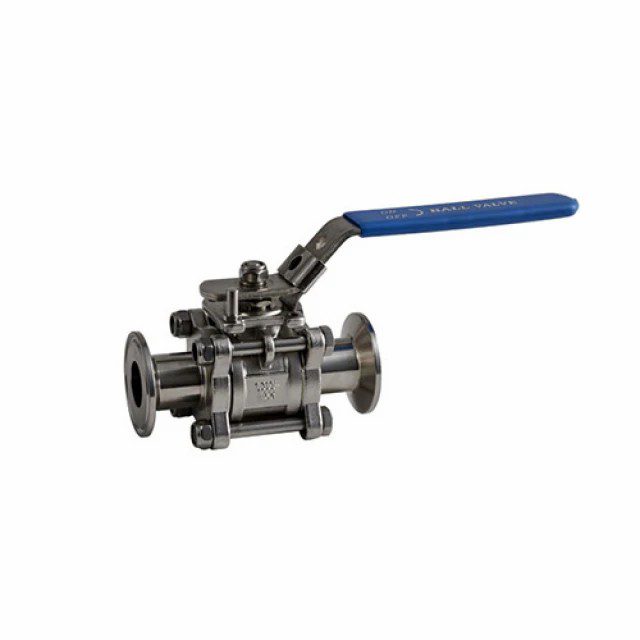
Valve Selection: Diaphragm valves eliminate dead angles and are easy to clean, suitable for aseptic applications; butterfly valves have low flow resistance and low cost, suitable for high flow rate regulation; ball valves offer good sealing and are suitable for shut-off control. For shear-sensitive products (such as yogurt and fruit-flavored beverages), special attention should be paid to the impact of shear forces during valve opening.
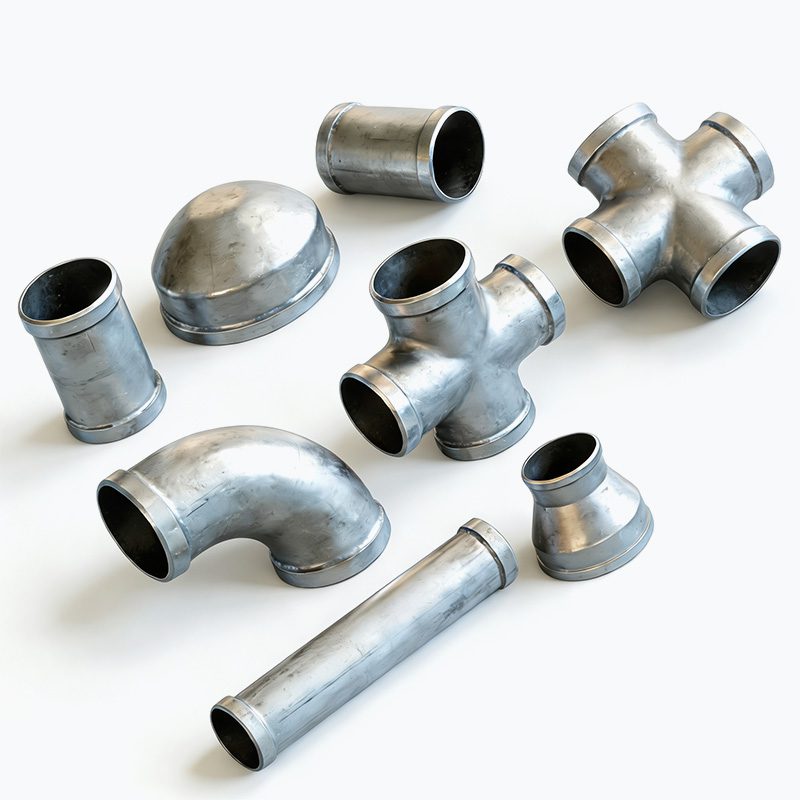
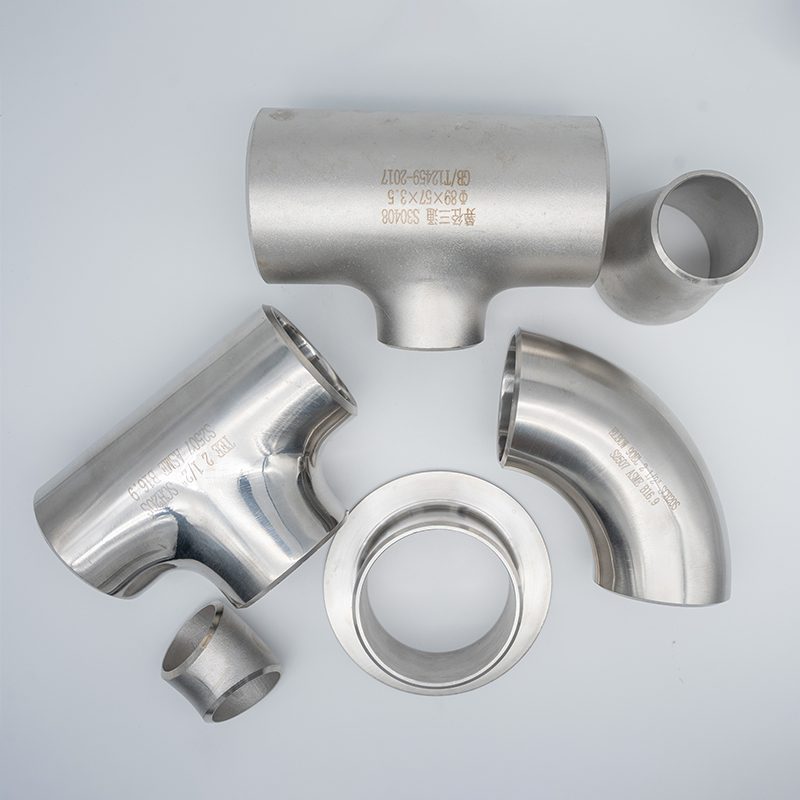
Elbows and Tees: Prioritize large-radius elbows (R≥1.5D) to reduce pressure loss and material deposition. Tee sections are prone to dead angles; streamlined designs or specially manufactured sanitary tees should be used.
Special Functional Components: Sight glasses must ensure consistent smoothness on both inner and outer surfaces; the respirator’s burst pressure must be precisely selected based on the process pressure; sampling valves should be designed with a complete venting structure to avoid cross-contamination of samples.
Holistic thinking:
Dead Zone Control: Follow the “6D rule” (branch pipe length should not exceed 6 times the main pipe diameter), and strictly adhere to the “3D rule” in sterile areas. Potential dead zones can be identified and eliminated in advance through 3D design software simulation.
Venting Capacity: The entire system should be designed for complete self-venting, with a slope generally not less than 1%, and a drain port located at the lowest point. Pneumatic components should be equipped with fast exhaust valves to ensure the rapid response of actuators.
Thermal Expansion and Contraction Compensation: For high-temperature sterilization or low-temperature cooling processes, thermal expansion must be calculated, and stress should be eliminated through natural bends or corrugated compensators to prevent leaks at connections or pipe deformation.
Selection Decision Support System
Establishing a scientific selection decision process is crucial:
Process Analysis Stage: Clarify media characteristics (pH, chlorine content, particulate matter), process parameters (temperature, pressure, flow rate), and hygiene requirements.
Preliminary Selection Stage: Determine material grades, surface treatments, and connection methods based on analysis results.
Supplier Evaluation Stage: Review supplier qualifications (e.g., 3-A certificate), testing capabilities, traceability systems, and conduct on-site inspections of their production process control.
Validation and Validation Stage: Request samples from suppliers for third-party testing; conduct actual operating condition simulation tests if necessary.
Life Cycle Assessment: Calculate the Total Cost of Ownership (TCO) by comprehensively considering procurement costs, installation efficiency, maintenance frequency, and service life.
FAQ
What is sanitary stainless steel?
Sanitary stainless steel is a special type of stainless steel with extremely high gloss, corrosion resistance, and no gaps. It is mainly used in piping systems in industries with extremely high requirements for hygiene and cleanliness, such as food, beverage, pharmaceutical, and biotechnology.
Is stainless steel ok for plumbing?
Yes, stainless steel (especially 304 or 316 grade) is an excellent piping material for water supply because it is strong, corrosion-resistant, does not rust, and does not leach harmful substances like some other materials.
Are brass or stainless steel plumbing fittings better?
This depends on the application: stainless steel is generally superior in terms of corrosion resistance (especially against chlorides) and strength; while brass has advantages in machinability, water hammer resistance, and compatibility with traditional piping systems, and is generally less expensive.
Conclusion
In the food industry, a field crucial to human health, every pipe and every fitting is more than just a cold metal component; it embodies a commitment to safety.
The scientific selection and application of stainless steel sanitary pipe fittings reflects not only engineering capabilities but also a company’s commitment to quality and respect for consumers.



 Optimized by Seraphinite Accelerator