- Whatsapp: 8613738300923
- Email: [email protected]


This article explains what is SS pipe elbow, its advantages, installation and maintenance precautions, how to correctly select the appropriate stainless steel pipe elbow, and answers related questions.
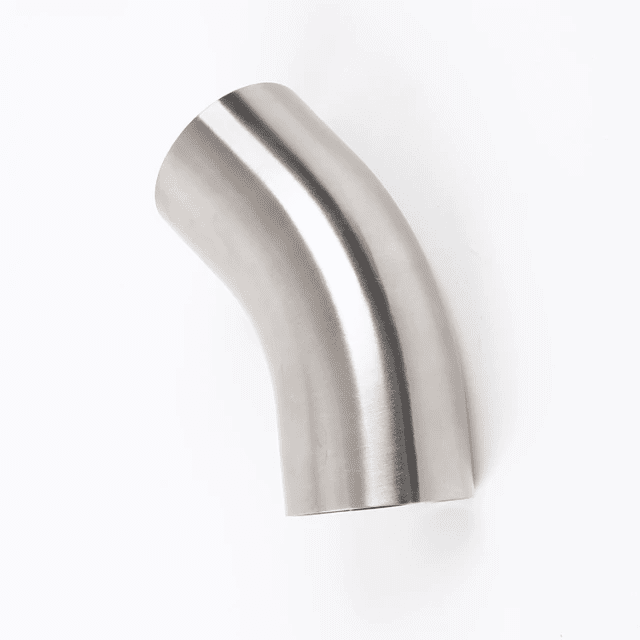
SS pipe elbows (stainless steel elbows) are pipe fittings used in piping systems to change the direction of fluid flow. They are typically installed at pipe connections, allowing the pipe to turn at a specific angle.
The stainless steel material gives them unique performance advantages, making them widely used in various industries such as petrochemicals, food and pharmaceuticals, building water supply and drainage, and energy.

Superior Corrosion Resistance: stainless steel elbows suppliers tell you,stainless steel contains chromium, which forms a protective chromium oxide layer, resisting corrosion from various chemicals, water, and oxidation, making it suitable for harsh environments.
High Strength and Durability: Excellent mechanical properties, resistant to high pressure and extreme temperatures, and long service life.
Hygiene and Safety: Smooth surface, less prone to scale buildup, easy to clean and disinfect, meeting hygiene standards in the food and pharmaceutical industries.
Aesthetics: Modern appearance suitable for exposed installations, such as architectural and decorative piping.
Environmentally Friendly and Recyclable: 100% recyclable, meeting sustainable development requirements.

Choose the correct connection method (butt welding, threaded, flange, or socket welding)
Ensure the piping system is clean and free of impurities
Use suitable sealing materials
Follow torque specifications and avoid overtightening
Consider thermal expansion factors and install expansion joints appropriately
Regularly check for corrosion, leaks, and physical damage
Use non-corrosive cleaning agents when cleaning
Replace gaskets and seals promptly
Establish regular maintenance records
304 Stainless Steel: General purpose, suitable for general corrosive environments
304L Stainless Steel: Low carbon version, better resistance to intergranular corrosion
316 Stainless Steel: Contains molybdenum, stronger corrosion resistance, especially against chloride ion corrosion
316L Stainless Steel: Low carbon version of 316, superior weldability
Other special alloys: such as duplex steel, suitable for more demanding environments
Select the appropriate angle (90°, 45°, or other special angles) based on the pipeline layout.
Select a long radius (low pressure loss) or a short radius (when space is limited) based on flow requirements.
Accurately measure the pipe’s outer diameter and wall thickness.
Select the appropriate wall thickness and pressure rating based on the working pressure.
Butt welding: High-pressure, high-temperature systems
Threaded connection: Low-pressure, small-diameter pipes
Flanged connection: For locations requiring frequent disassembly
Socket welding: Small-diameter, high-pressure pipes
Consider temperature, pressure, and media corrosivity.
External environmental conditions (indoor, outdoor, buried)
Ensure compliance with industry standards (ASTM, ASME, DIN, etc.)
Select products with specific industry certifications when necessary.
The main differences between stainless steel elbows and carbon steel elbows
| feature | Stainless steel elbow | Carbon steel elbow |
| corrosion resistance | Excellent, especially with molybdenum grades | Poor, requires surface treatment |
| Strength to weight ratio | higher | average |
| Maintenance requirements | low | High (requiring anti-corrosion treatment) |
| cost | higher | lower |
| Applicable temperature range | -270 ° C to 800 ° C | -29 ° C to 425 ° C |
| Hygiene performance | Excellent, easy to clean | average |
Types of stainless steel elbows
90-degree stainless steel elbow: The most common type, achieving a right-angle turn; available in long-radius and short-radius versions.
45-degree stainless steel elbow: Achieves a gentle change in flow direction, reducing pressure drop and turbulence.
Long-radius SS elbow: The radius of curvature is 1.5 times the pipe diameter, resulting in low flow resistance and minimal pressure loss.
Short-radius SS elbow: The radius of curvature equals the pipe diameter; suitable for space-constrained applications.
Other types: Includes 180-degree return bends, reducing elbows (different dimensions at one end), and various non-standard angle elbows.
Choosing the right SS elbow requires comprehensive consideration of the application environment, fluid characteristics, pressure and temperature conditions, and budget.
Correct selection and installation of stainless steel elbows not only ensures safe and efficient system operation but also significantly reduces long-term maintenance costs, providing a solid guarantee for the reliability and durability of the piping system.
It is recommended to consult a professional engineer or supplier for complex operating conditions to obtain the most suitable solution.

STAINLESS STEEL&GENCEL;
Privacy Policy | SiteMap
Copyright GENCEL STAINLESS STEEL CO.,LIMITED
 Optimized by Seraphinite Accelerator