- Whatsapp: 8613738300923
- Email: [email protected]


Choosing the right SS Sanitary Pipe Fittings Manufacturer is an important decision for companies that need reliable components for hygienic piping systems. SS sanitary pipe fittings are widely used in food and beverage processing, dairy production, pharmaceuticals, biotechnology, cosmetics, and other industries where cleanliness, corrosion resistance, and reliable fluid transfer are essential.
Although many manufacturers offer similar sanitary elbows, tees, reducers, unions, and clamps, their actual capabilities can vary considerably. Differences in stainless steel quality, manufacturing precision, surface finishing, quality control, production capacity, customization, and technical support can directly affect the performance and service life of the piping system.
Therefore, buyers should look beyond the product price and evaluate the manufacturer’s overall capabilities. This guide explains the most important factors to consider when selecting a reliable SS Sanitary Pipe Fittings Manufacturer.

Material quality is one of the first factors to consider. Common materials for sanitary fittings include SS 304, SS 316, and SS 316L. SS 304 is suitable for many general food, beverage, and hygienic applications, while SS 316 and SS 316L may be preferred for environments exposed to more aggressive chemicals, chlorides, or demanding cleaning processes.
A reliable manufacturer should have clear procedures for raw material sourcing, inspection, identification, and storage. For industrial projects, it is also useful to confirm whether the supplier can provide material certificates or other documentation to verify that the stainless steel meets the specified requirements.
A professional manufacturer should have appropriate production equipment and experience in manufacturing sanitary fittings. Depending on the product range, this may include forming, machining, welding, grinding, polishing, assembly, and inspection processes.
Manufacturing capability directly affects dimensional accuracy and product consistency. Sanitary fittings need to connect accurately with pipes, valves, pumps, tanks, and other equipment. A manufacturer with stable production processes is more likely to maintain consistent dimensions and quality across different production batches.
Surface finish is particularly important for sanitary piping systems because the internal surface can directly affect cleanability and hygiene. Rough surfaces, scratches, or poorly finished weld areas may provide places where product residues or contaminants can accumulate.
When evaluating a manufacturer, ask about internal surface roughness, polishing methods, weld finishing, and surface inspection. A qualified manufacturer should be able to provide a consistent finish that matches the requirements of the intended application.
For welded sanitary fittings, welding quality should be carefully evaluated. Poor welding can result in surface defects, crevices, contamination risks, and reduced corrosion resistance. Weld areas should also be properly finished when required for hygienic applications.
An experienced manufacturer should have controlled welding procedures and appropriate inspection processes. Buyers can ask about welding methods, operator qualifications, weld inspection, and post-weld polishing or finishing procedures before placing an order.
Sanitary fittings must match the dimensions of the piping system and other components. Incorrect dimensions can cause installation difficulties, leakage, alignment problems, or additional modification work at the project site.
Before selecting a manufacturer, confirm its ability to control fitting dimensions and tolerances. For large projects involving many fittings, consistent dimensional accuracy is especially important because small variations between batches can create significant installation problems.
Different industries may have different requirements for sanitary fittings. Food processing, pharmaceutical production, dairy processing, and other hygienic applications may require specific standards, certifications, or technical documentation.
When evaluating an SS Sanitary Pipe Fittings Manufacturer, ask which standards its products follow and what documentation it can provide. Depending on the project, this may include material certificates, inspection reports, product specifications, or other quality documents.
The exact standards required should be confirmed according to the application, target market, and customer’s technical specifications.
A reliable manufacturer should have quality control throughout the production process rather than checking products only after manufacturing is complete. Raw materials should be inspected before production, while important manufacturing processes should be monitored to identify potential defects.
Finished fittings should also be checked for dimensions, surface condition, appearance, and other required specifications. A systematic quality-control process helps ensure that products remain consistent between different orders and production batches.
Production capacity becomes especially important when purchasing sanitary fittings for large projects or long-term supply. A manufacturer may produce good samples but still struggle to handle large quantities or meet strict delivery schedules.
Consider the supplier’s production equipment, workforce, manufacturing capacity, inventory management, normal lead time, and ability to handle repeat orders. A suitable manufacturer should be able to meet your current order requirements while providing stable supply for future projects.
Not every piping system can use completely standard fittings. Some projects may require special dimensions, angles, connection configurations, wall thicknesses, or surface finishes.
If customization is required, choose a manufacturer with engineering and production capabilities rather than a supplier that only resells standard products. The manufacturer should be able to review technical drawings, confirm specifications, communicate production limitations, and manufacture according to approved requirements.
Clear communication before production is particularly important for customized sanitary fittings.
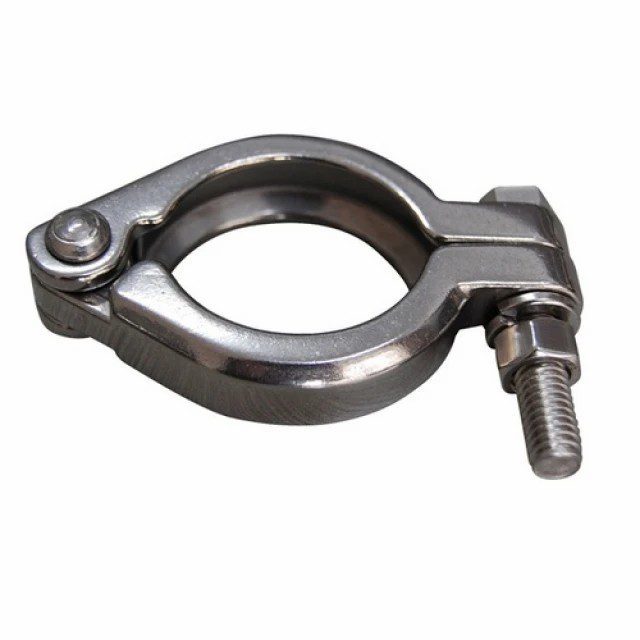
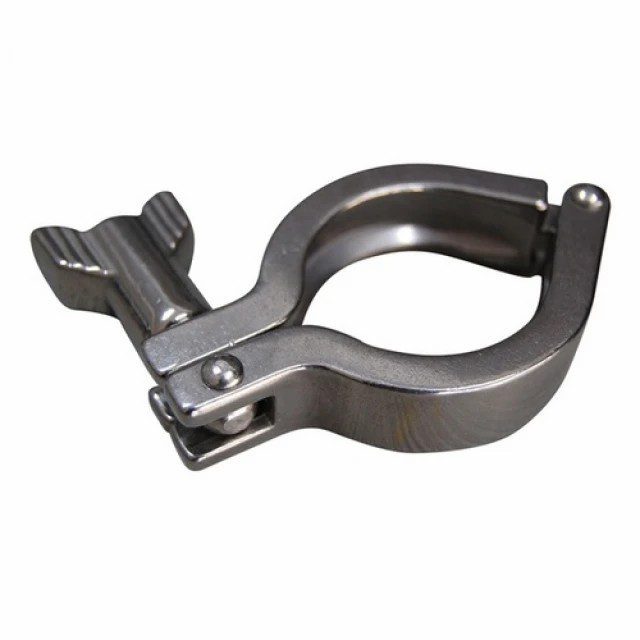
A manufacturer with a broad sanitary fitting range can simplify procurement. Common products include sanitary elbows, tees, reducers, crosses, unions, clamps, caps, and welded fittings.
Working with one experienced supplier for multiple products can make communication, quality management, and logistics easier. However, buyers should not evaluate a manufacturer simply by the number of products listed on its website. It is more important to determine whether the company actually has the production capabilities and experience to manufacture those products consistently.
Industry experience can be a valuable indicator of a manufacturer’s technical understanding. A supplier that has worked with food and beverage, dairy, pharmaceutical, biotechnology, or cosmetics companies may have a better understanding of hygienic processing requirements.
When evaluating a supplier, consider its experience with similar applications, export markets, product types, and customer requirements. Relevant experience can make communication easier and help the manufacturer provide more appropriate product recommendations.
Sanitary fittings require appropriate protection during storage and transportation. Scratches, contamination, moisture, or deformation can affect the appearance and potentially the performance of the products.
Ask how the manufacturer cleans, protects, and packages finished fittings before shipment. Proper packaging should protect the fitting surfaces and connection areas during transportation, especially for long-distance international shipments.
A good SS Sanitary Pipe Fittings Manufacturer should provide more than products. Technical support can be important when customers need help with material selection, fitting dimensions, connection methods, customized products, or technical documentation.
Fast and accurate communication is particularly important for customized orders and large industrial projects. A manufacturer that can understand technical drawings, respond to questions clearly, and provide appropriate documentation can help reduce delays and misunderstandings.
Price is an important purchasing factor, but it should not be the only criterion. A low-cost fitting may create additional expenses if it has inconsistent dimensions, poor surface finishing, shorter service life, or unreliable delivery.
Instead, buyers should consider total cost of ownership. Product quality, durability, maintenance requirements, replacement frequency, installation efficiency, delivery reliability, and technical support can all affect the real cost of a sanitary piping project.
A manufacturer with a slightly higher initial price may provide better long-term value if its products are more consistent and reliable.
For a new supplier, requesting samples is a practical way to evaluate manufacturing quality before placing a large order. Samples can be checked for material, dimensions, surface finish, welding quality, connection compatibility, and packaging.
For demanding applications, sample evaluation can also be combined with documentation review or appropriate third-party testing. This helps buyers determine whether the manufacturer’s actual products match the specifications and quality claims provided during the quotation stage.
Before selecting an SS Sanitary Pipe Fittings Manufacturer, buyers should ask several basic questions: What stainless steel grades are available? Can material certificates be provided? What surface finishes are available? Which connection standards can the manufacturer support? How are dimensions and tolerances controlled? What quality inspections are performed?
It is also important to ask about production capacity, lead time, customization, technical support, packaging, and after-sales service. The manufacturer’s answers can help you understand whether it is a professional manufacturer capable of supporting your project or simply a trading company sourcing products from different suppliers.
One common mistake is choosing a manufacturer based only on the lowest quotation. Price differences may come from differences in material grade, manufacturing processes, surface finish, inspection standards, or product consistency.
Another mistake is ignoring the manufacturer’s ability to provide technical documentation and customized products. For industrial sanitary piping systems, accurate specifications and reliable communication can be just as important as the physical product itself.
Buyers should also avoid selecting suppliers without checking samples, quality-control procedures, production capabilities, and delivery performance. A little additional evaluation before purchasing can help reduce quality and project risks later.
When comparing manufacturers, consider the following key factors:
| Factor | What to Evaluate |
| Material | SS 304, SS 316, SS 316L, and material traceability |
| Manufacturing | Production equipment and manufacturing processes |
| Surface Finish | Internal and external finish quality |
| Welding | Welding procedures and inspection |
| Dimensions | Accuracy and tolerance control |
| Quality Control | Incoming, process, and final inspection |
| Certifications | Applicable standards and documentation |
| Capacity | Production volume and delivery capability |
| Customization | Ability to manufacture according to drawings |
| Experience | Experience in hygienic industries |
| Technical Support | Product selection and engineering assistance |
| Cost | Overall value and total cost of ownership |
Selecting the right SS Sanitary Pipe Fittings Manufacturer requires a comprehensive evaluation rather than a simple price comparison. Material quality, manufacturing capabilities, surface finish, welding, dimensional accuracy, quality control, certifications, production capacity, customization, industry experience, and technical support should all be considered.
The right manufacturer should be able to consistently provide sanitary fittings that meet your technical specifications while offering stable quality and reliable delivery. By clearly defining your requirements, reviewing supplier capabilities, requesting samples, checking documentation, and considering long-term costs, you can reduce purchasing risks and establish a reliable supply relationship.
For companies purchasing sanitary fittings for food, beverage, dairy, pharmaceutical, biotechnology, or other hygienic processing systems, choosing an experienced and capable manufacturer can make a significant difference in the reliability, maintainability, and long-term performance of the entire piping system.
What should I consider when choosing an SS Sanitary Pipe Fittings Manufacturer?
Consider material quality, manufacturing capabilities, surface finish, welding quality, dimensional accuracy, quality control, certifications, production capacity, customization, industry experience, delivery, and technical support.
Which stainless steel is commonly used for sanitary pipe fittings?
SS 304, SS 316, and SS 316L are commonly used. The appropriate material depends on the process medium, corrosion environment, cleaning chemicals, and application requirements.
Why is surface finish important for sanitary fittings?
A suitable internal surface finish can help reduce product buildup and make cleaning and sanitization easier, which is important in hygienic processing systems.
Should I request samples before placing a large order?
Yes. Samples allow you to evaluate the manufacturer’s actual material, dimensions, surface finish, welding quality, and overall product consistency before committing to a larger order.
Is the lowest-price manufacturer the best choice?
Not necessarily. Buyers should compare overall value, including product quality, service life, delivery reliability, technical support, maintenance requirements, and total cost of ownership.
Can sanitary pipe fittings be customized?
Yes. Depending on the manufacturer’s capabilities, sanitary fittings can be customized in dimensions, angles, connection configurations, wall thicknesses, and surface finishes.


STAINLESS STEEL&GENCEL;
Privacy Policy | SiteMap
Copyright GENCEL STAINLESS STEEL CO.,LIMITED
 Optimized by Seraphinite Accelerator