- Whatsapp: 8613738300923
- Email: [email protected]


Industrial piping systems are designed to transport liquids, gases, steam, and chemicals safely and efficiently. Every component in the pipeline must withstand pressure, temperature changes, and corrosive environments while maintaining reliable performance over many years. Among these components, stainless steel butt weld fittings are one of the most widely used solutions because they provide permanent, leak-proof connections and excellent structural strength.
Unlike threaded or socket weld fittings, butt weld fittings are welded directly to the ends of pipes, creating a continuous flow path that minimizes pressure loss and reduces the risk of leakage. Their durability and corrosion resistance make them the preferred choice for industries such as oil and gas, chemical processing, food and beverage, pharmaceuticals, power generation, and water treatment.
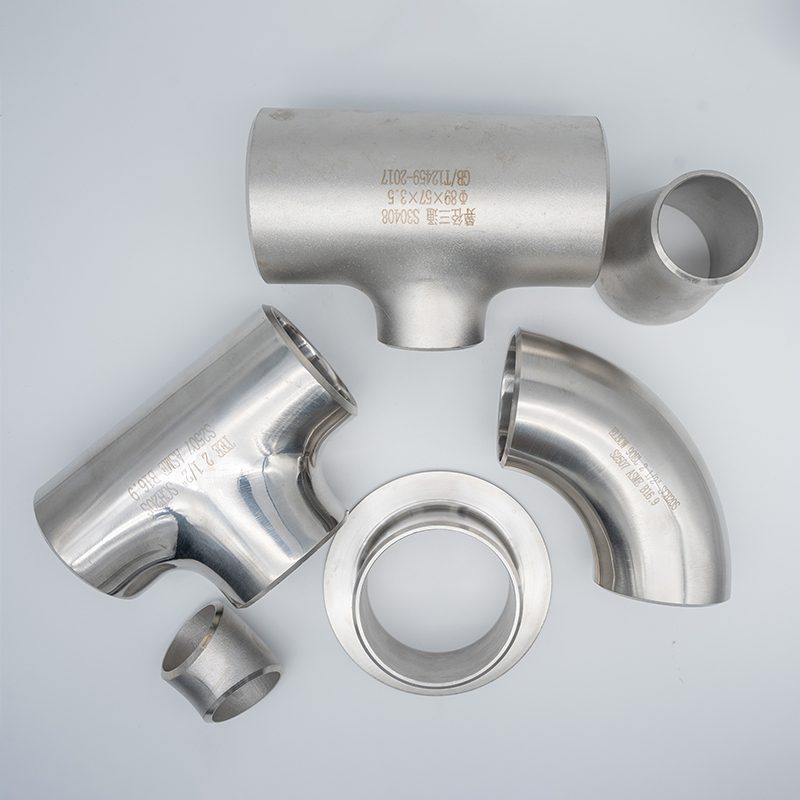
Stainless steel butt weld fittings are pipe fittings that connect two sections of pipe by welding their beveled ends together. Once welded, the fitting and the pipe become a single continuous structure, capable of handling high pressure, elevated temperatures, and harsh operating environments.
These fittings are commonly manufactured according to ASME B16.9 standards and are available in stainless steel grades such as 304, 304L, 316, and 316L. Depending on the piping layout, different fitting types—including elbows, tees, reducers, caps, and stub ends—allow engineers to change flow direction, create branch lines, reduce pipe size, or seal pipeline ends while maintaining system integrity.
The working principle of stainless steel butt weld fittings is based on creating a permanent welded joint between the fitting and the pipe. During installation, both pipe ends are carefully prepared with matching bevels and aligned precisely before welding. A full-penetration weld joins the components together, eliminating gaps that could otherwise become potential leak points.
Once the weld is completed, the fitting essentially becomes part of the pipeline itself. This continuous connection distributes mechanical stress evenly across the joint, allowing the system to withstand vibration, thermal expansion, pressure fluctuations, and mechanical loads without compromising safety.
Another important aspect of butt weld fittings is the smooth internal bore created after welding. Because there are no threads or internal shoulders interrupting the flow path, liquids and gases move through the pipeline with minimal turbulence. Reduced flow resistance improves pumping efficiency, lowers pressure loss, and minimizes the accumulation of debris inside the system.
Material selection is critical for any piping system, and stainless steel offers several advantages that make it ideal for butt weld fittings.
The chromium content in stainless steel forms a protective oxide layer on the surface, providing excellent resistance to corrosion, oxidation, and many aggressive chemicals. This protective layer continuously regenerates if damaged, helping extend the service life of the piping system.
Stainless steel also performs well under high temperatures and pressure, making it suitable for steam systems, chemical plants, and high-purity processing environments. In industries such as food processing and pharmaceuticals, its smooth surface is easy to clean and resistant to bacterial contamination, helping maintain hygienic production standards.
Stainless steel butt weld fittings are used wherever strong, permanent pipe connections are required.
In oil and gas facilities, they safely transport crude oil, natural gas, and refined petroleum products under high pressure. Chemical processing plants rely on their corrosion resistance to handle aggressive acids, solvents, and other hazardous media. Food and beverage manufacturers use sanitary stainless steel fittings to maintain clean production environments, while pharmaceutical facilities depend on their hygienic properties for sterile process systems.
They are also widely installed in power plants, marine engineering, water treatment facilities, HVAC systems, and industrial manufacturing plants where long-term reliability is essential.
Compared with threaded or socket weld connections, stainless steel butt weld fittings offer several important advantages.
Because the fittings are permanently welded, they provide outstanding leak resistance even in demanding operating conditions. Their welded construction also creates higher mechanical strength, allowing pipelines to operate safely under elevated pressures and temperatures.
The smooth internal surface reduces turbulence and pressure drop, improving overall flow efficiency while lowering energy consumption. In addition, stainless steel requires relatively little maintenance thanks to its excellent corrosion resistance and long service life, reducing operating costs over the lifetime of the piping system.
These benefits make butt weld fittings one of the most economical choices for critical industrial piping applications.
Although stainless steel butt weld fittings are highly reliable, proper installation is essential to achieve maximum performance.
Pipe ends should be accurately cut, beveled, and cleaned before welding to ensure full penetration and consistent weld quality. Qualified welding procedures and appropriate inspection methods, such as radiographic or ultrasonic testing, help verify the integrity of each joint before the system enters service.
Routine maintenance should include periodic visual inspections for corrosion, mechanical damage, or weld defects. Keeping the piping system clean and replacing damaged components promptly can significantly extend the service life of the entire installation.
Stainless steel butt weld fittings play a vital role in modern piping systems by providing permanent, high-strength, and leak-free connections that ensure safe and efficient fluid transport. Their welded construction, smooth internal flow path, excellent corrosion resistance, and ability to withstand demanding operating conditions make them the preferred choice for a wide range of industrial applications.
Whether designing a new pipeline or upgrading an existing system, selecting high-quality stainless steel butt weld fittings and following proper installation practices can improve system reliability, reduce maintenance requirements, and deliver long-term performance in even the most challenging environments. This combination of durability, efficiency, and safety explains why butt weld fittings remain a standard solution across industries worldwide.
Stainless steel butt weld fittings are used to connect, redirect, reduce, or terminate pipelines in industrial piping systems. They provide permanent, leak-proof connections for transporting liquids, gases, steam, and chemicals in industries such as oil and gas, chemical processing, food and beverage, pharmaceuticals, and water treatment.
Butt weld fittings work by being welded directly to the ends of pipes. The welded joint creates a continuous, permanent connection that provides high mechanical strength, excellent pressure resistance, and a smooth internal flow path that minimizes turbulence and leakage.
Unlike threaded fittings, butt weld fittings eliminate threaded joints that can loosen or leak over time. They offer greater strength, better corrosion resistance, improved flow efficiency, and are better suited for high-pressure and high-temperature applications.
The most commonly used grades are 304/304L and 316/316L stainless steel. Grade 304 is suitable for general industrial applications, while 316 offers superior corrosion resistance, making it ideal for marine environments, chemical processing, and pharmaceutical industries.
Yes. Because they form full-penetration welded joints, stainless steel butt weld fittings are designed to withstand high pressure, high temperatures, and demanding operating conditions. They are widely used in critical industrial piping systems where reliability and safety are essential.


STAINLESS STEEL&GENCEL;
Privacy Policy | SiteMap
Copyright GENCEL STAINLESS STEEL CO.,LIMITED
 Optimized by Seraphinite Accelerator