- Whatsapp: 8613738300923
- Email: [email protected]


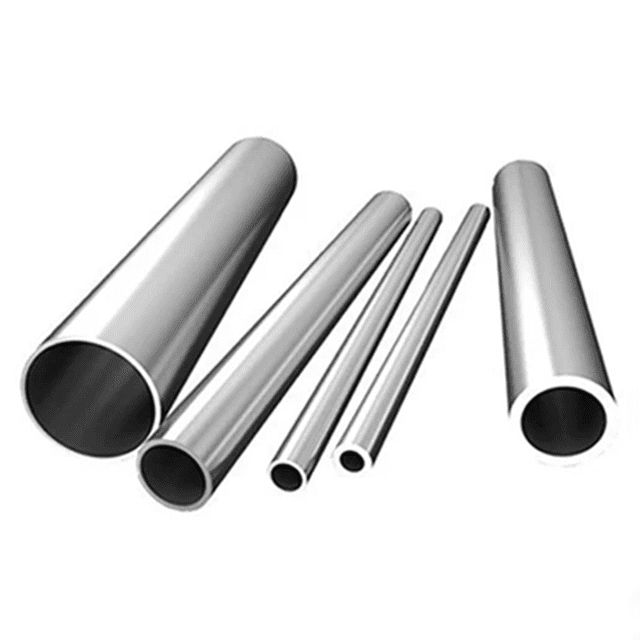
Stainless steel sanitary pipe fittingsAs a key component for connecting pipes, changing flow direction, and controlling flow rate, stainless steel sanitary pipe fittings play an indispensable role. This guide will take you through all aspects of stainless steel sanitary pipe fittings.
Stainless steel sanitary fittings are pipe connections specifically designed and manufactured to meet stringent hygiene standards. Unlike ordinary industrial fittings, they have the following key features:
Highly smooth inner wall: The inner surface is precision polished to a specific roughness (Ra value), ensuring no liquid residue or adhesion on the pipe wall, facilitating cleaning and disinfection.
Corrosion-resistant materials: These fittings are typically made of austenitic stainless steel (such as 304, 304L, 316, and 316L), which resists corrosion from fluid media, cleaning agents, and high-temperature disinfection.
Dead-angle-free design: The structural design eliminates fluid stagnation areas, thus preventing microbial growth.
Standardized dimensions: Compliant with international standards (such as ISO, DIN, SMS, 3A, etc.), ensuring interchangeability and system compatibility.
In the sanitary ware industry, stainless steel is the undisputed material of choice, primarily due to its superior properties:
Excellent corrosion resistance: Resistant to water, steam, acids, alkalis, and various food and pharmaceutical media.
Extremely high mechanical strength: Robust and durable, capable of withstanding pressure, vibration, and temperature variations in piping systems.
Stability: Suitable for high-temperature cleaning (CIP/SIP) and sterilization processes.
Easy to process and polish: Achieves a mirror-like surface finish, meeting hygiene requirements.
Depending on different system designs and application requirements, sanitary pipe fittings mainly have the following connection methods:
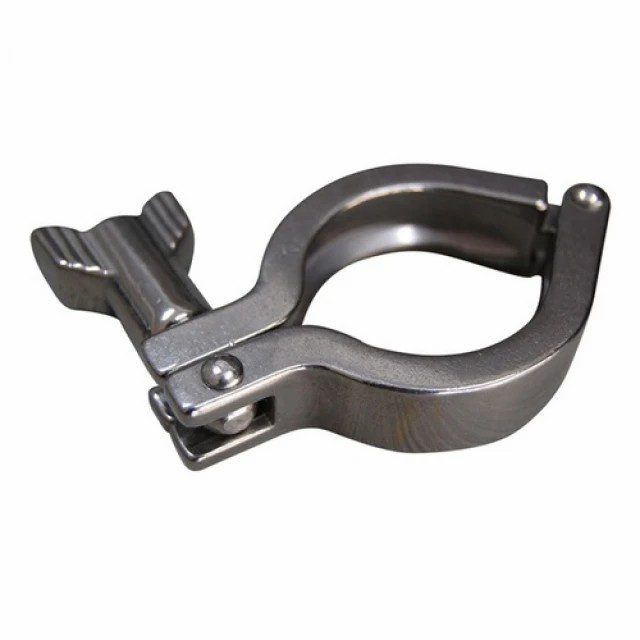
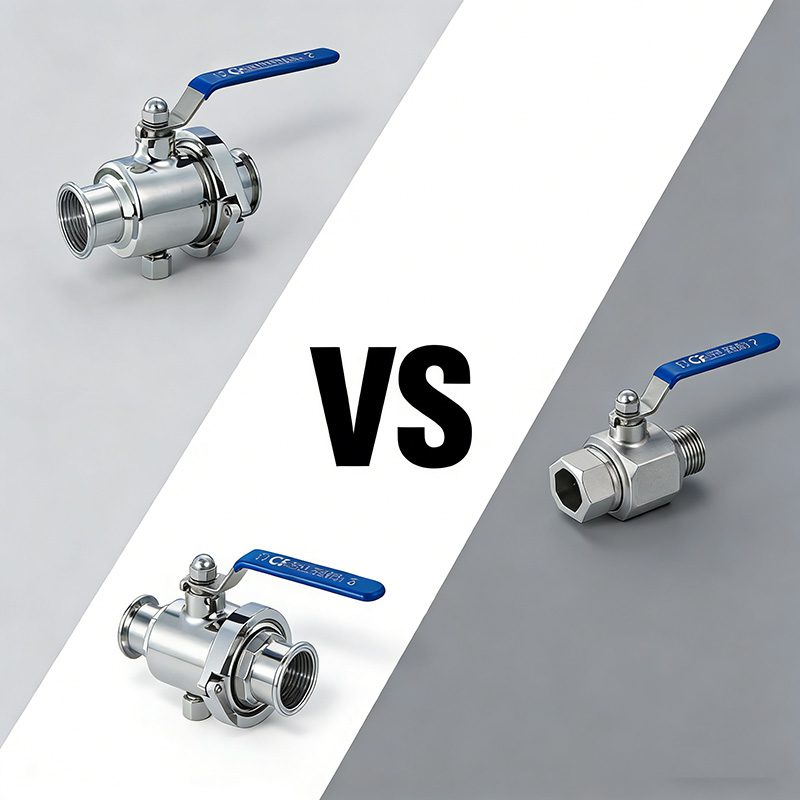
This is the most common sanitary connection method. It allows for quick connection and disconnection via two clamp end pieces, a sealing ring, and a clamp. Its advantages include easy installation, and convenience for daily cleaning, maintenance, and system retrofitting.
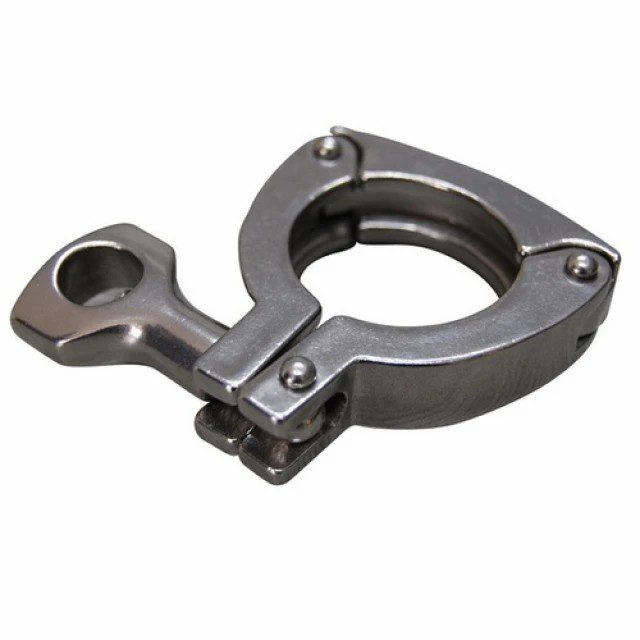
It comes in internal and external threads, and the connection is achieved through the threads. Sealant or Teflon tape is usually applied to the threads to ensure a tight seal. In areas with extremely high hygiene requirements, the potential risk of microbial contamination needs to be considered.
The fitting is directly aligned with the pipe end face and welded to form a permanent connection. Its advantages include unobstructed flow channels, no dead corners or gaps, making it one of the highest-level sanitary connection methods, commonly used in aseptic systems.
Welding is performed after the pipe is inserted into the socket of the fitting. Compared to butt welding, it is easier to align, but it will create a small step at the joint, which may produce a slight dead angle.
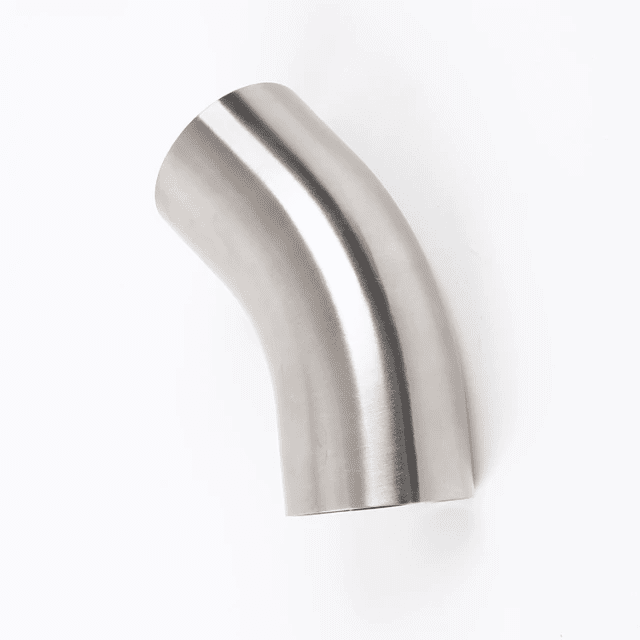
Used to change the direction of pipes, the most common angles are 45° and 90°.
Used to split or merge fluid flows, tees are divided into equal diameter tees and reducing tees.
Reducer: Used to connect pipes of different diameters, allowing for changes in the flow channel cross-section.
Flange: An important connecting component, typically used in combination with gaskets and bolts to connect pipes, valves, equipment, etc.
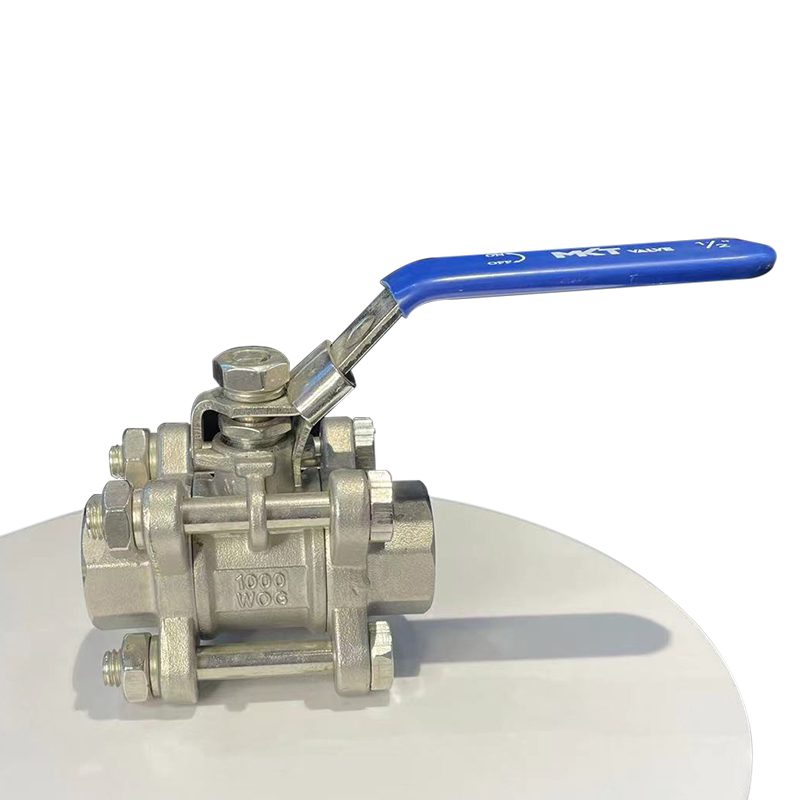
“1/2 inch” refers to the nominal diameter of the pipe fitting, which usually corresponds to the outer diameter of the pipe. 1/2 inch (approximately DN12) is a very common specification for small flow or branch lines in sanitary piping systems.
When selecting 1/2-inch pipe fittings, pay attention to the following:
Wall thickness: Ensure it meets the system’s pressure rating requirements.
Connection method: Choose clamps, threads, or welding based on whether frequent disassembly is required.
Material grade: Select 304/L or 316/L based on the corrosiveness of the medium.
Surface finish: Select an appropriate Ra value (e.g., 0.8μm, 0.5μm, etc.) according to industry standards.
Investing in high-quality sanitary pipe fittings means:
Ensuring product safety: Eliminating the risk of product deterioration due to pipe contamination.
Reducing maintenance costs: Durable materials and designs reduce failure rates and replacement frequency.
Improving operational efficiency: Quick installation and easy cleaning shorten downtime.
Compliance with regulatory requirements: Ensuring production processes meet stringent certifications such as GMP and FDA.
First, you need to clarify your industry and the medium being transported. Is it food, water for injection, high-purity pharmaceutical solutions, or corrosive cleaning agents? The characteristics of the medium determine the required corrosion resistance level of the materials.
Ensure that the fittings meet the standards of your industry and region, such as 3A (USA), DIN (Germany), SMS (Sweden), etc., and check whether they have relevant material certifications (such as MTC).
Assess whether your system requires a flexible (easy to disassemble) or rigid (permanent, no dead angles) design. Clamp connections are suitable for the former, while butt weld connections are suitable for the latter.
Material: 316L stainless steel offers better resistance to chloride corrosion than 304L stainless steel, making it the preferred material for the pharmaceutical and biotechnology industries.
Surface Finish: A lower Ra value is not always better. The specific choice depends on the viscosity of the medium and the cleaning method. For example, high-viscosity products may require a surface finish with Ra < 0.4 μm, while Ra 0.8 μm may be sufficient for ordinary water systems.
Choosing a reputable manufacturer is crucial. They should be able to provide:
Stable product quality and reliable supply.
Comprehensive technical documentation and certifications.
Professional technical support and after-sales service.
Gencel Stainless is a professional manufacturer of sanitary stainless steel pipe fittings located in China, committed to providing high-standard, high-quality products to customers worldwide. Whether it’s standard 1/2-inch fittings or custom-designed solutions, Gencel offers reliable options and technical support.
Are sanitary and industrial grade pipe fittings interchangeable?
This is strongly discouraged. Industrial piping fittings typically do not meet the stringent requirements for surface finish, seamless design, and material purity in sanitary applications. Mixing them significantly increases the risk of product contamination and microbial growth.
Is a lower surface roughness Ra value always better?
Not necessarily. While a lower Ra value means a smoother surface, the resulting improvement in hygiene benefits is not always linearly related to the increase in cost. A “good enough” Ra value needs to be selected based on the specific process requirements to achieve the optimal balance between cost and performance.
How should routine inspections and maintenance be carried out?
Regular visual inspection: Check surfaces for scratches, dents, or signs of corrosion.
Sealing ring inspection: After each disassembly, inspect sealing rings for aging, deformation, or damage, and replace them promptly.
Cleaning and disinfection: Strictly follow established CIP/SIP procedures.
Storage management: Keep accessories clean and dry during storage, and seal ports with dedicated protective caps.
A thorough understanding of the types, connection methods, and selection criteria for stainless steel sanitary pipe fittings, and choosing a reliable supplier, is crucial for building a safe, efficient, and compliant fluid transport system. This guide aims to provide valuable reference for your sanitary pipe fitting planning and procurement.

STAINLESS STEEL&GENCEL;
Privacy Policy | SiteMap
Copyright GENCEL STAINLESS STEEL CO.,LIMITED
 Optimized by Seraphinite Accelerator