- Whatsapp: 8613738300923
- Email: [email protected]


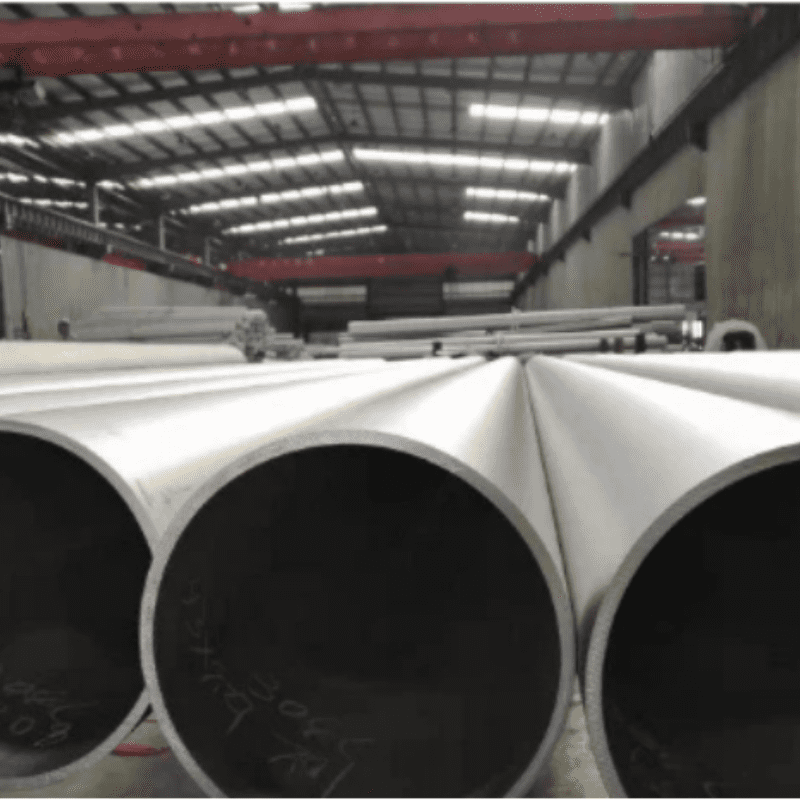
In the fields of industrial fluid transportation,chemical production,food and pharmaceutical processing,high-pressure HVAC systems,etc.,stainless steel pipes have become an indispensable transportation carrier due to their core advantages of corrosion resistance,high and low temperature resistance,and high cleanliness.However,the performance advantages of stainless steel pipelines rely entirely on standardized installation and construction.Once the installation process is stepped on,not only may the entire pipeline be directly scrapped,but it may also cause medium leakage, pipeline corrosion and cracking, and even trigger safety accidents, resulting in a series of chain problems.There is a common problem in the industry:construction personnel mistakenly believe that stainless steel material is “tough and durable”,engage in rough operations, simplify processes arbitrarily,and ignore installation standards during construction, ultimately leading to a doubling of maintenance costs in the later stage, and making pipeline rework even more difficult. This article combines the requirements of the GB50235-2010 national standard, setting aside useless theories,focusing on the five installation traps that are most easily overlooked and can easily cause major problems once touched At the same time,it outlines the standard installation steps, analyzes the practical application advantages of special pipe fittings, and includes high-frequency practical Q&A. All content is in line with the actual construction site, achieving theoretical discussion on paper.

This is the most concealed and long-lasting issue in the installation of stainless steel pipelines. Most construction workers only focus on whether the material of the pipe itself meets the standards, but ignore the compatibility of the materials used for auxiliary materials, tools, and supports during construction. The corrosion resistance of stainless steel relies entirely on a dense oxide film formed on the surface. Once this film is damaged or contaminated, the local corrosion rate of the pipeline will sharply increase, and it will be impossible to effectively control it in the future. Such problems on site are often caused by practical bad habits: using carbon steel wrenches and carbon steel cutting blades to directly process stainless steel pipes, the iron filings embedded in the pipe wall will cause corrosion of the original battery on the spot, and rust spots will appear on the pipeline within two months; Directly using carbon steel brackets and ordinary rubber gaskets, chloride ions and iron ions will slowly penetrate into the pipe wall. In humid and chemical medium environments, pitting and crevice corrosion will rapidly spread; The arbitrary selection of gaskets and sealants results in chloride ion content far exceeding the national standard’s red line of 50ppm. The longer the usage time, the more severe the corrosion of the pipe wall. More commonly, pipes and carbon steel components come into direct contact without isolation gaskets, and are mixed with carbon steel materials during transportation and stacking. Oil stains, welding slag, and dust adhere to the surface of the pipeline without deep cleaning. This type of pollution is difficult to detect with the naked eye. After the pipeline pressure test is qualified, there will be no abnormalities in the short term. However, after six months to two or three years of production, problems such as pipeline leakage and thinning of the pipe wall will occur. Tracing the root cause, it was discovered that the problems all occurred in the early stages of installation. There are clear and mandatory requirements for this national standard: special tools must be used for the construction of stainless steel pipelines, all contact parts must be isolated, and surface cleaning and passivation pretreatment must be completed before installation. Each step cannot be omitted.
The only reason for forcibly assembling pipelines during construction is to meet the deadline and save time. After the pipe mouth is misaligned or the concentricity deviates, do not use a special bracket to adjust it. Instead, use a jack or bolt to forcefully pull and top the interface. Seemingly saving construction time, it actually causes a large amount of internal stress in the pipeline, resulting in hidden injuries that are invisible to the naked eye. Stainless steel material has strong rigidity, but its ability to resist stress corrosion is relatively weak. The residual stress generated by forced assembly, combined with the repeated changes in medium pressure and temperature in the later stage, can easily lead to microcracks in weak parts of pipelines such as welds, interfaces, and elbows. These types of microcracks cannot be detected by conventional testing and will continue to expand over time, ultimately leading to pipe breakage and medium leakage. The problem of large caliber and thick walled stainless steel pipes is more prominent, and the stress concentration effect will be multiplied, directly increasing the safety risk. The national standard has strict requirements for pipeline assembly deviation: the misalignment should not exceed 10% of the pipe wall thickness, and the maximum value should not exceed 2mm. Concentricity deviation must be strictly controlled. The correct construction method is not complicated: use adjustable sets of frames and laser calibrators to achieve precise positioning, ensure uniform gap between pipe openings before fixing, and strictly prohibit correction through violent means. Do not pay the cost and duration of full line rework just to save half an hour of team time.
Welding stainless steel pipes is not simply a matter of splicing and fixing. Once the process standards shrink, the weld seam will immediately become the weak point of the entire pipeline. There are numerous non-standard welding operations on site: the back of the weld is not filled with argon gas for protection, resulting in blackening and oxidation of the inner wall of the weld, directly causing intergranular corrosion and significantly reducing the corrosion resistance of the pipeline; Arbitrarily adjusting welding current and welding speed can cause various defects such as incomplete penetration, slag inclusion, porosity, and undercutting; Without acid pickling and passivation treatment after welding, welding slag and oxide scale adhere to the surface, becoming a fixed source of corrosion. Some construction teams also cut corners in order to save costs: using ordinary welding rods instead of specialized stainless steel welding materials, allowing unlicensed welders to operate without following the process evaluation requirements for welding; Randomly controlling the temperature during brazing and uneven filling of the brazing material can directly lead to seal failure. This type of pipeline pressure test may be able to get away with it, but under long-term pressure and temperature fluctuations, weld leakage and cracking are inevitable results. The core specifications for stainless steel welding must be strictly followed: argon arc welding is preferred for austenitic stainless steel welding, and the purity of argon filling on the back is not less than 99.99%, with strict control of interlayer temperature; After welding, acid pickling and passivation must be carried out to repair the oxide film on the surface of the pipeline; The appearance of the weld seam undergoes 100% full inspection, and non-destructive sampling is carried out as needed, with zero tolerance for various defects. The construction quality of welds directly determines the actual service life of stainless steel pipelines.
The coefficient of linear expansion of stainless steel is much greater than that of carbon steel, and when the ambient temperature changes, the expansion and contraction of the pipeline will be very significant. Most construction only focuses on the static installation of pipelines, but completely ignores the thermal stress caused by thermal expansion and contraction. Expansion joints and compensators are not installed according to design requirements, and fixed and sliding supports are randomly arranged, which poses significant hidden dangers for pipeline operation. In construction projects involving high-temperature medium transportation and large outdoor temperature differences, the push-pull stress generated by thermal expansion and contraction of pipelines will all act on interfaces, valves, and equipment pipe openings. Mild cases can lead to interface loosening and seal leakage, while severe cases can cause weld seam tearing and even damage to equipment pipe openings. Many pipelines under high and low temperature conditions have malfunctioned, and after investigation, it was found that it is not a material problem, but rather a failure to perform proper thermal compensation treatment. Before installation, it is necessary to accurately calculate the expansion and contraction of the pipeline, install brackets according to the spacing required by the national standard, and install compensating devices such as corrugated pipe compensators and square expansion joints according to the design position specifications to thoroughly release thermal stress and avoid stress on the hard connection between the pipeline and equipment. This step may seem to increase construction costs and working hours, but it is the core key to the stable operation of pipelines under long-distance and variable temperature conditions, and cannot be omitted.
The most common construction practice in the industry is to rush for pressure testing and delivery after pipeline installation, skipping the comprehensive inspection process. The post installation inspection is not just a formality, but the final checkpoint to block all construction loopholes in the early stage. If the appearance, size, cleanliness, stress review and other aspects are skipped and the pressure test is directly conducted, even if the pressure test is qualified, various hidden dangers will still be hidden in the pipeline. There are countless missed items on site: not checking whether the brackets are firm and whether the spacing is compliant; Not checking whether the sealing surface of the pipe mouth is complete; Not cleaning the welding slag and debris inside the pipeline; Do not re inspect the surface of the pipeline for scratches or contamination; Not checking whether the installation position of the expansion joint is correct and whether the valve opening and closing are flexible. Moreover, only water pressure tests are conducted on pipelines, and for pipelines transporting flammable, explosive, and toxic media, no air tightness or leakage tests are conducted at all, posing extremely high safety risks. The national standard has clear regulations on the acceptance process after pipeline installation: after installation is completed, a comprehensive inspection of the appearance and dimensions is carried out to confirm that there are no violations and that all accessories are complete. Then, pressure testing, flushing, and passivation treatment are carried out step by step, and construction records are kept throughout the process. Only after passing the acceptance can it be handed over for use. Omitting the inspection process means directly transferring the hidden dangers to later operation and maintenance, which ultimately leads to frequent pipeline failures and consumes more time and cost.

The installation of stainless steel pipe fittings follows the core principle of “prefabrication before installation, main pipe before branch pipe, underground before above ground”, and conforms to the requirements of national standards throughout the process. The steps are simple and practical on site, and the core links must not be reduced. Construction preparation: Review the coordinates and elevations of the civil foundation and equipment pipe openings. After the entry of pipes, fittings, and auxiliary materials, acceptance must be carried out to verify whether the materials, specifications, and chloride ion content meet the standards; All specialized construction tools are in place, and pipes are stacked separately and well isolated for protection. Prefabrication of pipes: Use specialized cutting tools for mechanical cutting, and flame cutting is strictly prohibited; Remove burrs from the incision, polish and level it, and wipe the pipe mouth clean; Prefabricate pipe sections according to the design dimensions and mark them properly. Strictly control the misalignment and concentricity when assembling the pipe sections. Pipeline assembly: precise positioning is achieved through dedicated assembly racks to ensure uniform gap between pipe openings, without any hard pulling or docking; Isolation gaskets must be installed at the contact area between pipelines and carbon steel components to protect the pipe wall from contamination. Welding connection: Welding shall be carried out according to the process evaluation requirements, and argon protection shall be provided on the back of the welding. After welding, slag shall be promptly cleaned and acid pickling and passivation treatment shall be carried out; After the appearance acceptance of the weld seam is qualified, non-destructive testing shall be carried out as needed. Bracket installation: Install fixed brackets and sliding brackets according to the national standard spacing. The bracket material should match the pipeline, and the installation should be firm to avoid the formation of stress concentration points. Compensation device installation: Install expansion joints and compensators according to the pre calculated positions to ensure effective release of thermal stress. System inspection and testing: Conduct a comprehensive visual inspection and dimensional review of the pipeline, carry out water/air pressure tests step by step, complete pipeline flushing and blowing, ensure that the sealing meets the standards, and officially hand over after passing the acceptance inspection.

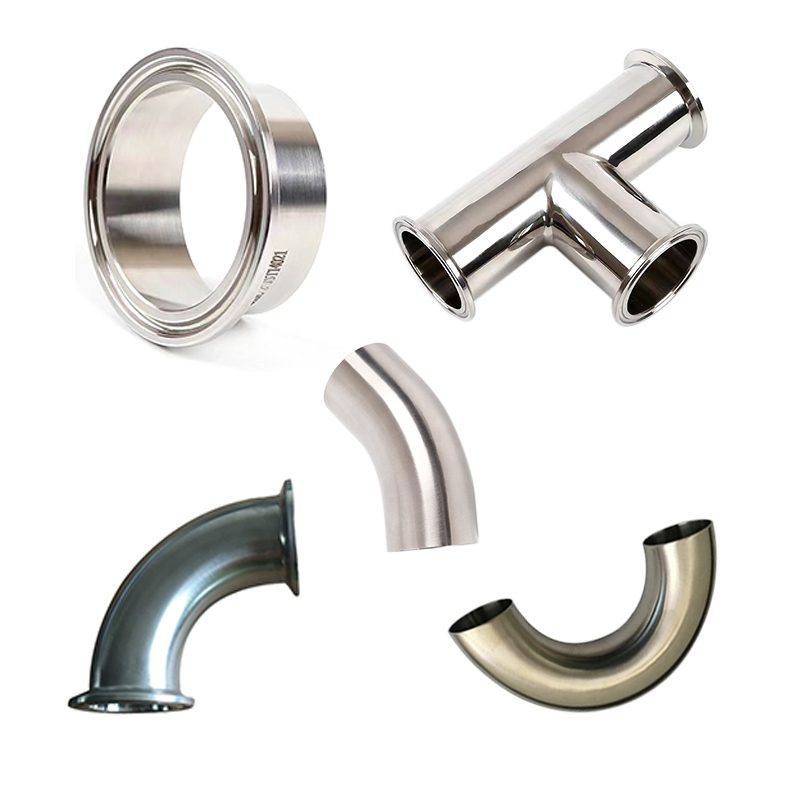
Conventional stainless steel pipes are difficult to adapt to extreme working conditions such as high pressure, high temperature, and strong corrosion. General purpose alloy steel pipe fittings are specially adapted to these harsh working conditions by optimizing material formulas and improving processing technology. They are applied in high-end industrial projects such as petrochemicals, energy, and chemicals, with more guaranteed safety and stability, and significant practical application advantages. Excellent corrosion resistance: Compared with conventional stainless steels such as 304 and 316, the ability to resist intergranular corrosion, pitting corrosion, and stress corrosion is greatly improved by optimizing the alloy composition. It can withstand corrosion from various media such as acid, alkali, chloride ions, and sulfides, and has a much longer service life in harsh environments than ordinary pipe fittings. Strong stability under high temperature and high pressure: It has good creep resistance under high temperature conditions, and long-term operation will not cause deformation or softening problems. Its mechanical strength remains stable; When used in high-pressure and high-temperature pipelines such as power plants, refineries, and hydrogenation units, there will be no problem of weakening the high-temperature strength or stress failure of ordinary stainless steel. Good adaptability: Smooth docking with conventional stainless steel pipelines, strong material compatibility, and no occurrence of electrical corrosion; The welding process is consistent with conventional stainless steel, and there is no need to change the existing construction process. Ordinary pipe fittings can be directly replaced, greatly improving the operational reliability of the entire pipeline. Lower full cycle cost: Although the initial purchase price is slightly higher than that of ordinary pipe fittings, there is almost no need for frequent maintenance and replacement during use, resulting in a low failure rate and effectively reducing downtime losses; For enterprises engaged in continuous production, the cost-effectiveness of using pipes is much higher than that of ordinary pipes, and long-term use is more cost-effective.
Q1: What Are The Key Requirements For Qualified Stainless Steel Pipe Welding?
A1:Match the welding material with the base material, using specialized stainless steel welding material; Priority argon arc welding, back argon filling; The parameters are evaluated according to the process, and there are no defects such as incomplete welding; After welding, slag cleaning, acid pickling and passivation should be carried out, and non-destructive testing should be conducted as needed.
Q2: What Advantages Do Gencel Stainless Steel Fittings Have For Industrial Piping?
A2:Small deviation in pipe size, reducing installation stress; The material is pure, passivated in place, and resistant to corrosion and pollution; Precise sealing surface, low risk of liquid leakage; Suitable for clean/weakly corrosive media, easy installation and maintenance, with durability far exceeding non-standard parts.
Q3: How To Maintain Stainless Steel Pipes After Installation To Extend Service Life?
A3:Regularly inspect welds, brackets, and compensators; Keep the pipe wall clean and avoid residual chloride ions; Operate according to design parameters and regularly flush; Minor scratches and rust spots should be promptly passivated and repaired locally.
Q4:How To Ensure Proper Alignment And Avoid Forced Assembly Of Stainless Steel Pipes?
A4:Laser calibration is used to determine the elevation of the axis, and the pipe mouth is fixed with an adjustable bracket to control misalignment and gaps; Large diameter pipes with temporary support should be naturally fitted together, and violent correction is strictly prohibited; First, perform spot welding to verify the dimensions, and then proceed with formal welding.
Q5: What Are The Standard Steps For Pressure Testing Of Stainless Steel Piping Systems?
A5:Isolate equipment and check support before the experiment; Clean water with chloride ions ≤ 50ppm and water temperature ≥ 5 ℃ is used for hydrostatic testing; Gradual pressure increase, pressure maintenance inspection, and after passing the inspection, pressure relief and drainage; Special medium pipelines shall undergo additional airtightness and leakage tests.
Q6: What Items Should Be Included In Post-Installation Inspection Of Stainless Steel Pipes?
A6:Check the appearance and size; Installation of nuclear components and sealing of interfaces; Clean up internal debris and confirm that there is no forced assembly stress; Ensure complete construction documentation.
Q7: What Harms Can Material Incompatibility And Surface Contamination Cause In Installation?
A7:Damaging the oxide film, causing pitting corrosion, intergranular corrosion, and thinning and rusting of the pipe wall; Formation of primary batteries accelerates electrochemical corrosion, and welds are prone to cracking; The pressure bearing capacity decreases, the medium is prone to leakage, and it may also contaminate materials. The damage is irreversible, significantly increasing the cost of rework and operation.
Stainless steel pipe installation is not just fitting splicing, but meticulous construction requiring strict standards and attention to detail. Material contamination, forced assembly, substandard welding, ignored thermal stress and skipped post-installation inspections—these small on-site oversights are the main causes of pipeline failures. Only by following national standards, ditching rough operations and executing every detail can we unlock the material advantages of stainless steel pipes and ensure long-term stable operation. For extreme conditions like high pressure, high temperature and strong corrosion, GENCEL stainless steel fittings with standard construction processes boost pipeline reliability and cut overall costs significantly. Industrial pipeline construction is crucial, and embedding risk avoidance awareness in every step is the bottom line for project quality and production safety. Consult Gencel now and submit your inquiry for high-quality fittings to build a solid foundation for your industrial pipeline safety!

STAINLESS STEEL&GENCEL;
Privacy Policy | SiteMap
Copyright GENCEL STAINLESS STEEL CO.,LIMITED
 Optimized by Seraphinite Accelerator